|
Getting your Trinity Audio player ready...
|
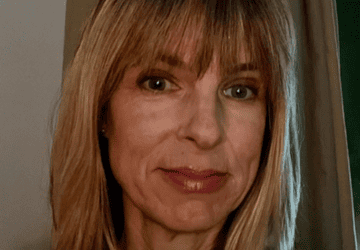
My liver transplant experience – by Eleanor
I was first diagnosed with a pancreatic neuroendocrine tumour (pNET) at The Royal Marsden Hospital in early 2017 when I was 46. I was subsequently referred to King’s College Hospital – one of the UK’s NET Centres of Excellence – as the team at The Royal Marsden felt that my surgery would be too risky for them to undertake.
In January 2018, I had surgery at King’s to remove my primary tumour. This involved a total pancreatectomy and splenectomy. However, lesions remained on my liver, so in July 2019 I began a trial of four cycles of PRRT (Peptide Receptor Radionuclide Therapy). By 2023, the lesions were showing signs of growing again and in July of that year I started treatment with Everolimus.
My consultant first raised the possibility of a liver transplant in early 2025, when scans showed that the lesions were beginning to grow again. At a follow-up appointment a few weeks later, my oncologist invited one of the transplant co-ordinators to join us for an informal chat about what a transplant would involve.
Once the national transplant committee had approved me for consideration, I spent a couple of days at King’s having scans and tests and meeting the transplant team. I must admit, compared to some of the other patients, it was disconcerting to look so well, when some of them around me were visibly very unwell. I was then added to the active transplant waiting list.
In the end, I waited nine months for a suitable liver to become available. And when the call finally came, it was on my birthday! I decided to take that as a good omen.
The nine-month wait was difficult at times. Not knowing when the call might come meant that, to some extent, life felt as though it was on hold, however hard I tried not to let it. Most of the time, I tried not to think about it too much and only told close family and friends.
Throughout the process, I had complete trust in the team at King’s. The first operation in 2018 had been successful and I’d had great care over the following years, where they continued to monitor and assess the lesions regularly. So, when they said that they believed a transplant was the best option for me, I didn’t really have to think about it for long.
The transplant co-ordinators were always at the end of an email if I had any questions. If I was going away for a weekend, I could simply let them know when I was leaving and when I would be back, so that I could be taken off the waiting list temporarily.
I’ve also been incredibly fortunate to have had the same fantastic clinical nurse specialist (CNS) since I first came under the care of King’s in 2017. I really can’t speak highly enough of her. She has always been available at the end of an email to answer my questions and help with any problems or concerns. Having that continuity of care and knowing there was always someone I could turn to has been, and remains, invaluable.
I want to be open and transparent – so one of the disappointing aspects of my transplant surgery was that the donated liver was too large for me. As a result, the surgeon closed the skin but left my abdominal muscles unstitched. Too much pressure on the new liver at this stage could affect how well it functions in the long term. And once the liver has shrunk, I’ll need a second operation to have the muscles stitched back together.
In the meantime, I have to wear an abdominal binder to support my middle and help prevent a hernia. I understand this approach is in my best interests, but it does limit what I can do, and my recovery will be longer than I’d anticipated. I still experience a lot of fatigue and sometimes take a nap during the day, but that, of course, may be down to my cancer anyway, or perhaps my immunosuppressants. For now, I also need to drink 3 litres of water per day to stop the immunosuppressants damaging my kidneys, so that doesn’t help as obviously I’m up and down to the bathroom all evening. But I’m off both Lanreotide and Everolimus now.
I’m generally a very active person and have a physical job. I am an upholster by profession – and very involved in my local Riding for the Disabled, so at the time of writing (six months after my surgery), I’m still having to be careful about what I do until I can have the next operation. For now, the transplant has had a bigger impact on my day-to-day life than I’d hoped. However, I keep reminding myself to look at the bigger picture and focus on the ultimate goal: being cancer-free.
Would I do it again? For me, it was never really a question. PRRT had run its course, Everolimus was beginning to do the same, and there weren’t really any other options available to me. I don’t like to dwell too much on what the alternative might be. I’m very lucky to have two amazing children and more than anything, I want to see them grow up.
And the best part so far? Without a doubt, not having to jab myself in the thigh every month with that huge, great big, mother-of-all-needles for my Lanreotide – that’s a big plus!
But there has also been a completely unexpected bonus. A few weeks after my operation, I discovered through my aunt that I have a third cousin in Ireland who is also on the liver transplant waiting list. We’ve never met, and I didn’t even know she existed until then.
When her call finally comes, she’ll be flown over to King’s for her operation, as liver transplants aren’t available at hospitals in Ireland. I’m hoping that, when the time comes, I’ll have the chance to pop up to King’s and meet her in person. In the meantime, we’ve already been in touch.
My journey has certainly had its challenges, and recovery has taken longer than I expected. But I’m incredibly grateful to the team at King’s for their care, expertise and support throughout the process. Most of all, I’m grateful to have been given this opportunity and I’m very hopeful about what the future may hold.