

For healthcare
professionals.
Clinical information, guidance and resources to support neuroendocrine cancer care
Neuroendocrine cancer can be challenging to recognise, diagnose and manage. We’re here to support healthcare professionals with practical, accessible resources to help build knowledge, recognise potential symptoms, support people living with neuroendocrine cancer and improve patient care.
Explore our resources below, including clinical and educational guides, patient case studies, mental health support, professional development and information about our research and support services.
Practical guides for healthcare professionals
Overview of neuroendocrine cancer
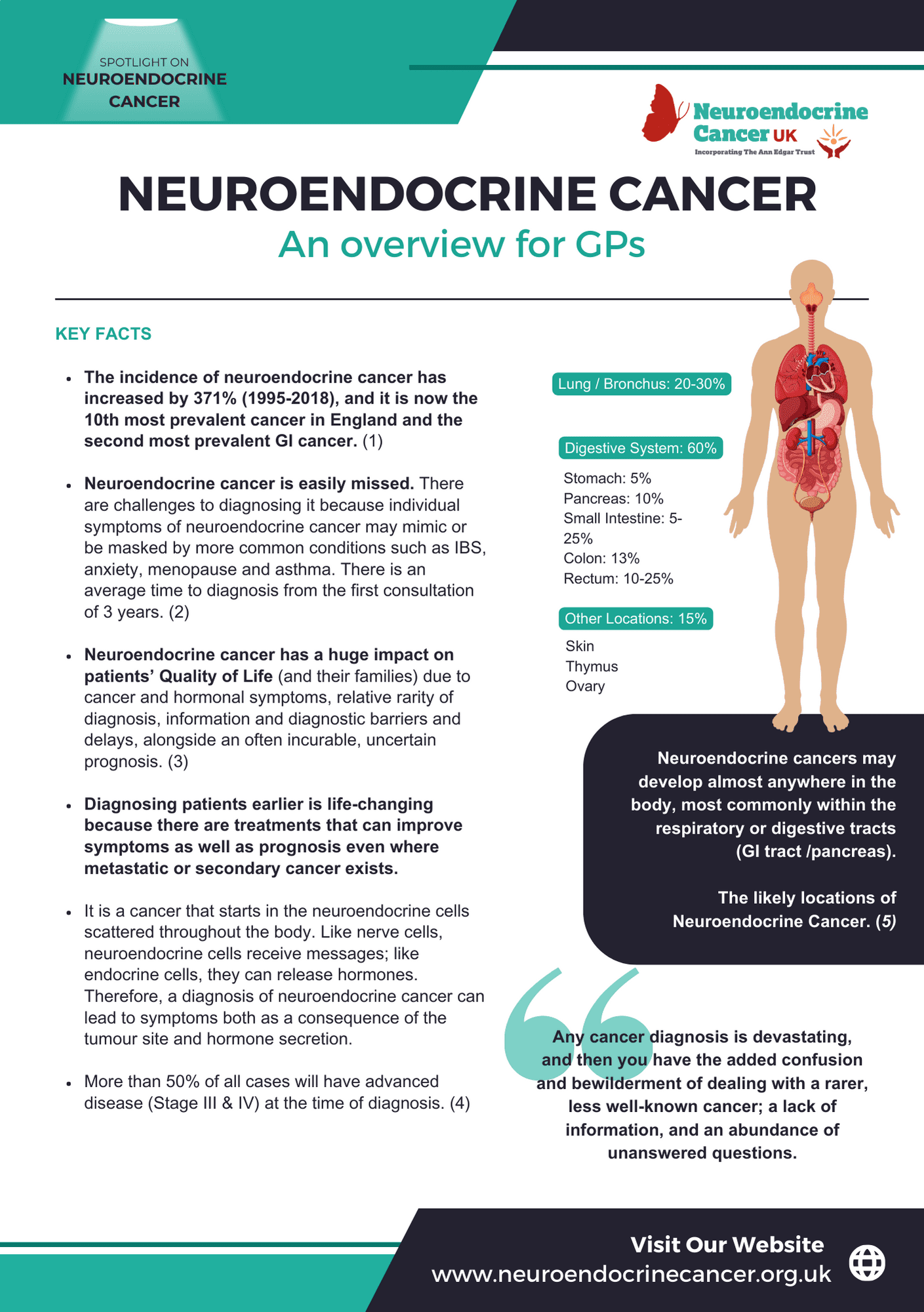
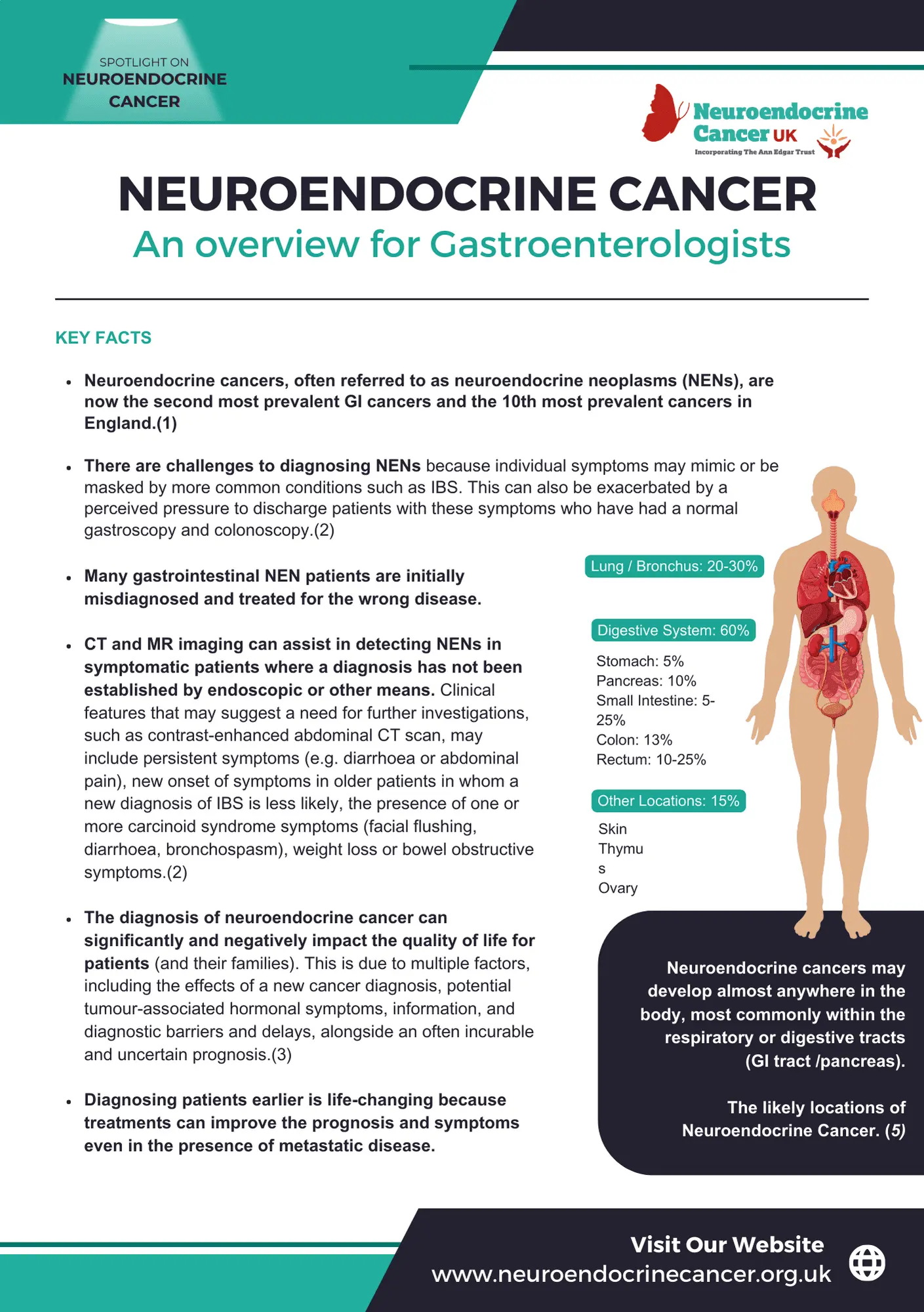
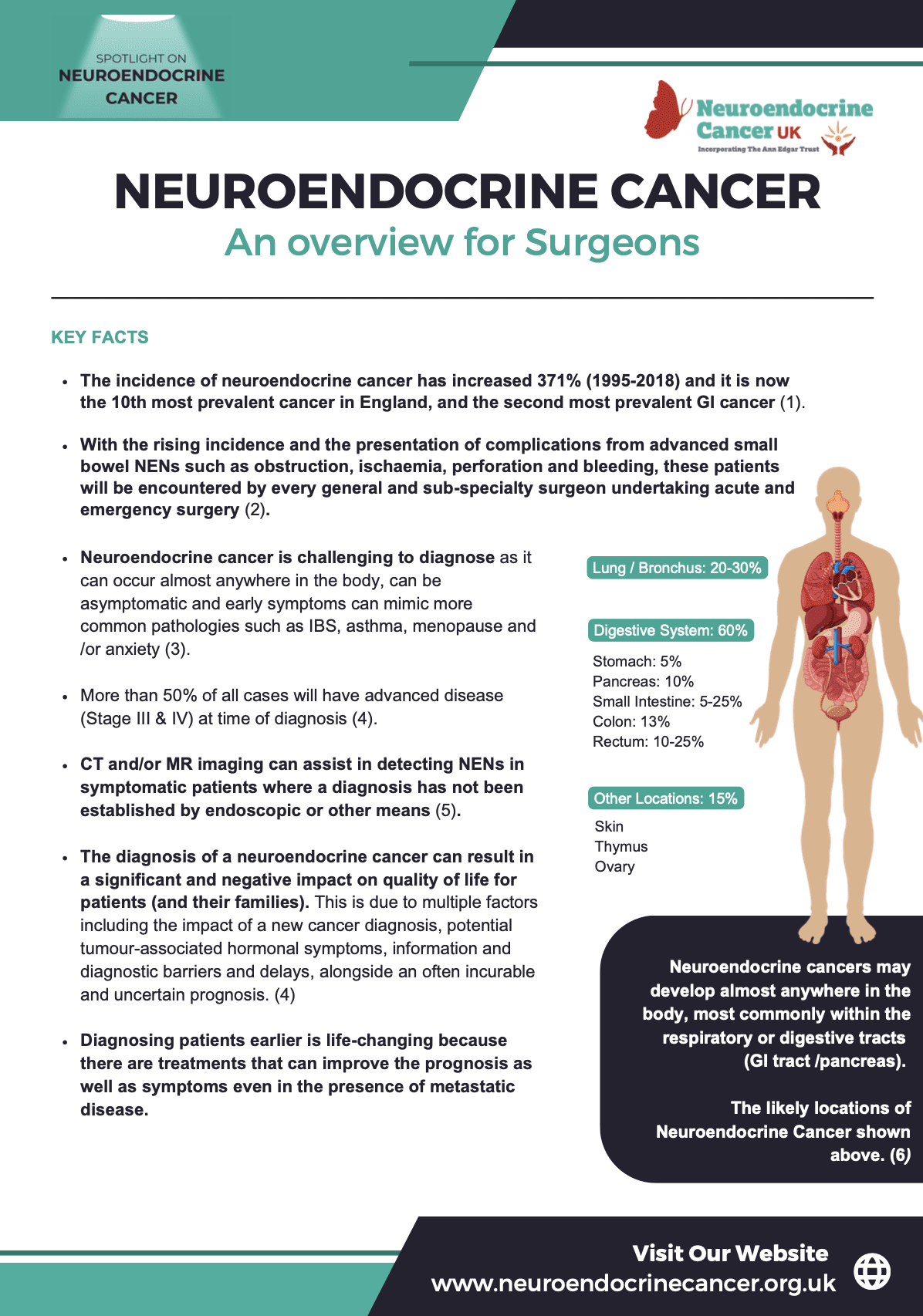
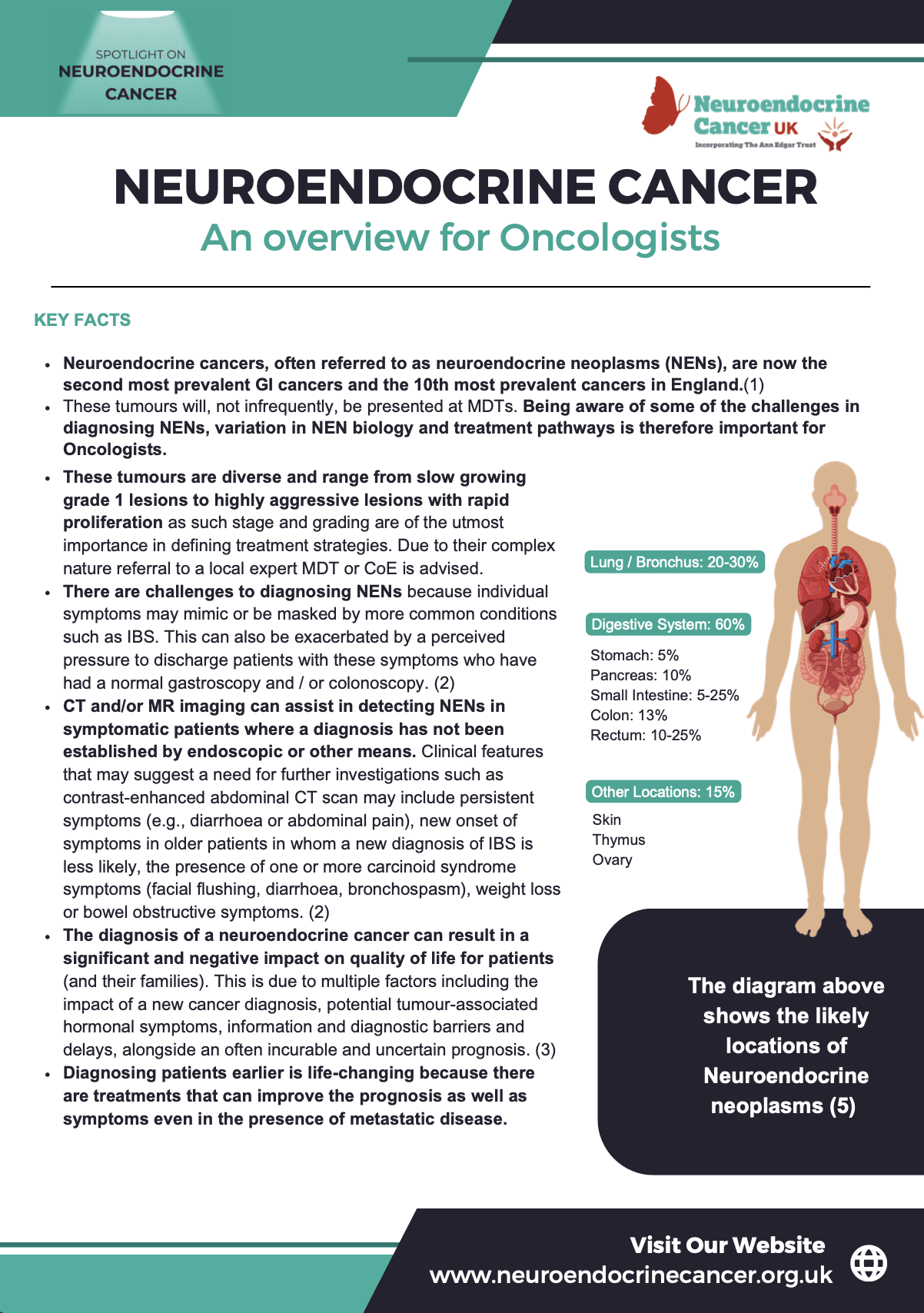
As part of our ‘Spotlight on Neuroendocrine Cancer’ campaign, in partnership with the UK and Ireland Neuroendocrine Tumour Society (UKINETS), we have created a series of neuroendocrine cancer overviews for healthcare professionals to raise awareness of neuroendocrine cancer and act as bite-size practical educational aid to support patient identification.
Please select your discipline below:
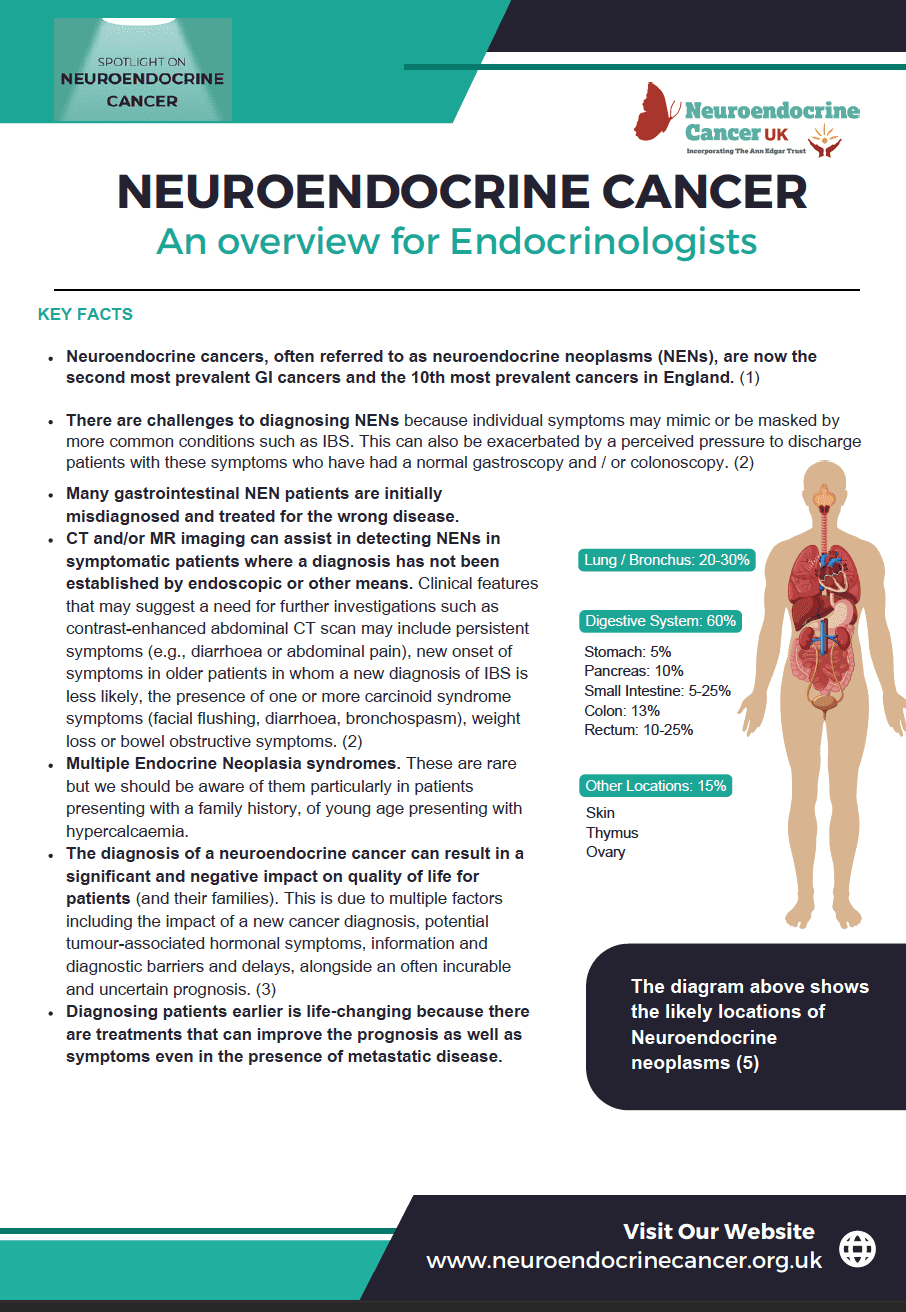
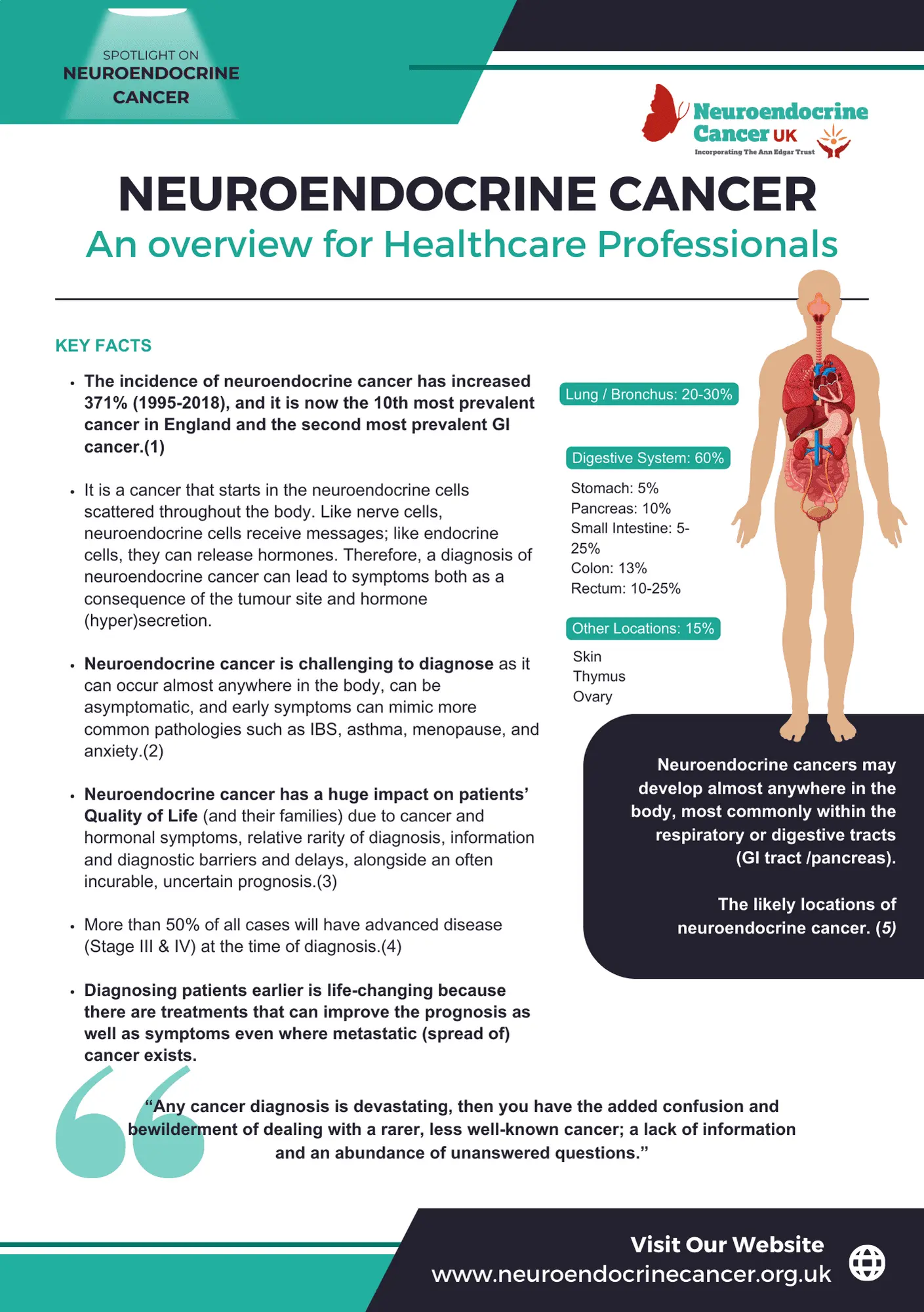
Symptom awareness cards
Our GP symptom awareness cards are an essential tool for raising awareness of neuroendocrine cancer and encouraging early diagnosis. By downloading and distributing these cards to local clinics and GP practices, you can help make a real difference to earlier recognition of this cancer.
We aim to ensure that more people get diagnosed and treated early, and you can play a part in achieving this goal. Ordering and sharing these cards is a simple yet effective way to spread awareness of neuroendocrine cancer and improve lives.
Mental health support for your patients
In collaboration with Rareminds, Neuroendocrine Cancer UK presents Conversation Openers, an initiative born from our Open Conversations report on neuroendocrine cancer and mental health. Launched in 2022, the report underscored the critical need for healthcare professionals to engage in open dialogues with neuroendocrine cancer patients and their families regarding mental health concerns.
Recognising the unique psychosocial challenges faced by individuals with neuroendocrine cancer, Conversation Openers provides healthcare professionals with practical communication strategies to navigate discussions about mental health effectively. As part of our ongoing ‘Spotlight on Neuroendocrine Cancer’ campaign, these videos offer insights into integrating mental health considerations into routine care and initiating sensitive conversations with patients.
Find out how Neuroendocrine Cancer UK can support your patients
Patient case studies
These patient case studies are a series of videos taking the format of a Q&A between a medical student and three patients living with neuroendocrine cancer. They share their personal stories of being diagnosed (their symptoms, how they presented, investigations and treatments). There is also a video by a specialist neuroendocrine cancer consultant summarising the three patient cases.
They are part of our ongoing ‘Spotlight on Neuroendocrine Cancer’ series, a collaboration between Neuroendocrine Cancer UK and UKINETS to raise awareness of neuroendocrine cancer among healthcare professionals.