|
Getting your Trinity Audio player ready...
|
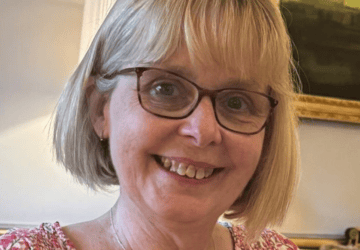
Name: Alison
Date of diagnosis: Autumn 2022
Primary Site: Small bowel
Under the care of: The Royal Free London
–
Alison’s Liver Transplant Journey
The first time a liver transplant was mentioned was when I initially met my consultant – shortly after diagnosis in 2022. I didn’t really think about it because my head was in a spin. I didn’t think it would apply to me and I didn’t know nearly as much about neuroendocrine cancer as I do now.
I recovered quite well after surgery to my primary (and various other bits) in 2022.
Then it was time to deal with my liver. It was devastating to hear that I was inoperable because of the number and location of the tumours.
Even with treatment such as PRRT (Peptide Receptor Radionuclide Therapy), I had an expected lifespan of 7-10 years. At this point, my Prof asked if I wanted to be considered for a transplant as I seemed to be an appropriate candidate for the pilot scheme. And I agreed - with some trepidation – after discussions with family and nursing friends.
Once the local and national transplant boards agreed that I could be considered, I had a 2-day assessment with further scans, scary meetings with the surgical and anaesthestic teams, fitness tests and an in-depth patient meeting with other potential transplant patients where the transplant process was explained - including what happens next.
I also had to sign a ‘Declaration’ detailing what I could and couldn’t do and that if I broke the Declaration, I understood that I would be removed from the list. There was little information about survival rates for neuroendocrine transplant patients – or degrees of recovery - so although I could hear about generic transplant patients, it didn’t really apply to me. I recall feeling a bit of a fraud when other people being assessed were clearly so poorly and I looked relatively well.
To be honest, I found the whole process quite stressful and lonely at times. Everything seems to take such a long time to move forward and as usual, the waiting is the worst.
As a patient, sometimes it’s easier to keep things to yourself and not talk about your worries because you want to protect your family, and that is a stress in itself.
After 5 months, I received confirmation that I could be put on the list (with the caveat that I would continue to be scanned every 3 months and any deterioration/change in my condition would trigger removal from the list).
As the call to attend hospital can come at any time, day or night, I packed my hospital bag and took it everywhere with me from then on.
There was a possibility that the wait for a donor liver could be up to 2 years. But I was lucky enough to receive a liver only 2 months after going “live” on the list and a few hours after getting the call, I was waiting to go into theatre – with a sudden realization that I could be saying goodbye to my family for the last time.
The next thing I remember is waking up in ICU – thankful to be alive but with no concept of day or time.
I had expected to be there for a few days, but I was quickly moved on to the main ward and then my recovery began. The initial regime of medication was difficult, and hospital life was wearing. But with physio and a desire to get home as soon as possible, I was soon doing laps of the ward and was discharged after 9 days.
Today, over 2 and a half years since my transplant and all is currently stable.
Transplant medication is not difficult to manage, and hepatology clinics are now every 6 months. I am reviewed regularly by the neuroendocrine cancer team and I am still currently NED (No Evidence of Disease).
I want to be frank for those who come after me. A liver transplant is not all plain sailing as you may think from reading above. I am a more anxious person now than I was before, and although I have had counselling (which has helped), I worry about being unwell when away from home so I find it difficult to book trips/travel.
I am still tired - partly due to do with poor sleep quality, which seems to be a side effect of the medication , but I just pace myself and if I’ve had a busy few days, I schedule in some downtime.
I have stomach issues – maybe because of the primary surgery or my lack of a gallbladder – but it’s manageable.
Am I glad I had the transplant?
Absolutely yes. I am in a much better position than I would have been without surgery and no longer have a limited life expectancy. Do I get frustrated? Yes, because I want to feel better than I do - to travel and have days out without worrying and yes, I miss the occasional drink!
But overall, I am so grateful that I was approved, and for the skill and care of all the medical staff at the Royal Free NET Centre, not to mention the donor family who gave me the greatest gift of all. I would encourage anyone offered this opportunity to grab it with both hands. And consider the alternative carefully.
Alison
Written August 2026