|
Getting your Trinity Audio player ready...
|
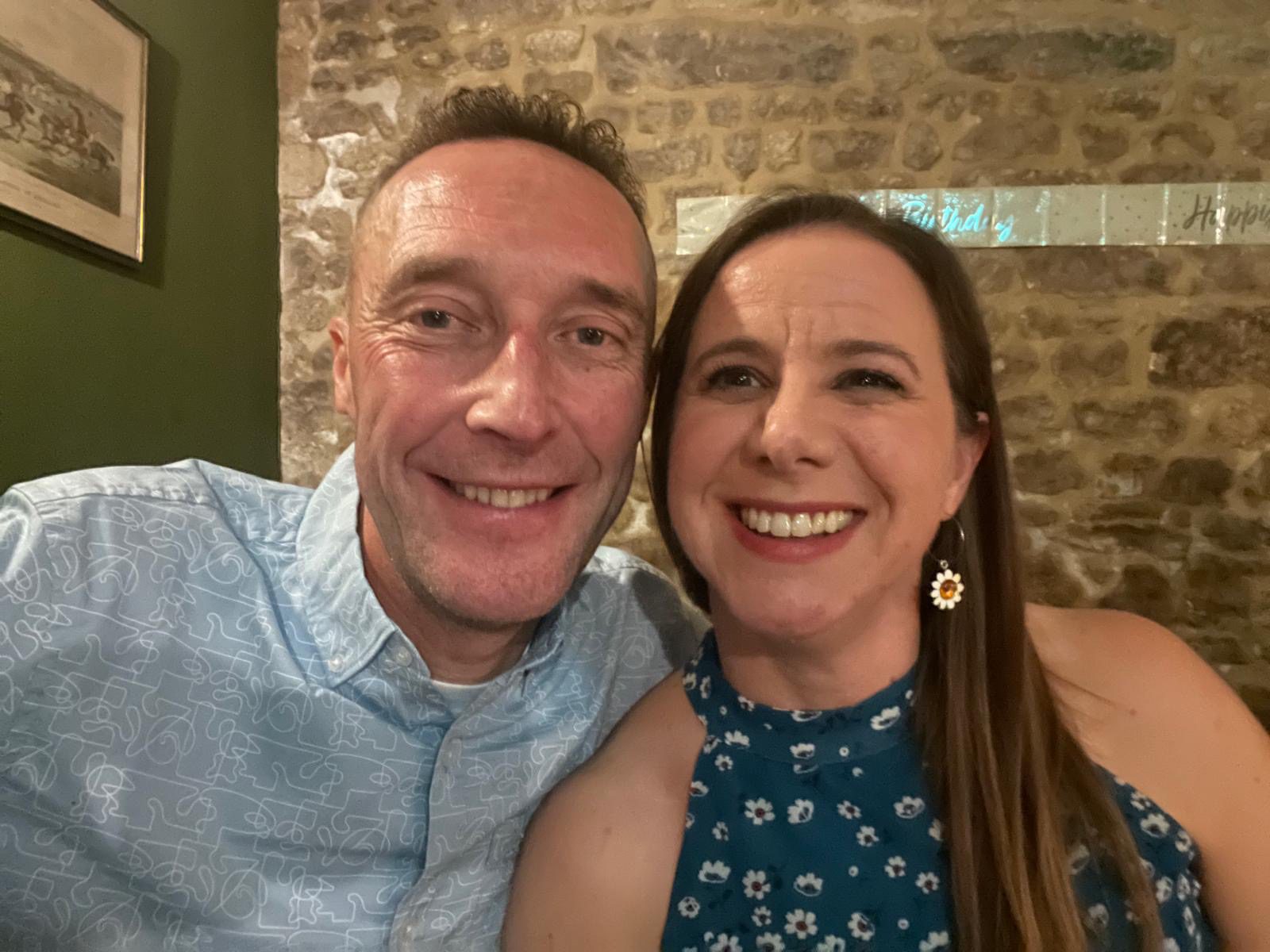
Name: Jon (also an Ambassador and Facilitator for the Bristol and Bath Patient Support Group)
Primary NET: Small bowel
Secondary NET: Liver
Centre of Excellence: The Royal Free London
Diagnosed: Age 33
Current age: 50
–
–
Jon’s Story
One of our Ambassadors, Jon, was diagnosed with a small bowel NET at the age of 33. Sixteen years later, he recently underwent a liver transplant at The Royal Free London under the NET Patient / Liver Pilot Scheme.
We asked Jon about his experience of the transplant selection process, the wait for a suitable organ, and how he and his wife, Emma, managed the uncertainty along the way.
How long did the selection process take from the MDT confirming that you were eligible?
Approximately six months.
How fit did the team want you to be, and were there any specific fitness requirements?
I was asked to raise my heart rate above 120 beats three times a week. I was also told that the fitter I was, the quicker I was likely to recover.
I was given an exercise programme to follow, which I did religiously. It was something practical that I could focus on while going through the process, and I knew that being as fit as possible would help me both going into the transplant and during my recovery.
I started doing a few small runs 3 times a week, as well as some light weight exercises recommended to me.
How long were you on the transplant list before you had your transplant, and how did you manage the waiting period psychologically?
I was very lucky and was only on the list for four months in total, but I had my first call after three months.
After living and working with cancer for so long, and managing to live a relatively normal life, I was used to always feeling slightly on edge waiting for results, scans, or appointments, so in a way, I found waiting for news of a new liver a similar feeling.
Emma’s biggest fear was getting the phone call, as we simply didn’t know when it might come, so the waiting was quite difficult. We were restricted on going too far from home, which meant we couldn’t go on holiday, and day trips were tricky as we could only be approximately 3 hours away from the hospital.
I was also working at the time, so there was an element of having to prepare for a handover at work at very short notice.
I received a call, and we travelled to London as quickly as we could. I then had all the necessary tests and spent time waiting at the hospital, only to be told that the transplant wasn’t going ahead as the organ was not suitable. That was a really stressful experience, but it was a good test run, and we felt more relaxed knowing what to expect.
I did have complete faith in the team looking after me.
Were you offered any counselling or psychological support before the transplant?
I was offered counselling, although I didn’t have any during the process itself, as I didn’t need it as I was given a lot of information and support at the work-up sessions.
I did have the opportunity to speak to another transplant patient who had gone through the same process, and this was invaluable and put me at ease.
The transplant coordinators were very experienced and gave me all the information I felt I needed. They were always there through the whole process and were incredibly helpful. I felt able to ask them any questions or raise any concerns I had, which made a real difference.
What impact did the transplant process have on your loved ones?
My wife, Emma, came with me to every appointment. That meant taking time off work for her, but we are a team, and we were in this together.
We told close family and friends that I was on the transplant list, and they were incredibly supportive.
It did put people on alert, so when we phoned, they were a little anxious that we had had the call.
How long were you off work after the transplant?
I was off work for four months.
The occupational health team at my work were fantastic and recommended a phased return back to work. I started with two weeks at 25%, followed by two weeks at 50%, then two weeks at 75%, before returning to my normal hours.
I also needed a few additional weeks off because of the general ill health that NETs can bring.
Looking back on everything you went through, would you do it again?
Absolutely yes. It was a long and sometimes difficult process, and the waiting and uncertainty were challenging, but I had complete faith in the team caring for me.
Having Emma alongside me throughout made a huge difference too. We approached it as a team, and I’m incredibly grateful for the support we received.
If someone else with a NET were now going through the transplant assessment or waiting for a transplant, I would say: stay as fit as you can, take things one step at a time, ask questions when you need to, and trust the team looking after you.
It has been a life-changing experience. And I would also be happy to support anyone going through the same process.