|
Getting your Trinity Audio player ready...
|
Name: Anna
Neuroendocrine Cancer Site: Lungs
Diagnosed: July 2025
Neuroendocrine Cancer Specialist Hospital: The Christie, Manchester
–
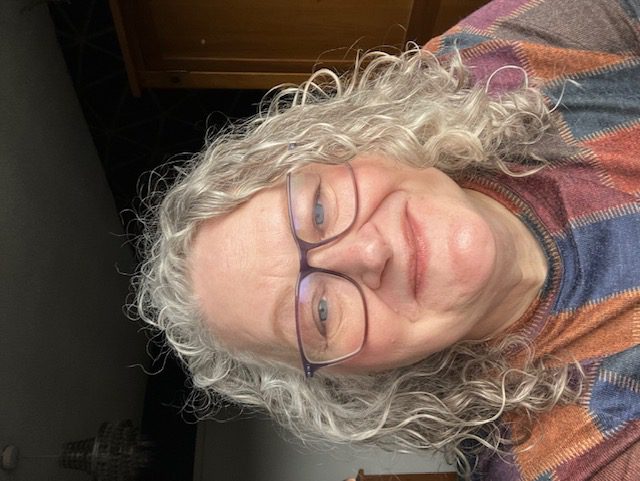
Anna’s story
I found out I had multiple neuroendocrine tumours in my lungs following a biopsy on 24th July 2025. It had been a bit of a roller coaster as these separate tumours were discovered during a CT scan performed prior to surgery for head and neck cancer. I had had surgery earlier that month to remove part of my tongue.
Prior to this, I was fit and well, with no symptoms and working full-time as a midwife in the NHS.
It was this second cancer that led me to apply to be an Ambassador for Neuroendocrine Cancer UK.
At the point of this second diagnosis, I was cared for in my local hospital – the one where I work. Unfortunately, the medical team just kept telling me all would be explained at my NET Centre of Excellence, as that was where I was being referred, and they couldn’t tell me anything else. I was given the Roy Castle Lung Cancer booklet, which, unfortunately, was inappropriate for my diagnosis.
It was many weeks before the MDT met and presented me with a plan. It was at the point of diagnosis that I spoke to one of the CNS’s (clinical nurse specialists) on the Neuroendocrine Cancer UK helpline – and it certainly helped to talk through the likely course of further investigations and treatment options. I didn’t know I could do this – just talk to someone who understood.
Once the MDT telephoned me with a plan, unfortunately, my local Oncologist disagreed, and therefore, I was back in limbo. It was at this point that I found out that there wasn’t a NET lung specialist on the MDT team, even though this was a Centre of Excellence. It never crossed my mind to ask who was on that team. So, I now was left with 2 differing opinions on what to do. But I did my research (I would encourage everyone to do this) and attended the Lung NETS-only Patient Support Group and discovered that there was a specialist available at The Christie NHS Foundation Trust, Manchester – a Prof Wasat Mansoor. It meant a 6-hour round trip, but it was worth it for my peace of mind, getting the most appropriate and up-to-date advice.
I like to research everything and ask so many questions, I get tired of my own voice! I feel that by going to The Christie, I have been a participant in decisions around my care, something which was lacking when I was being discussed at an MDT by people who had never met me, had no knowledge of my life, my wishes, or my future plans. Very much a step in the right direction for self-advocacy.
Surgery is not an option for me, and for this first year, we are monitoring any growth of my multiple lung tumours and recently diagnosed DIPNECH (Diffuse Idiopathic Pulmonary Neuroendocrine Cell Hyperplasia), and will step in only if necessary, and then assess which treatment will be most suitable for me. It’s a new concept for me, ‘watch and wait,’ but one I am learning to accept.
Prof Mansoor talks about it as ‘getting to know my tumours’ and how they behave. I feel like an individual. So, my life currently revolves around multiple hospital appointments and scans. For my head and neck, I have 6 weekly appointments in clinic and 3 monthly ultrasound scans of my lymph nodes.
For neuroendocrine tumours, I have 3 monthly CT scans, chest, abdomen, and pelvis, 3 monthly appointments with my local oncologist, and 3 monthly at The Christie too. I’ve never been so well looked after. The support I have received from friends and family, my work colleagues, and the medical profession, but most importantly from Neuroendocrine Cancer UK, has been, without doubt, unparalleled and humbling beyond words.
Personally, I’ve decided to focus on myself more. I’m learning about my condition constantly and developing healthy habits, and I hope to take partial retirement to reduce my stress. And this month, I’ve become an Ambassador for Neuroendocrine Cancer UK. I hope to ensure that at the point of diagnosis, people receive the correct information, given in a sensitive manner, by someone who can answer any questions about neuroendocrine cancer in a meaningful way. We cannot alter the distress of the diagnosis – but we can help to relieve the uncertainty. And my lived experience has very much taught me the importance of sharing our stories.
……………………………
Anna Temke – April 2026