|
Getting your Trinity Audio player ready...
|
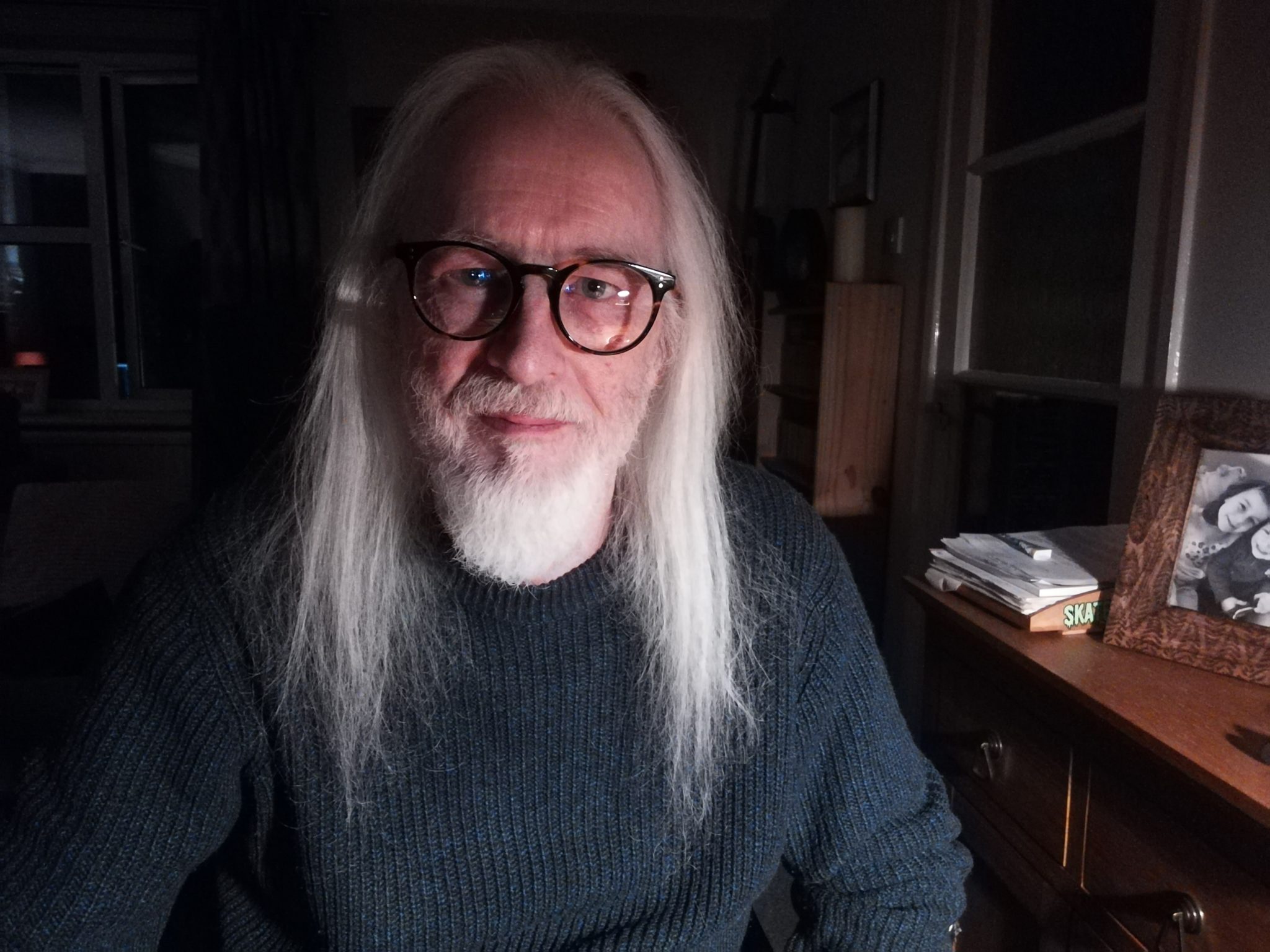
Hello friends. My name is Graham Shankarji Hunt, I’m 73 years old and in retirement, I am a singer/songwriter by trade. I’ve been lucky with my health so far and have only had one stint in hospital in my adult life, which was for renal colic in 2015. This is my story of the last 4 months – I hope it’s not too long, detailed and graphic.
On the Thursday 7th April this year I woke up with a slight feeling of discomfort in my abdomen. I didn’t really think anything of it – just a minor belly ache. The following day it was slightly worse and on the Saturday morning I vomited just after passing a motion. However, during the rest of the day I felt fine so again, I passed it off as an upset tummy. But by the following Tuesday the pain was more intense – short-lived, but followed by more vomiting. So I called my GP, had a triage phone call with a nurse practitioner, who asked me to come in for an examination. She gave my abdomen a physical examination but said she could find no lumps or bumps. She did a urine test and said my white cell count was slightly raised, which might indicate the presence of an infection. I asked her if she would prescribe an antibiotic for that, but she said there would be no point, because my problem was almost certainly a virus and therefore untreatable with antibiotics. She sent me for a blood test and told me I would just have to suffer it and wait until it passed. Fair enough I thought – it must be norovirus or something – it’ll pass soon.
So another week went past during which there was a pattern. When I got up in the morning I would feel fine but then as soon as I passed a motion, within minutes I would be suffering a strong pain high up in my stomach/solar plexus area – the sort of discomfort you feel when you eat a huge meal and are totally bloated, only it was worse. Sometimes I would vomit too but not every time. I would take some painkillers and curl up on the bed until the pain passed, which it usually did in an hour. For the rest of the day and the night I would feel fine, except when it came to eating. As soon as I ate anything, I was again stricken with the bloating pain, so I began to avoid eating – chicken soup and dried toast became my friend! So I had another couple of triage calls from two different nurse practitioners and one of the practise GPs who prescribed me Omeprazole and told me to take Zapain for the pain.
By the beginning of May things were not improving and my physical strength was waning rapidly as the lack of proper food took its toll, so I was back in the surgery for another assessment. During this time I also had another couple of blood tests that seemed to be fairly normal. So anyway, she then took the decision to refer me to hospital for an endoscopy. That was booked for the 20th May – I had a meeting with a consultant in the interim who examined me and listened to my story. During this time, I continued with the Omeprazole, which helped a little, but I had to stop taking it a week before the endoscopy. So, I went for the endoscopy on the 20th of May – I had a gastroscopy and colonoscopy at the same time. After the procedure I was informed my stomach and large colon were cancer free – I had one or two small polyps which they took for biopsy, there were one or two diverticulas but nothing of concern and then there was a slight inflammation of my stomach lining – on the report it said, ‘mild gastritis’. I was prescribed Ciprofloxacin antibiotics for this. The consultant said my gut was ‘pretty normal’ for a 73-year-old man.
So, I came out of the hospital feeling great, if still a little weak. After flushing my system with industrial strength laxative for the endoscopy, my stomach felt the best it had in a month, and we went home and had a celebration proper meal. On the Sunday I went back to hospital for a CT scan which they said was standard practise after an endoscopy. I suppose if I’m honest, there was always a nagging worry that the CT scan might show up something else, but I put it out of my mind and hoped for the best. So, I felt fine that week as I completed the course of antibiotics on the Wednesday night, and then blow me down if the symptoms didn’t return with a vengeance on the Thursday morning, complete with vomiting. It was the long weekend of the Queen’s Jubilee and the surgery would be closed for four days, so I got another triage call from one of the GPs and here it got a bit confusing. I explained to her that I’d had gastritis and been treated with antibiotics. She said, “Really? It’s not common practise to treat gastritis with antibiotics – Omeprazole is the standard treatment for gastritis and you’re already taking that.” I felt like suggesting she take that up with her colleagues at the hospital, but I kept my counsel. I did manage to convince her to prescribe another course of antibiotics, just in case things got worse over the 4 day break. In the event I didn’t need them because I was back to feeling fine the following day.
The next thing that happened was a letter dropped through the door with an appointment to see a Colorectal surgeon. Uh oh, I thought – this is to do with the CT scan. So my wife and I went to see the surgeon and that’s when I got the diagnosis – I had what they described as “a small, slow-growing neuroendocrine tumour in my small intestine – I’m still not 100% sure if it’s ‘in’ or ‘on’ the small intestine. She showed it to me on the scan but it just looked like a blob of grey amongst a whole bunch of grey blobs! She said the good news is that she was pretty sure she could remove it all, along with two tiny suspect areas close to the tumour and a short length of my bowel, but there were some other tests that needed to be done to be certain. So a few days later I had a Tektroyd scan looking for secondaries and also another CT scan and an ECG. I’m thankful and relieved that the Tektroyd showed no secondaries – it had been caught very early.
I’m acutely aware that some people reading this will be in way worse shape than me. I feel for anyone dealing with cancer of any sort and it makes me feel something of a fraud, because I have no symptoms apart from some occasional very mild discomfort – I gather some people can live with NEC for many years without knowing. My main anxiety is surviving the operation – it feels strange to know I’ll be walking into hospital feeling perfectly well, knowing I’m going to be out after 5 days feeling lousy. I’m not a particularly physically fit 73 year old and I live in a top floor flat with 4 flights of stairs to climb, so I know it’ll be tough. But mentally I’m feeling so lucky that this has been caught early, almost by accident after treatment for gastritis symptoms. I should also confess that I’m a lifelong smoker – not heavy but a smoker nonetheless – and as any smoker will tell you, one always has an underlying fear of smoking-related cancer. So to find out I have a rare cancer that has nothing to do with smoking is something of an existential irony for me.
As I mentioned earlier, I am a singer/songwriter/musician these days, playing occasional gigs around the south of England, recording music videos for my YouTube channel and performing on facebook livestream shows. Some of my musician friends and fans have been asking me for a while why I don’t release some of my songs, so it seemed an opportune moment to do something creative and positive. So to take my mind off the cancer and the forthcoming surgery, I have just released my first album of original songs, which is raising money for Neuroendocrine Cancer UK. I’m selling it as a digital download on Bandcamp and so far it’s raised nearly £600 so I’m really happy about that!
So that’s my story. The operation is scheduled for the 4th August, just four months after the first symptoms, so for me the NHS has really come up trumps. It breaks my heart to see such a vital institution struggling with lack of proper funding and hearing the stories of our amazing nurses and medics, who deserve so much more from successive governments. All I can say is that from my experience, they are always there when you really need them. I’m hoping their skill and dedication will result in a positive outcome for me and I hope for all of you.
One last observation that may sound familiar to those who have had a cancer diagnosis. I’ve been very open about my diagnosis on social media or to be more precise, Facebook, which is where most of my musical activity and connections take place. When I announced I was releasing the album, I unashamedly used my cancer diagnosis as a fund-raising tool, explaining that all proceeds from the sale of the album would go to NCUK. Friends from all over the world have been very generous with their contributions, but I’ve definitely detected a reticence to address the elephant in the room i.e. cancer. Of course people have been kind and wished me well, but it’s like people can’t bring themselves to mention the word cancer. It seems we still have some way to go to normalise the conversation about cancer and how it’s perceived.