|
Getting your Trinity Audio player ready...
|
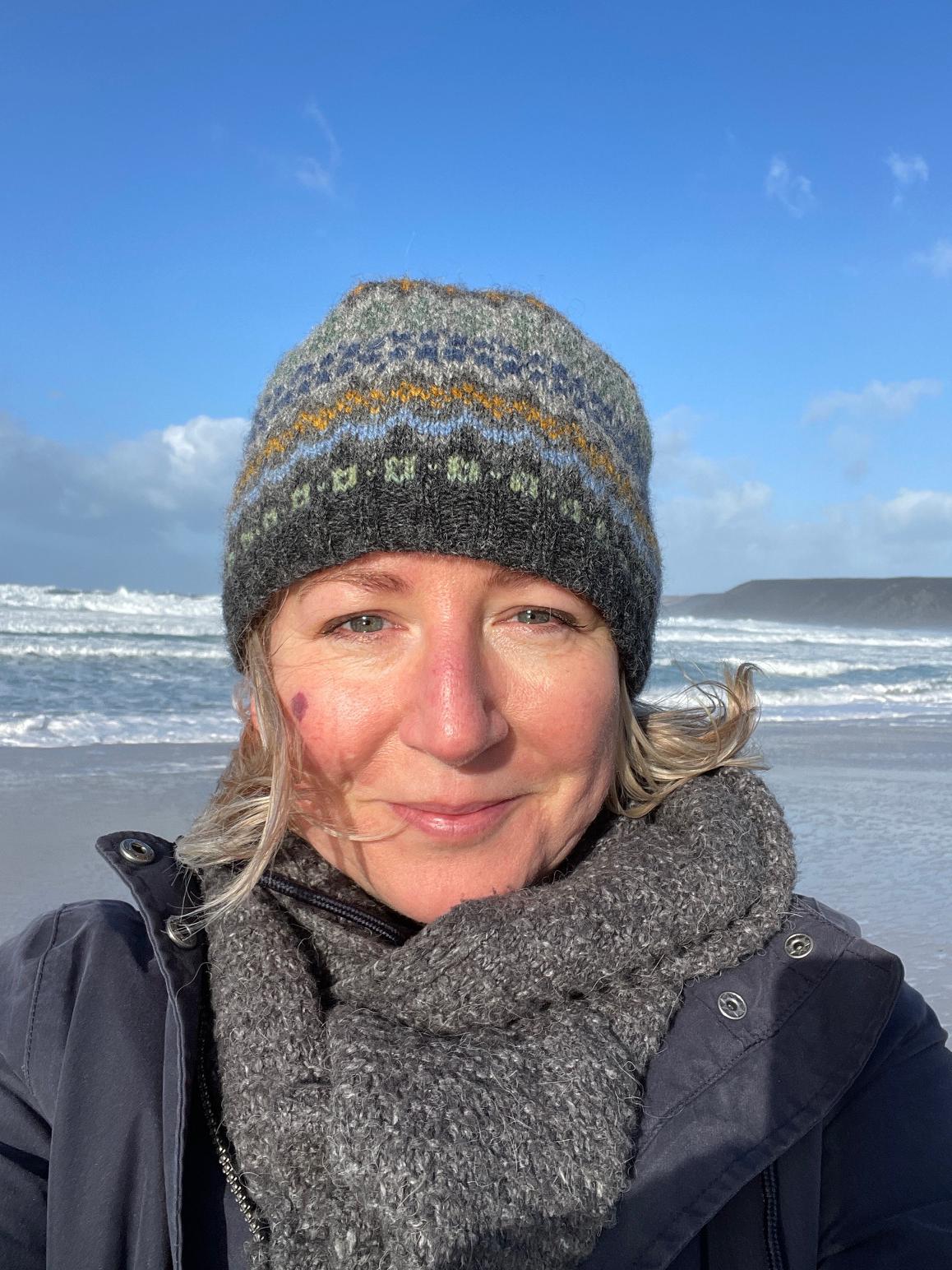
Name: Melanie
Neuroendocrine Cancer Site: Lung (Atypical Carcinoid)
Diagnosis: October 2023
Neuroendocrine Cancer Specialist Centre: The Christie NHS Foundation Trust
–
Melanie’s Story
I think what I find most frightening is the fact that I had no idea I had been living with a form of neuroendocrine cancer for several years. Mine is called ‘Atypical Lung Carcinoid’ – AC for short – and I didn’t have any symptoms. I was diagnosed by chance nearly a year ago.
And yet, here I am with an incurable-but-treatable Stage IV metastatic cancer I’d never heard of. Right now, I’m trying to find a way to live with the continued rollercoaster of emotions and the knowledge that, really, I am a ticking time bomb – and I need help.
I am no stranger to professional mental health support. Following a breakdown a few years ago, I tried the NHS’s one-size-fits-all counselling solution – but for me, it was counterproductive. I found a private, specialist trauma counsellor to walk beside me. And I built up a toolbox of other therapies and healing modalities to help me in day-to-day life. It has been transformative.
But after hearing the word ‘cancer’, I couldn’t seem to apply my previous learning to what I now faced.
There is a gaping hole in the NHS for psychological support, especially for a rare cancer diagnosis, and hearing phrases from those in professional cancer support roles saying that they’ve never heard of this cancer.. I felt very alone. These days, with cancer rates rising, you would think mental health support would follow a rather well-worn path.
Sadly, my diagnostic journey also left me feeling scared and rather anxious – not traits normally mine – as I was originally told I had metastatic lung cancer with a dire prognosis of just months – a fact I discovered on my NHS app in a note from my GP’s surgery. I believed I would be dead by Christmas.
I’d lost my mum to lung cancer, and to be fair, my GP noted I would now need extra support.
I’m still waiting. This rocked my faith in local care at a time when I most needed support. I remain angry about this, especially as I had asked the GP if I could have an X-ray or a test for lung cancer from time to time because of my mum.
So, receiving my correct diagnosis – and a better prognosis – was an incredible relief.
But there were added frustrations along the way before I got to that …
It was only my own research that had led me to discover UK NET Centres of Excellence for neuroendocrine cancer. Turns out I can be cared for by one, and this allowed my anxiety to settle down tremendously.
It was such a relief instead of hearing phrases like: ‘I’m afraid we don’t know anything about your cancer, you’ll need to speak to your specialist team’, or ‘we don’t have specialist neuroendocrine cancer nurses’, or ‘we’ve a nurse you can chat to as a one off, but their patient list is closed’, or ‘we can’t help today, call back in a week or so’ …
I would break down because I just didn’t know where to turn. One nurse who didn’t even know me suggested I needed ‘something to take the edge off’ – to help with my anxiety and offered a prescription instead.
There just wasn’t anyone I could talk to. There is no formal NHS pathway for neuroendocrine cancer patients, and most hospitals don’t know what to do with us.
Neuroendocrine cancer is complex and diverse, which creates a place of continued anxiety and uncertainty for patients. The relief we feel when we find a specialist is immense.
Despite all this, I have been shown immense kindness by many clinicians.
Invaluable support eventually came from the charity, Neuroendocrine Cancer UK, and they have helped me educate myself. Without their support, I would probably still be in no man’s land.
Neuroendocrine Cancer UK signposted me to Rare Minds Counselling, also a registered charity providing specialised rare disease mental health support. The relief upon hearing the counselor speak my new cancer language was immense.
Psychologically, cancer is as exhausting as the diagnosis, and I would like to see a future where mental health professionals work alongside oncology teams, MDT’s and can be in the room with patients on the day of diagnosis.
This should be standard protocol, and not just for those receiving a diagnosis, but for loved ones, too. Even just one session for them would be amazing because they experience immense trauma, too.
Melanie Lucas
Neuroendocrine Cancer Lung Patient
Under the care of Somerset Foundation Trust, Yeovil & The Christie NHS Foundation Trust, Manchester.
Written April 2025