|
Getting your Trinity Audio player ready...
|
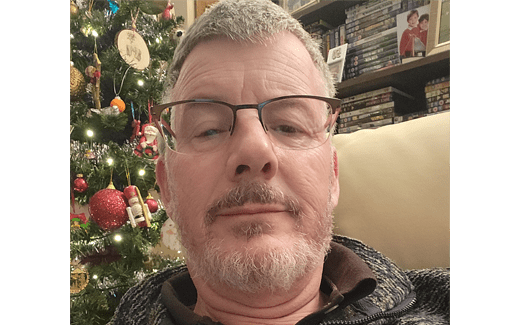
Name: Paul
Age: 55
Neuroendocrine Cancer Site: Pancreas
Paul’s story:
I was struggling with various tummy issues and upper abdomen problems throughout 2017 and 2018. I was backwards and forwards to my GP with these pains. There was an assumption that this was pancreatitis, despite blood tests being negative. A scan in 2017 showed my gallbladder was full of stones and the surgeons at my local hospital (Lister Hospital, Stevenage) referred me to another hospital (Watford Hospital) for an Endoscopy.
This highlighted a dilated pancreatic duct which was referred to the Royal Free for a surgical MDT in July 2018. It was still suggested that this was likely to be caused by the gallstones firing across into my pancreas causing the dilation. I eventually had my gallbladder removed in January 2019 with a plan to have a scan after the cholecystectomy. We had a post operative clinic appointment 6 weeks after the cholecystectomy. At that point the surgeon was going to discharge me but we pushed for the promised scan. This showed that the pancreatic duct was even more dilated but now the bile duct was also dilated. This was a red flag to the surgeons and I was scheduled for an urgent EUS.
Unfortunately the endoscopist was unable to find a tumour. It was then decided they would get a more experienced endoscopist to try again. This time around they found a 3cm tumour in the head of the pancreas. I was seen the following week and it was decided they would undertake a Whipple.
The Whipple took 9 hours and the initial frozen section showed it was a Neuroendocrine tumour. They continued with the procedure and took a further frozen section which highlighted that there were still Neuroendocrine cells in the remnant of my pancreas and they were considering doing a total pancreatectomy but unfortunately by this time I was struggling and the anaesthetist said they needed to close me up. I was so poorly post op I was put in an induced coma for 3 and a half days and a further 4 days in ICU.
I saw the surgeons 3 weeks later and they confirmed the initial histopathology was correct and showed that the tumour was a Neuroendocrine tumour. I was then referred to the NET Team at the Royal Free. They ordered a Gallium and FDG PET. The Gallium PET showed a significant uptake in my pancreas which tallied with the second frozen section. They then ordered an MRI which showed a growth in my liver which had not shown up in the PET scans.
I was booked in for a biopsy as it was unlikely to be a NET and thought it might be a Hepatocellular Carcinoma (HCC). The biopsy was inconclusive but I was told to prepare for a hepatectomy in early 2020. The surgeon was doubtful and suggested to take a watch and wait approach with a follow-up MRI, I was not happy with this but the surgeon was adamant. Luckily I saw my NET consultant the following week and he was not happy with that approach. He decided to order another biopsy which came back with a conclusive HCC diagnosis. It was decided to proceed with the hepatectomy in March 2020. Unfortunately this was then delayed due Covid-19. I had a Liver embolization as a holding position and luckily I was able to get the hepatectomy in June 2020. This was successful and the followup scans showed the liver had grown back successfully with no tumours.
To top off my surgical journey I suffered a significant incisional hernia which was repaired in October 2020.
So far all further scans have shown no further tumours in the liver and 4 weekly Lanreotide injections have kept the pancreatic NET’S stable.
Do you have any useful hints and tips that you would like to share?
Always be your own advocate. The NHS are brilliant but there are times they can be wrong.
If you don’t understand something ask more questions.
Once you get a diagnosis make sure you are referred to a NET Team.