|
Getting your Trinity Audio player ready...
|
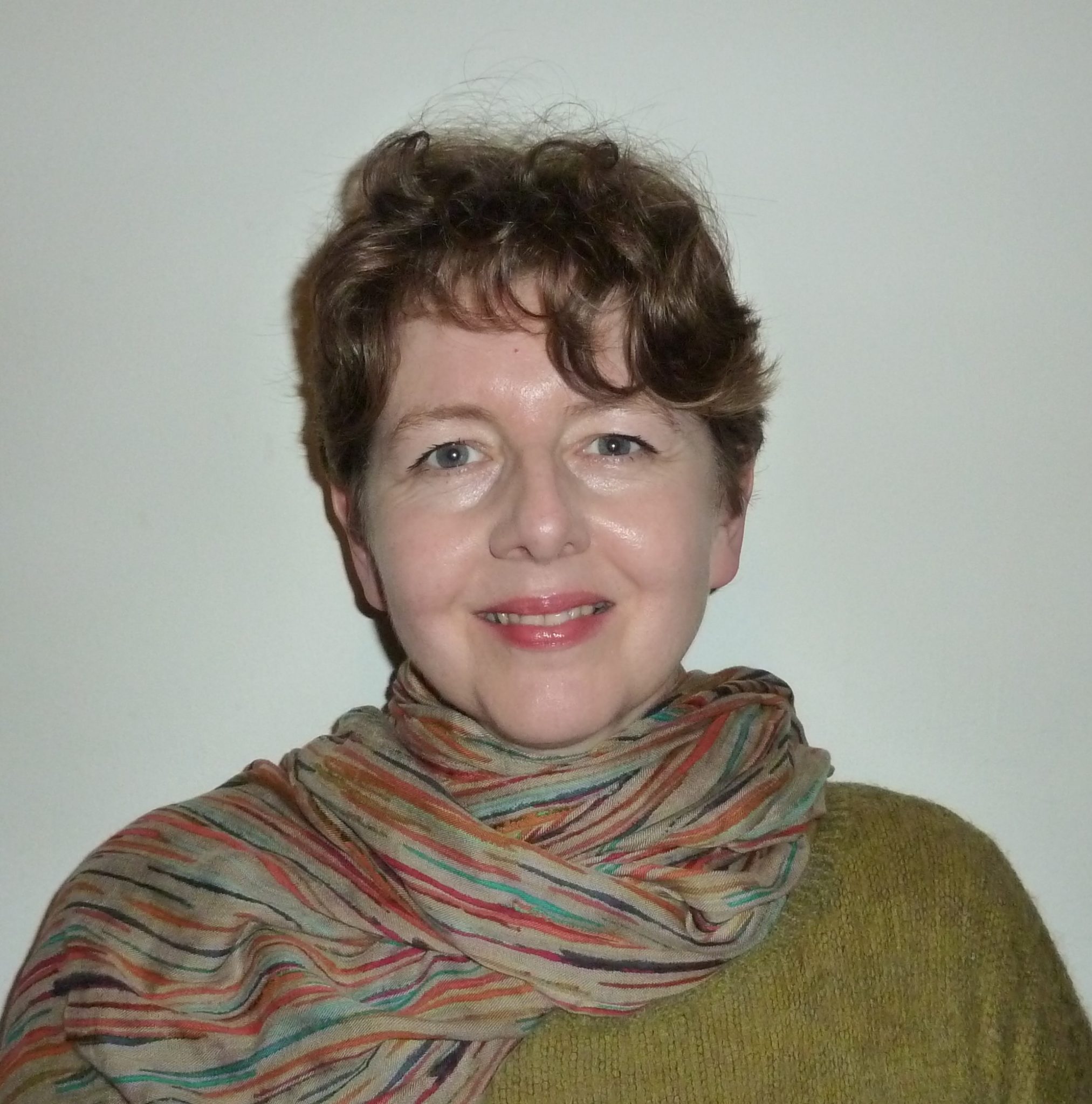
Name: Sophie
Age: 52
Neuroendocrine Cancer Site: Glucagonoma – pancreas (primary), paraaortic retroperitoneal lymph nodes (secondary).
Sophie’s Story:
When is a rash not a rash?
My NET story probably begins some time before 2014, but that is the year I first started to show symptoms of what was later diagnosed as a glucagonoma. At the time, I was struggling to complete a PhD, which I’d started as quite a mature student. Already in my mid-40s, I initially thought my difficulties were down to poor self-discipline, which I’d not suffered in the past, but I had an inkling there was something not quite right. I’d long had some mild-ish digestive problems – heartburn and occasional nausea. Could have been anxiety. I was quite down. Again, could have been anxiety.
I went to visit friends in Germany – to celebrate a confirmation of a close family friend – thinking this would refresh me. During the trip, I started to develop crusty rashes on my wrists, hands, feet and ankles and there were some dermatitis-type spots on my face, around my mouth which I covered with thick make-up as I was embarrassed this looked like cold sores or worse. People asked me what I thought was wrong. And I didn’t know. On the way home from Germany, I flew via Hamburg and was stopped by security to be patted down. Looking in the mirror, I think my face possibly reminded them of someone who might have been using drugs. I got a non-urgent appointment with dermatology with the referral in the spring. But I continued to obsess over what was wrong. I thought it might be soap powders, and I explored all sorts of topical treatments for eczema. Had I exposed myself to too many agri-chemicals during my farm field work? I consulted an alternative medicine practitioner, who recommended a complete change of diet and some very expensive natural supplements. Which I never bought. I was trying to find work in parallel with this and attended one job interview on a particularly warm day in May, but self-consciously covered from head to toe and in long sleeves as my skin continued to worsen. I couldn’t cover my, by this time, scabby hands as I think that wearing gloves on a warm May day might have looked a little odd. The interview did not go well and then I chatted with the person who would have been my assistant, but I saw she couldn’t take her eyes off my poor hands. I knew that was it.
Getting increasingly desperate, I booked a private dermatology appointment at the local BMI and was assessed as having discoid eczema. I had ‘phlogistic’ rash marks on my shoulders, round my neck, on my legs and feet and ankles, wrists and hands – anywhere my skin had been even lightly in contact with clothing. To even an expert skin doctor’s eyes they didn’t look like much in all likelihood. I thanked the doctor for his prescription of diprobase. It helped – but not completely.
The summer came and I at last got my appointment with the hospital dermatology department. By this point I had some large areas on my legs and feet which would come and go slightly and leave brownish marks. Several dermatologists scratched their heads. And so it continued through July and August into September. Was it scalded skin syndrome, was it viral, was it fungal, was it bacterial. At one point I was on antibiotics, anti-fungals and anti-virals and I remember nearly blacking out one afternoon. I was advised to cover myself in 50:50 – so not only was I scabby, from head to foot, but also greasy. I didn’t go out and I hardly moved. I felt like the dirty secret of dermatology. Being covered in ichthopaste and bandaged like a mummy (ironically, by my poor Mum) brought some relief. The skin peeled off, appeared healed and then rashed up again. Was I scrubbing myself? The dermatologist asked. I went in one day to be bathed by a nurse and the skin came off in sheets. At that point the most senior dermatologist became involved. Looked at my face and I could see from his eyes suspected something. Zinc deficiency. But more than that. I could sense his urgency as he ordered some bloods. It was then a relatively short time before I learned that my widespread skin rash was actually an NME – necrolytic migratory erythema – one of the classic symptoms of glucagonoma. The kindly senior dermatologist had seen it only once before in his long career, but I was glad he had seen it that once as I know it is vanishingly rare. Or maybe not these days.
For confirmation, I was admitted to hospital for several days in September 2014, undergoing urine tests, blood tests and scans. A CT showed a mass on the distal part of my pancreas. And there was some suspicion about irregularities in my liver, which later proved unfounded. The octreotide scan showed focal activity in my pancreas only. We were all kind of comforted by that.
Initially, I felt some amusement at being a rarity – 1 in a million or 1 in 20 million, depending on which source you read – but I was in a great deal of discomfort too as my skin was drying and cracking despite emollients. This resolved largely after I began to receive Lanreotide injections, although in the final week of the monthly cycle I tended to find the rash creeping back on my torso mainly.
I was relieved I was a surgical candidate and by November had my reassurances that this would be straightforward, albeit major surgery, with the intention of being curative. The surgery took place at QMC in Jan 2015 and I was lucky to be tended to by top surgeons.
Surgery brought almost immediate resolution to my skin issues. No more rashes. Which, bizarrely and rather vainly, was my main fixation, despite the rather more serious problems the glucagonoma could have caused my body. The only hiccup post-operatively was salt-wasting disease, when bag after bag of water flowed through my body and the nurses nearly had difficulty keeping up. That too resolved. After discharge, all seemed well again. Trying to make the best of the experience and appreciate my extended lease of life. I did some minor fund-raising in my community, mustered the courage to give a talk at the local WI (scary!), even chaired the Parish Council for a year, during which time we held a community resuscitation even for residents to mark Start a Heart week, completed my PhD and even did a spell both working and volunteering in the NHS. I don’t think I wasted too much time.
Regular check-ups using blood markers (glucagon, Chromogranin A, and B too), CT scans and MRIs, showed no evidence of recurrence for the best part of 5 years, between 2015 and 2020. I have to admit, I thought I might have ‘got away with it’. However, I noted something not quite right in autumn of 2019. Feeling irritable, low, ropey – this continued into 2020. More trips to the GP – suspected UTI, back and abdominal pain, noisy and sluggish gut. A non-urgent referral to gastroenterology, rather than ‘bothering’ my oncologist was decided on by the GP. I decided to take my chit to the bloods clinic a bit earlier than I might otherwise in the early summer. The results coincided with my gastro appointment and the poor gastroenterologist had to break it to me that there was evidence of recurrence after all. So urgent CT. Which showed the NET was back and had spread to my paraortic lymph nodes. I hadn’t ‘got away with it’ after all. MDT determined this was non-operable. Effectively, incurable. Since that news in August/Sept 2020, I’ve had some difficulties with the uncertainty of my situation. I’d started a PGCE – rather late in life, I accept – but that is now on hold. The glucagonoma is back, but being kept at bay with Lanreotide and with monitoring by specialists at Sheffield.
I haven’t reached a state of equanimity yet, but am seeking help with that. I don’t know anybody else with the same condition and of course even those with the same condition will probably have quite a different tale to tell. You can’t afford to let these things spoil whatever time you have and I’m determined I still have plenty to give in any way I can. I note some more tiredness, aches and pains than before, but surely compared to the year (2020/2021) that too many have suffered, I do not feel I can complain. None of us is 100% all of the time, even the healthiest amongst us. The sun still shines and Nature goes on. For me the natural world is a big comfort, and particularly when I see something I have grown from seed flourish in the garden, or a sapling I have nurtured through drought and cold, survive and thrive in the ground.
SHARE YOUR STORY AND BE A PART OF THE FACES OF NCUK CAMPAIGN