|
Getting your Trinity Audio player ready...
|
For six years my life with Neuroendocrine Cancer has had a rhythm that has enabled me to live a positive and organised life. Last month, that changed for me.
And that change rocked my confidence.
My surgery was at the Freeman Hospital Newcastle (an ENETs Centre of Excellence); in 2016 where the amazing surgical team removed 7 tumours. The surgery saved my life but also changed it completely. To adapt I needed to work out a way of life that enabled me to have some control and management. Since then, I’ve had an annual scan, bloods and urine, and a clinic appointment where I’ve been able to not only unload my health worries but also get the information I need for my own peace of mind, too. I’ve always had a plan.
So, when your Consultant suggests changing that rhythm because: “You’re stable” – that good news can cause a massive upset to a pattern I have adopted as my way of coping with Neuroendocrine Cancer.
To give you some background …
Feb 2023: My latest clinic appointment got off to a shaky start. Four appointment changes: I waited with bated breath to see if the latest appointment would take place. No further letters, so I relax and make sure I have all my notes and questions ready to take to clinic. Afternoon before clinic date, I receive a text – changing the time of clinic. Breathe. OK, no problem.
Morning of the appointment: set of in good time with all relevant paperwork. Phew – success. Not so fast! Phone call from the Doctor: “Are you planning to attend the Clinic?” Stunned, I explain the text notification of changed appointment time. Agreed that I would attend the clinic and we speed up, noticeably. Not quite white-knuckle ride, but close.
We arrive at the Freeman Hospital Newcastle and are quickly shown to the clinic waiting area. Height and weight taken, all the usual palaver. And we’re called in. The Doctor is efficient; everything is ‘stable’ (the magic word).
All the figures are on the screen, I look but they’re a blur of lines and colours. The Doctor ignores my detailed list of issues that I had carefully collated over the past few months and keeps reassuring me: “You’re stable. Isn’t that good?”
“Hmmm, not really, because I feel awful. I’m in pain and still flushing a lot.” I dissolve into floods of tears and become incoherent. The Doctor is nonplussed and continues with her prepared plan; to stop my scans.
Now my brain is on overload.
Does that mean I won’t receive any more monitoring? I struggle to follow what she’s saying, with the explanation that unnecessary scans are not good. Anyway, anything can cause flushing, even menopause.
Pardon? “I’m 77, well past menopause age.” I’m utterly confused now.
By now the desperate Doctor suggests I contact Macmillan Palliative Care about the pain control, as ongoing pain can cause fatigue and feelings of being overwhelmed.
Some final explanations regarding my thyroid and why it’s a good idea to leave it alone, and suddenly we’re getting up to leave. Nothing further said. I’m distraught, unable to stop crying as I try to recall what the Doctor said.
Once home, I contact Macmillan Palliative Care and speak to the wonderful Tony. We discuss my reluctance to take morphine. He gently probes about what exactly is bothering me, and why exactly I am in pain.
I haven’t been able to let myself acknowledge that the root of the pain is just there, no specific reason (apart from having Neuroendocrine Cancer, of course). Logically, I know that it can’t be serious because I’ve had scans, and nothing has shown up. So finally, I accept that I just need to get the pain under control, and we work on a pain management programme.
Reflecting on the clinic later, I try to sort out in my head what was actually said. No further scans? Does that mean I’ve been discharged? I can’t even think about the clinic without dissolving into tears again. I’m furious for allowing myself to get into such a state.
The next day, the Pharmaxo nurse arrived to give me my injection. She listened patiently and calmly to what had happened. She urged me to contact my CNS (Clinical Nurse Specialist). I’m always reluctant to bother her, I know she’s always busy. But I agreed that I would email to explain my concerns over whether I was being discharged.
So, email sent: “Just had my injection and had a chat with Lynsey, my nurse. Unable to stop crying, I told her how upset I had been after my clinic appointment. Reflecting upon it I now understand that I had unrealistic expectations, anticipating that I would merely have my injections increased. Added to which, the shambles over the booking systems unsettled me and certainly annoyed the Doctor and made the appointment difficult.
Please could you explain: if my annual scans are discontinued, will I still be monitored? I was very unclear what would happen. Is it still worthwhile me keeping a record of flushing and other issues? The Doctor was very dismissive, making it clear that in her view, the flushing was nothing to do with my NET.
“I don’t want to waste your time. Just some reassurance regarding the future management of my NET. I have contacted Macmillan Palliative Care team as per the Doctor’s instructions and I now have an effective pain management plan.”
Of course, I received a reply first thing next morning, urging me to phone. My CNS explained clearly and calmly what was going to happen. The MDT will be discussing my scans in 2 weeks. I will be monitored in clinic for life whether we are scanning or not. For now, the Doctor is asking: how long has this patient been stable and what are the future plans for scans? The November 2022 5HIAA was normal and that’s a good indication your flushes are not caused by the tumour.”
Suddenly the fog lifted, and I began to understand the relevance or not of the flushing. The iteration of continued monitoring and reviews helped me accept the minor change that the Doctor was suggesting.
Finally, I could gain control of what was happening to me and how I could continue to manage my cancer. I’ve realised that in my subconscious the annual scans were my safety blanket. The sudden and unexplained removal of that reassurance completely shattered my self confidence in my own management and control of my Neuroendocrine Cancer.
A final reminder from the CNS to continue keeping a symptom diary. And importantly the CNS urged me to phone her whenever I had a query.
Stable: It’s a good thing.
But in my experience, it can be difficult.
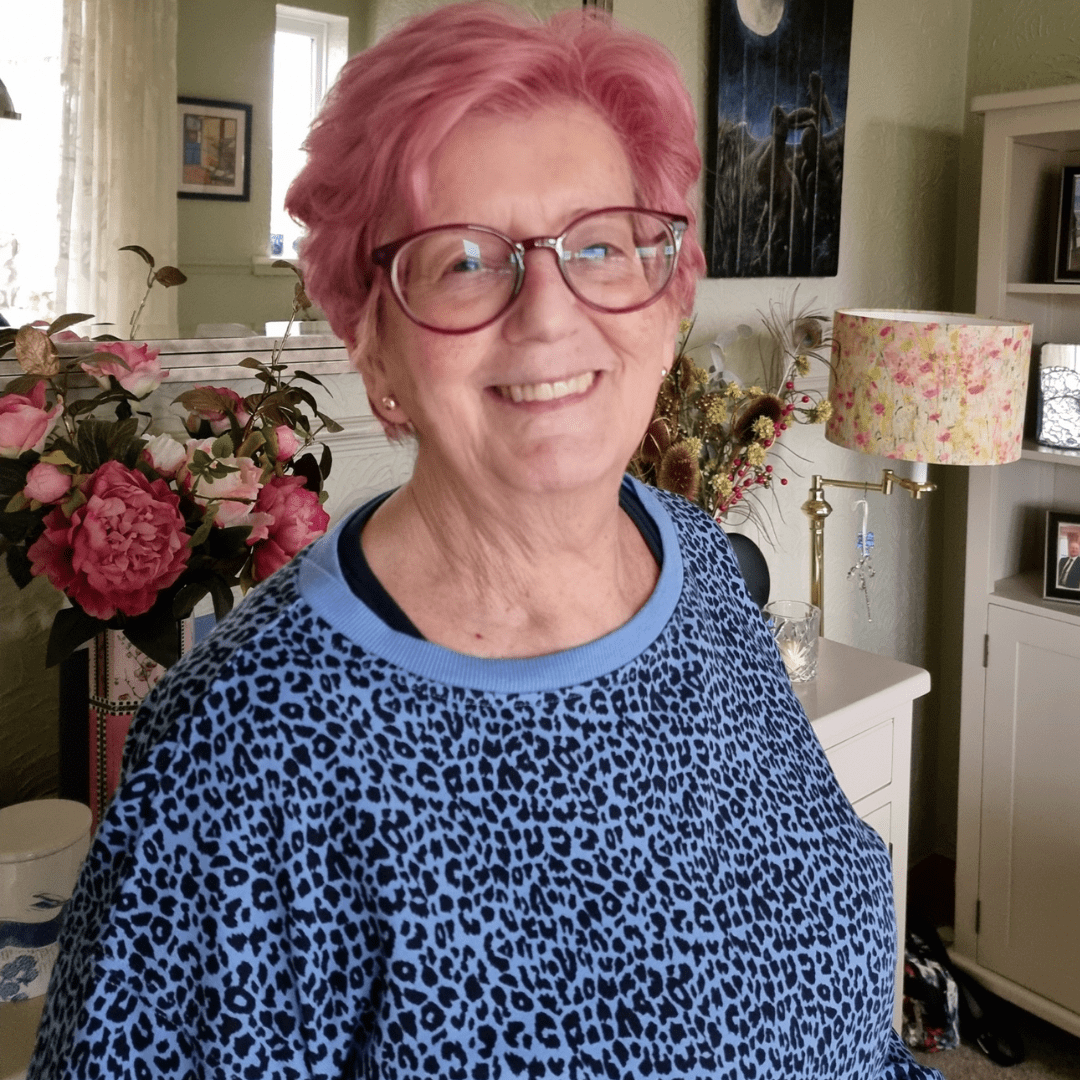
Maxine Patterson