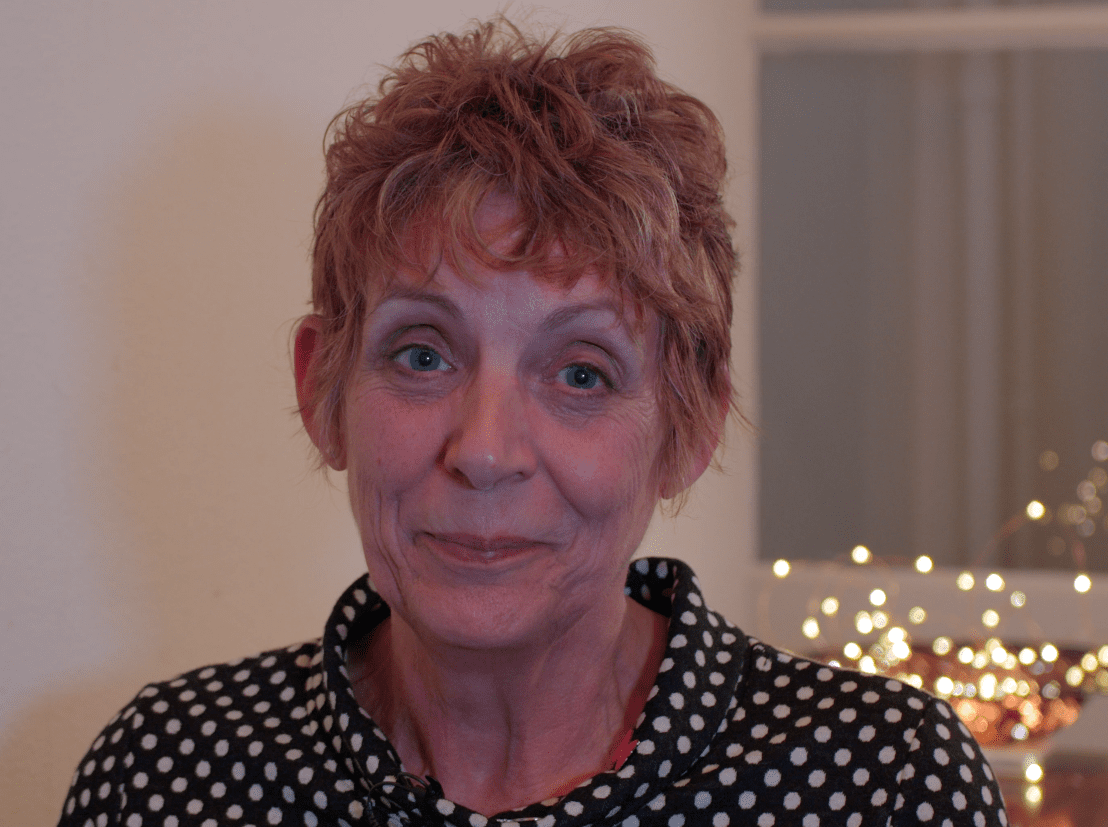
Stage 4… and I’m not dead yet, by Sally

By: Beth Chesser

Posted on: 5 years ago

Trigger Warning.

Please note that while some stories end on a positive note, others may depict the challenging and difficult road that many neuroendocrine cancer patients face.

Getting your Trinity Audio player ready...

This is the sort of situation where terminology can trip us up. 

I was diagnosed in 2009 with metastatic NETs. This meant that over the space of, probably, several years, the cancer cells from the original growth in my small intestine had quietly seeded themselves throughout my body including a substantial batch peppering my liver. 

There were, and still are, tumours in my spine, diaphragm & various other places.  

The medics call this Stage IV – and in many other cancers it would have meant curtains for me and pretty rapidly, too. But this is where the Grade of the tumours became relevant. 

Mine are Grade 1, ie. sluggish, slow-growing cells that take their time increasing. Surgery removed some of the tumours plus a largish chunk of small intestine that was too diseased to keep and I was put on monthly injections of a somatostatin analogue (SSA) called Octreotide to inhibit the growth of the cancer. 

I was also referred to a dietician and given a host of supplements to ensure good nutrition. I was in palliative care, that is, the cancer was incurable but I could live with it and live well. 

I went back to a normal(ish) life – not the same as before my diagnosis but with a lot to enjoy and to be grateful for.  

My stability lasted for around ten years until 2019 when the tumours showed signs of mobilising again. Enter PRRT (Peptide Receptor Radionuclide Therapy). Over the space of about a year, this zapped the growths into temporary submission. 

Now in 2021, the signs are promising that there’s another length of stability up ahead. I don’t know how long that will be, but I’ve learned to make the most of every symptom-free day. 

So…… my metastatic, Stage IV tumours are still there, I’m still in palliative care and will be for the rest of my life. But, here’s the important bit – that is emphatically not the same as end-of-life care although the two are often used interchangeably.  I’m very fortunate to be treated by an excellent specialist NET team (extremely important) and I can look forward with pleasure to all the good things that life has yet to bring. 

I hope my story will help some of my fellow NET patients who may be in a similar situation. And now I’m off to enjoy the sunshine and get on with giving the garden its Spring overhaul.

Best wishes 

Sal
Everyone’s experience of neuroendocrine cancer is different. Take your time, and engage with the stories in whatever way feels right for you.

Do you have a story to share?

Sharing what you’re going through with others can be incredibly powerful, helping others to feel less alone, find hope and reassurance, and feel more confident and empowered.

If you have a story to share, we would love to hear from you.

Share your story
Share your story

We’re always looking for people to share their experiences with Neuroendocrine Cancer. Whether you have the personal experience yourself or through a family member or friend, we use stories on our website, on social media, in our patient information, and on occasion, in the press.

By raising awareness of Neuroendocrine Cancer (NC), we can reach and help more people. Personal stories highlight many relevant aspects of living with NC.

Experiences provide insights that support the education of healthcare professionals, raise awareness of possible signs and symptoms pre diagnosis, raise awareness of NC in the general public arena and encourage and inspire other people who have just started their pathway.

Please complete the form below to share your story.

A note about reading and listening to personal stories

Everyone’s experience of neuroendocrine cancer is different. Some stories may offer hope and reassurance, while others may be difficult or upsetting to read or hear. Take your time, and engage with the stories in whatever way feels right for you.

Remember that treatments and outcomes vary from person to person. These stories offer personal perspectives and support, but should not replace advice from your own healthcare team. If something raises questions about your care, speak to your doctor or clinical nurse specialist.

Support and next steps

You do not have to face this alone. Support is here when you are ready.

Disclaimer

The stories and opinions shared here reflect the personal experiences and views of individual contributors and do not necessarily reflect those of Neuroendocrine Cancer UK. They are provided for information and support and are not a substitute for professional medical advice.


Read more stories from people 
affected by neuroendocrine cancer, 
sharing their journeys, hopes and advice.

In this episode, Lisa is joined by Dave and Stephanie, parents to six-year-old Elliott and three-year-old Oliver. Dave was diagnosed with neuroendocrine cancer just one month ...


Published: 4 days ago

By Beth Chesser