|
Getting your Trinity Audio player ready...
|
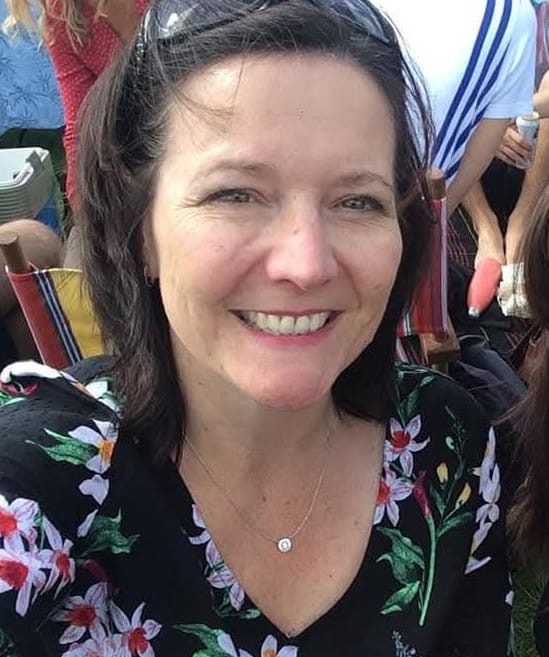
Name: Shan
Neuroendocrine Cancer Site: Pancreas
Neuroendocrine Cancer Hospital: The Christie
Diagnosed: March 2025
–
Shan’s Story
When life feels out of control
On a cold Monday morning, I received a call no one wants: “There’s something we’d like to clarify on your scan…”
In January 2025, I went for an ultrasound scan, arranged by my GP after months of tummy troubles. I was given the name of the doctor who would be waiting for me at my local hospital and went straight through to the Urgent Care Unit. I was weighed immediately (that’s for the chemo, I thought to myself … me, dramatic? Never!)
What followed was without doubt the most traumatic day of my life – Monday, 27th January 2025. I still get flashbacks.
I received nothing but kindness and excellent care, but I was really frightened.
Eventually, I was told I had an ‘unfriendly lump on my pancreas pressing on other vessels.’ Another doctor present referred to it as a ‘mass’ – I knew straight away it was cancer.
After a CT scan and blood tests, I was told it would be discussed at the next MDT meeting, and I would hear more in 2 weeks. I asked how large the tumour was, naively assuming it was a centimetre or so … nope …11cm by 6cm. I went from frightened to terrified.
Then wallop! Two weeks to live with the minimal details I had.
I sent a text to my boss that I wouldn’t be in work that week. Little did I know it was to be 4 months.
As I walked out onto the dark hospital car park with my husband, I was shaking uncontrollably. I wasn’t shaking due to the cold; I was in shock.
We decided not to tell anyone until we knew exactly what we were dealing with. A decision I have never regretted.
Then followed the strangest 2 weeks of my life. I tried to stay optimistic, but I had convinced myself I had pancreatic cancer and at best 6-9 months to live. There’s nothing like believing you are staring death in the face to alter your view of the world. I had gone from a happy-go-lucky mum, step mum, daughter, twin sister, colleague and friend to a terrified wreck in the space of one day.
I felt the full loss of control as healthcare professionals were sitting around a table discussing me and deciding what was going to happen – how dare they? Loss of control was very hard for me to deal with at first.
Inside my mind
My experience may sound dramatic, but writing this down has helped me process my feelings. I had had the rug, not just pulled out from under me, but ripped out.
I’m not afraid of dying; I’ve had a truly wonderful life. At 56, I was lucky to still have my parents and for them to be fit and healthy (and I’m being frank here…) – in that moment, I actually wished they weren’t still alive so they wouldn’t have to worry. I wished this had happened in 10 years time, not now (apologies for wishing my parents dead – my mind went to some very dark places and to this day I am ashamed of some of them.) And how would I tell my grown-up son and stepdaughter without causing them distress? The rehearsed conversations in my head kept me awake for weeks.
I stayed busy, though. I got up each day and tried to dress smartly, wear some make-up and do nice things – a day trip to the seaside (exotic Cleveleys) was one of them. I stood with the sea air on my face and looked out across the water, appreciating it like never before.
I embraced podcasts, music and jigsaws. None of which I had done before – the hours would whizz by. But I haven’t touched a jigsaw since that time! I love reading simply couldn’t concentrate.
Control comes back
Eventually, the 2 weeks passed. By this time, I had given up driving altogether; I just wasn’t mentally capable, and in the interests of other road users, my husband drove. Giving up driving temporarily was a huge loss for me.
I had told my husband that if there was a nurse with cards in her hand, it was definitely cancer. I walked in and there across the room from the doctor (naturally he looked about 12), was a serious-looking nurse with a business card in her hand. I knew she was a cancer CNS immediately.
I checked my husband had his notebook and pen as instructed by me (he has the patience of a saint), as I realised early on that I needed someone else with me at every appointment to listen properly to what was being said. I just heard “you are going to die” – rather than facts.
In that appointment, my whole world changed, and it was the beginning of the good news. It was not pancreatic cancer. I had either a neuroendocrine tumour or a lymphoma. Both were treatable.
Self-advocacy
This is where I went into overdrive – right, I’ve got this. Research, research, research.
The best-informed patients have the best outcomes. Doctors like it when patients are interested, well-informed and with an absolute wish to put their all into getting better, right? (probably most doctors dread patients like me rocking up with a notebook in hand.)
This was where I could regain some semblance of control (I was in my element.)
I researched lymphoma and neuroendocrine cancer like there was no tomorrow (no pun intended there) while I waited for a biopsy of the tumour to diagnose which type of cancer it was – both have very different treatment options.
My mind went into overdrive. But I’m nothing if not honest. Out of the two cancers I could get, I decided the ‘best’ one would be neuroendocrine since lymphoma would need chemo, whereas often neuroendocrine tumours did not.
Choosing the best out of two cancers seems a bizarre concept. But I didn’t have pancreatic cancer, so it felt like a positive step to be choosing one of these two instead. I absolutely understand that some patients object to the concept of a ‘good cancer’, but for me, it was simply how I thought about it. I do not intend to offend anyone.
Eventually, news
It was neuroendocrine cancer, and my care was moved to The Christie NET Centre of Excellence in Manchester. I had won the lottery. A few weeks before I thought I had nine months to live.
Being under the care of The Christie is like being in a club that no one wants to be in, but if you’ve got to be in a club, it’s the best one.
There are some very clever doctors out there. Whilst I’d been busy researching, having conversations and preparing myself for what lay ahead, they had been busy in the labs. They had been growing, dyeing and testing my tumour samples. They knew what stage and grade my cancer was and had worked out the drugs it would be receptive to. I am still in awe of the expertise of these oncologists.
So, notebook in hand, we ventured into the NET Clinic one Friday morning.
I had Grade 1, Stage 4 neuroendocrine cancer with the primary tumour being in the pancreas with involvement of lymph nodes close by (hence the Stage 4 category). It was inoperable as it was wrapped around the portal vein (and other vessels I didn’t understand).
My treatment would be monthly injections of a drug which would latch onto the receptors on the tumours to stop or reduce growth. I was also prescribed Creon tablets to take with every meal to help my pancreas work more effectively. I was incurable, but like many others who had gone before me, I would be living quite well with Stage 4 Cancer.
No operation, no high grade – this was more good news in my book.
For me, the news kept getting better. “Incurable but treatable” – this was my new mantra.
One of the doctors was quite impressed by my knowledge and my research – I didn’t dare tell her that less than a month ago, I didn’t know where my pancreas was. Some things are best left unsaid.
Life was good. I started planning my return to work. However, I was a bit premature as my CNS said I needed to see how I responded to treatment first. Sensible advice, I had just got carried away, still on a high from cheating death (me? dramatic? never!) Life began to take on some semblance of normality at long last. Although it will never be the same for me… more on that later.
The Christie arranged a Gallium-PET scan to look over my whole body to check for any other areas of disease. The radioactive isotope in the Gallium-PET attaches to any tumours hiding – it’s the gold standard in NET scans, I was a lucky lady. Naturally, my pancreas would light up, but other disease could be found as well. I subscribe to the positivity vibe 95% of the time but just try to have 5% of my brain prepared just in case the conversation at The Christie doesn’t always go my way. This is another good call I have made, and still use this approach today.
The approach served me well on 18th July when I received the results of my Gallium-PET scan. I had an inkling that as the cancer was in my lymph nodes, it would likely be elsewhere in my body – not unusual as this cancer is very often diagnosed at a late stage. Sure enough, I had 5 tumours on my liver, the largest being 1cm. I also had affected lymph nodes down behind my stomach as well as spread to my skeleton: spine, pelvis, ribs.
The good news was that they weren’t too concerned about the bone metastases, as they were tiny, but wanted to monitor my liver. More good news was that there had been no new growth in my pancreas, so the drugs were working.
I returned to work – only 2 or 3 days a week, but life was good. I continued my injections every 4 weeks. In Jan 2026, I got the results of my latest MRI scan, and there was NO NEW GROWTH AT ALL.
Chapters
Life has changed for me in so many ways. Life before cancer and life after cancer, and the 2 lives look very different. I will never ring the end of treatment bell. I will never get the all clear, but I will live a wonderful life. If I ever feel down (I do have the odd down day), I just have to remind myself that many other patients at The Christie do not get to go home like I do. Many cancer patients would happily swap places with me and would want my prognosis instead of theirs.
I cherish my husband, family and friends. Material possessions never interested me, but even less so now. I use my days off work to read, exercise, rest, and spend time with the people I love. I’m not the same person; I suffer a lot with chronic fatigue, which means I need to rest and need to pace myself. I think of myself as an AA battery; I only have so much juice in the tank, so I must plan ahead a bit to decide what to spend my energy on, as I can’t do it all. I have joint pain now. I just lead the healthiest life I can (do still like a few vinos and I’m not going to beat myself up about it – I stay well below my weekly 14 units.) My anxiety levels are coming down, and I am inflicting myself on other road users once again.
I truly feel having cancer has made me a better person and has been a positive experience (I know others will disagree, but it’s just how I feel).
I have made deeper connections with others I knew before I was diagnosed, who were having cancer treatment. We have an unspoken bond – a secret code, a more meaningful connection.
I’m not a fan of cancer language such as ‘battle’, ‘warrior’, ‘journey’, ‘brave.’ I’m not brave, I don’t have to face death – that’s brave.
Will this cancer eventually get me? Maybe in years to come, but I’ve got every chance of being knocked down by a bus or dying of something else before that.
Just twelve months on from a very dark place, I feel like I’m back.
Shan
Written March 2026