
|
Getting your Trinity Audio player ready...
|
Introduction
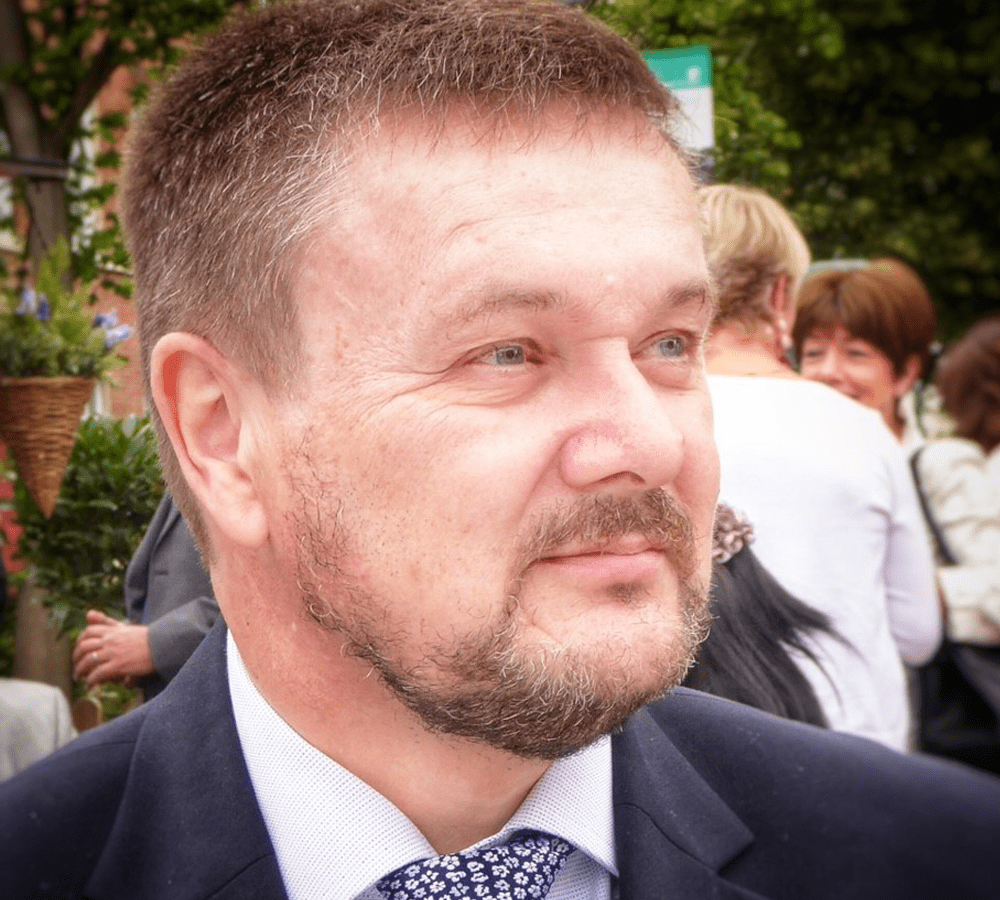
For me, Watch & Wait started in 2003.
Watch & Wait is a common support protocol for Neuroendocrine Cancer patients across all types of Neuroendocrine primaries. My primary was not identified until 7 years later when it was classified as a well differentiated Neuroendocrine Tumour in the head of the pancreas – Stage pT3N1(6/11 lymph nodes).
My Watch & Wait protocol incorporates regular:
- MRI Scan
- CT Scan
- Blood Tests
- Clinic Appointment
- Multi-Disciplinary Team (MDT) review
- Occasional PET CT Scan
More details on the technicalities of the Scans and Blood Tests and the role of the MDT can be found at:
Types of Tests & Getting Your Results – Neuroendocrine Cancer UK
Getting the Right Care – Neuroendocrine Cancer UK
Since 2003 my treatment can be split into a number of distinct periods which can be differentiated by unexpected tumour activity.
Initial Diagnosis
February 2003, an annual work-organised health check seemed consistent with previous years. Everything was within expected boundaries for someone of my age and I was given the usual recommendations to reduce alcohol intake, eat healthily, eat earlier in the evening, increase exercise and get more sleep. I couldn’t disagree, but I was travelling in and out of Europe every week, with multiple like-minded colleagues, which made this repeated advice hard to implement.
However, this time one blood test identified an anomaly.
My GP rather than putting it down to an unexplained one off, referred me to a Gastroenterologist. Between May and August, I had my introduction to the scans that were to become a regular feature in the rest of my life. MRI, CT, PET Scans, alongside endoscopies, angiographs, ultrasounds, and a whole host of tests until a gallstone was found.
The gallstone did not explain the initial anomaly so the decision was taken to remove the gall bladder with a Whipple style operation to enable the surgeon to take a closer look at the pancreas.
The surgeon confirmed scaring on the pancreas and the potential existence of tumours. The “good” news was that the tumours were not Pancreatic Cancer and were likely to be very slow growing.
The Early Years
No further treatment was required but I would need regular scans and blood tests – Watch & Wait began.

CT Scans typically don’t take too long although there can be challenges, especially if you need to have a full bladder or spend an hour drinking the “tasty” contrast.
MRI Scans I found more of a challenge:
- require a canula to feed in a contrast mid scan
- the scanner is very loud
- may be claustrophobic as you lie for long periods in a tube
- sometimes require controlled breathing
- include a warm sensation in the groin area when the contrast is administered
To lessen the impact of these challenges:
- take along a play list of loud music
- practice “breath out and hold” whilst lying down, multiple times, over a 10-minute period
- stay hydrated – the canula doesn’t hurt as much.
- for me the claustrophobia wore off after the 3rd or 4th scan and now I’m so relaxed that the challenge is to stay awake.
- I haven’t found a way to lessen the warm sensation you feel when they feed in the contrast. It still remains disconcerting and by habit I still check to make sure I haven’t wet myself….
Gallium-68 Dotatate PET/CT scans are scheduled less often as there is more radiation involved. The scan itself isn’t that different from the CT scan but it is a little more disconcerting. I once had one cancelled after the lab was closed following an accident preparing the gallium infusion for the scan.
The scans I had previously experienced – but the Watch & Wait clinics were new to me, and initially I found this day harder than going for the scans.
Attending clinic could be depressing and made me feel like a fraud:
- everyone else in the room looked in pain, of grey pallor, or looked ill. I’m sure I wasn’t the only one in the room thinking “What the hell am I / is he doing here?
- the clinic shared a waiting room and phlebotomist with patients undergoing treatment. There is more than one stream of patients waiting for a blood test. I used to get annoyed with “imagined” queue jumping. You don’t feel good when after 3 or 4 visits you realise you were begrudging a blood test to someone who needed it before that days chemo….
- unlike most Neuroendocrine patients I continued to be generally symptom free.
- unlike most Pancreatic patients I had no Pancreatitis or Blood Sugar issues.
- when the scans are clear, the blood tests are normal, and life seems fine what is there to talk about with the consultant?
Watch & Wait has an impact on work. Typically, the CT and MRI Scans are scheduled on separate days, with the blood test and clinic appointment scheduled a couple of weeks later. That means that if you are on a quarterly review cycle there could be an impact of around 12 working days a year. I came to an arrangement that these days would be covered by flexible working.
The following link provides information I would have found useful whilst working.
Work and Neuroendocrine Cancer – Neuroendocrine Cancer UK
As time passes, and all remains stable changes are likely to be made to the Watch & Wait routine:
- Scans and tests will become less frequent, 3 months becomes 6, 6 months becomes a year…
- Consultations will start to be allocated to the junior doctors or a Nurse Specialist
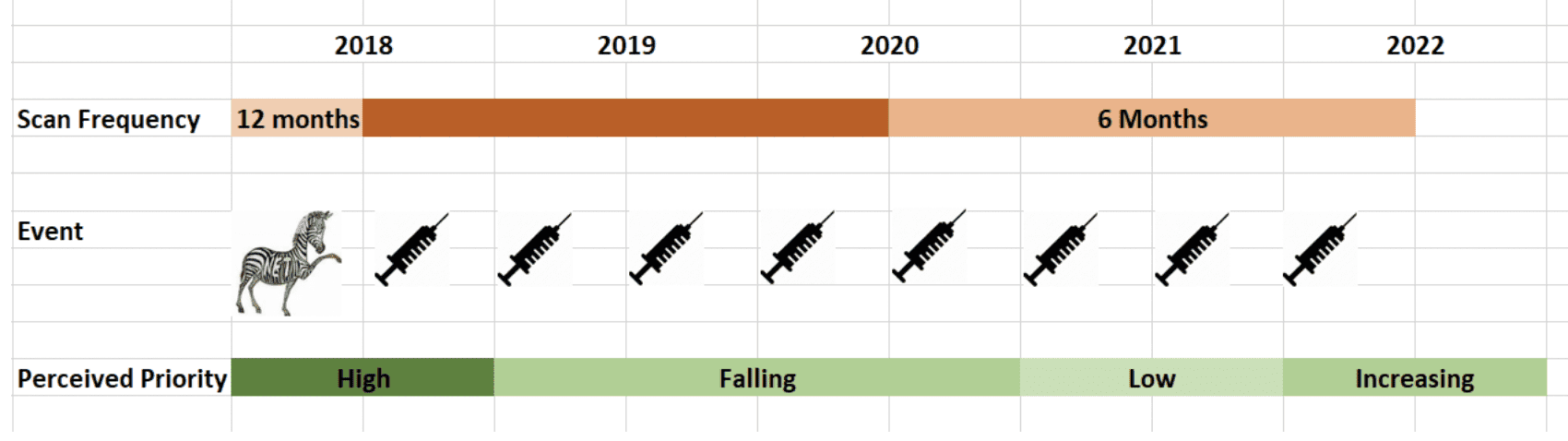
- You need to accept that your priority level is reducing – newer patients or patients with more extreme symptoms need to be prioritised by the MDT. We are effectively on the backburner waiting for a significant event.
By 2009, I had long fallen into a routine where following clinic I would forget about the tumours until the next scan and blood test. I was generally feeling OK and I was having my blood tests and scans reviewed by the MDT, a team of experienced specialists. I would have 2 or 3 weeks of concern around the Watch & Wait cycle before moving on and waiting for the next cycle in a year’s time (there was even talk about extending the cycle to every 2 years).
I was therefore totally unprepared when I received a call, having left clinic, to say I was to be referred to a surgeon.
Seven years after the initial intense investigation of MRI, CT, PET Scans, blood tests, endoscopies, angiographs and ultrasounds, the intensity was repeated.
The Gallium-68 Dotatate PET/CT Scan confirmed that the tumours in the pancreas had grown and spread to 6 lymph nodes. An Endoscopic Biopsy confirmed that the tumours were Neuroendocrine (G3T3N1). A decision was taken to remove the tumours, however the night before the operation this was changed to be a Total Pancreatectomy.

Here we go again
Following the total pancreatectomy I was advised that Watch & Wait would be resumed. At the time this was described as a treatment follow up protocol not because progression was expected.

Had I learnt any lessons? Probably not, I remained unaware that help existed for Pancreatic or Neuroendocrine Cancer. As a veteran of Watch & Wait it was all too easy to fall back into the old “let it be” routine.
Attending clinic wasn’t as traumatic, I had now lost two organs and therefore felt I had earned my place at clinic. Also periodically having to test my blood and eat Jelly Babies gave visibility to the fact I may not be as well as I thought I looked.
Whilst my health remained good and the scans and blood tests remained stable, the regular consultations seemed more productive as I had the opportunity to discuss managing my insulin and Creon dosage.
In 2013 having had time to recover from the 2010 operation the surgeon and MDT decided to schedule a PET CT Scan alongside the regular CT and MRI Scans. Following a review of the scans the decision was taken to remove some Lymph Nodes that remained after the 2010 operation.
The MDT decision had shown the benefit and purpose of Watch & Wait.
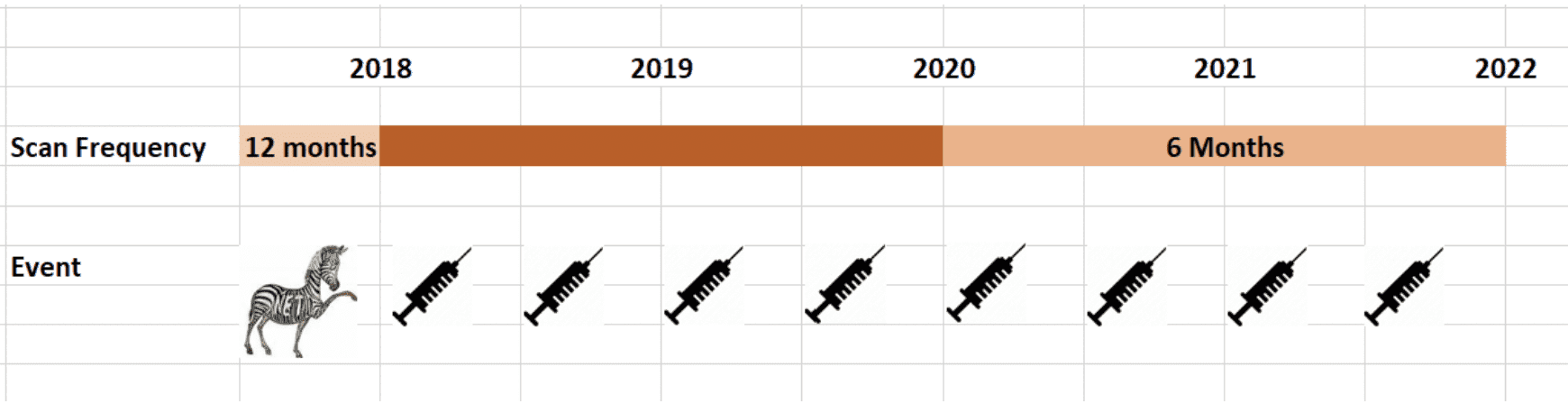
Watch & Wait again resumed after the operation, following the familiar pattern with the frequency again moved out to 12 months.
Family, work, and diabetes management therefore continued to take priority in my thoughts and time.

2018 saw the next step change. I attended clinic expecting a quick discussion and a move to a 2-yearly Watch & Wait Cycle, unfortunately the latest scans now showed a large number of metastases in the liver.
A new start
Two months prior to the new diagnosis I had taken redundancy and was in the process of moving out of London. Once the diagnosis was confirmed I was referred to a Neuroendocrine Cancer Centre of Excellence to arrange on going treatment.
Centres of Excellence – Neuroendocrine Cancer UK
At the first consultation it was made clear that Neuroendocrine Tumours were a form of CANCER and that metastases in the liver would have been a possibility once the pancreatic primary had spread to the lymph nodes.
Despite the regular Watch & Wait protocol, by the time the tumours in the liver were identified the size and quantity (along with the existence of lymph nodes that could not previously be removed) meant that my condition would be classified as inoperable.
This was a bigger shock than 2009 when there was the sudden change in the pancreas. At least then I had been aware that someday treatment would be required for the pancreas.
It was again stressed that Neuroendocrine Cancer was slow growing and therefore there was no end-of-life prognosis. To further slowdown the tumour growth, for the first time I was to have treatment (Lanreotide Injections every 28 days) alongside the continuation of Watch & Wait.
That same day there was a Neuroendocrine Cancer UK workshop at the hospital – a whole new world opened up.
The results of the regular scans and blood tests are now categorised as showing “No Discernible Change” (NDC) and, clinics have generally been productive. I have more to discuss:
- the impact of the Lanreotide (and / or my liver function) continue to present challenges to my blood glucose management.
- I had found Neuroendocrine Cancer UK and through the Natters have realised that what I had previously considered to be day-to-day / ageing ailments may be worthy of discussion in Clinic.
- I was at last “interested” in, and had the time to learn about, my Neuroendocrine Cancer and how to approach regular appointments with the Consultant or his team.
Useful Questions – Neuroendocrine Cancer UK
The last two years I have found that COVID has had minimal impact on my Watch & Wait protocol.
- scans and blood tests have continued without interruption or delay. There have been some strange appointment times, but generally going through the scan process has become more efficient.
- three consultations have been held by phone not face to face and this works as well as a face-to-face consultation during periods of stability.
Having found Neuroendocrine Cancer UK, and stopped working, I have had the opportunity to review how I have approached Watch & Wait and going forward I have asked that we review current and previous scans in clinic. There may be no visible change and I don’t expect to see anything that the specialists in the MDT don’t see, but after 2 surprises I now need to see and understand any progression as early as possible.
Final Thoughts
In general, I consider that my treatment protocol, of which Watch & Wait has been central, has resulted in a good life.
However, having gone through the process of looking back over 18 years of Watch & Wait, there are inevitably questions and thoughts that others may wish to consider if faced with a similar scenario:
- Is your Neuroendocrine Cancer slow growing? Twice I have gone through long periods of Watch & Wait stability prior to suddenly needing intervention, with no warning that my disease was progressing.
- Watch and Wait protocol reduces the frequency of scans over time. If the cancer is slow growing doesn’t the risk increase over time? Risk is therefore increasing as surveillance decreases….
- There is a known Neuroendocrine Cancer progression pathway, Primary > Lymph Node involvement > Metastasis. I would have liked to have known this in 2010 when Neuroendocrine Tumours were confirmed.
- Should I have been more proactive at clinic over the years?
- Should I have insisted on seeing the scans at each consultation?
- What questions should I have asked?
- Should I have raised what I considered to be trivial day-to-day ailments?
- Should I have pushed for more radical treatment options?
- To stop or slow the growth of the primary
- To stop or slow the spread of the metastasis
- Don’t be concerned if you do not see the Senior Consultant. Since 2019 I have had occasional appointments with a Nurse Specialist. I found that the Nurse Specialist brings a different dimension to the discussion and it helps to have more considered Quality of Life style discussions. They are an integral part of the MDT and will feed any concerns to the relevant specialist.
- I primarily managed work availability with my line manager.
- However, were agreements to work from home when I was not feeling 100% in our best interest?
- Should the time off required by Watch & Wait have been recorded as such rather than been hidden by flexible working?
- Would it have been better to have a regular review meeting with Human Resources to remove the pressure of budgets, targets, utilisation percentages…
- Should using Long Term Illness / Critical Illness benefits have been considered?
- The Internet and the way Cancer Organisations now use the internet should be embraced. When I started Watch & Wait in 2003 there was no internet but there was a small MacMillan Cancer Support Booth in the clinic. I now wish I had approached them, but I was told I didn’t have cancer….
- There are many Clinical Trials underway or planned. When there is nothing new to discuss at clinic ask if there are any new Clinical Trials for which you would be suitable. I recently asked about a potential new trial and the explanation of why I would not be suitable included more and clearer information than had been shared in earlier discussions.
Neuroendocrine Cancer Clinical Trials – Neuroendocrine Cancer UK