|
Getting your Trinity Audio player ready...
|
Neuroendocrine cancer of the thymus is very rare and can affect people in different ways. Some people have no symptoms initially, while others may experience symptoms such as a cough, chest pain or shortness of breath. Occasionally, the cancer may produce excess hormones, causing additional symptoms. Tests and scans can help your healthcare team understand the type of cancer and plan the most appropriate treatment and follow-up care.
This page explains more about neuroendocrine cancer of the thymus, including possible causes and risk factors, symptoms, how it is diagnosed and monitored, and the treatments you may be offered. It also includes information about living with the condition and taking an active part in your care.
Use the links in the box to find the information that is most relevant to you.
What is neuroendocrine cancer?
Neuroendocrine cancer is a type of cancer that begins in the neuroendocrine cells, which are found throughout the body. These cells have the ability to release hormones that can regulate many body functions. When they become cancerous, their growth rate and normal function is disrupted.
This page looks at neuroendocrine cancer of the thymus.
Neuroendocrine cancer of the thymus
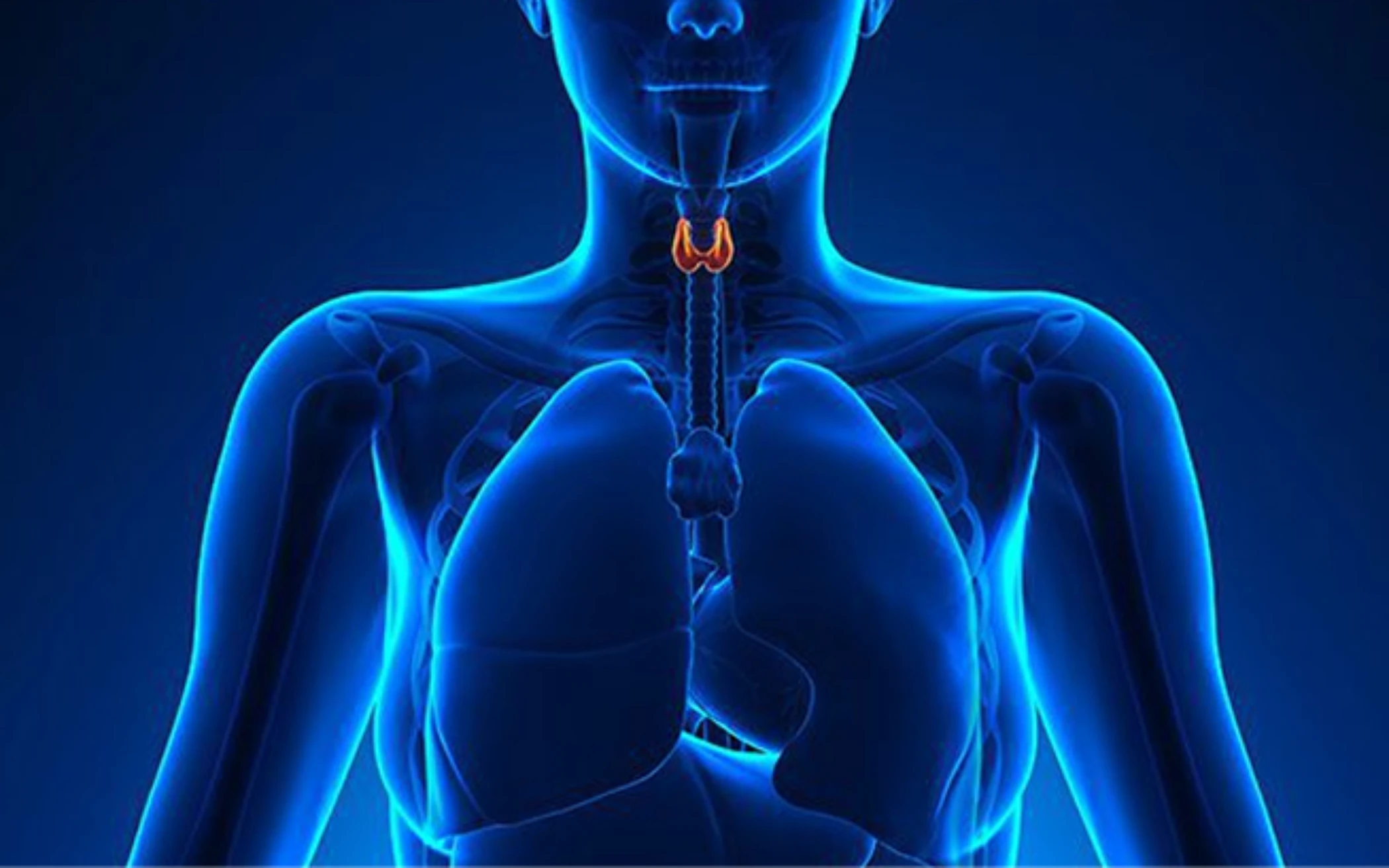
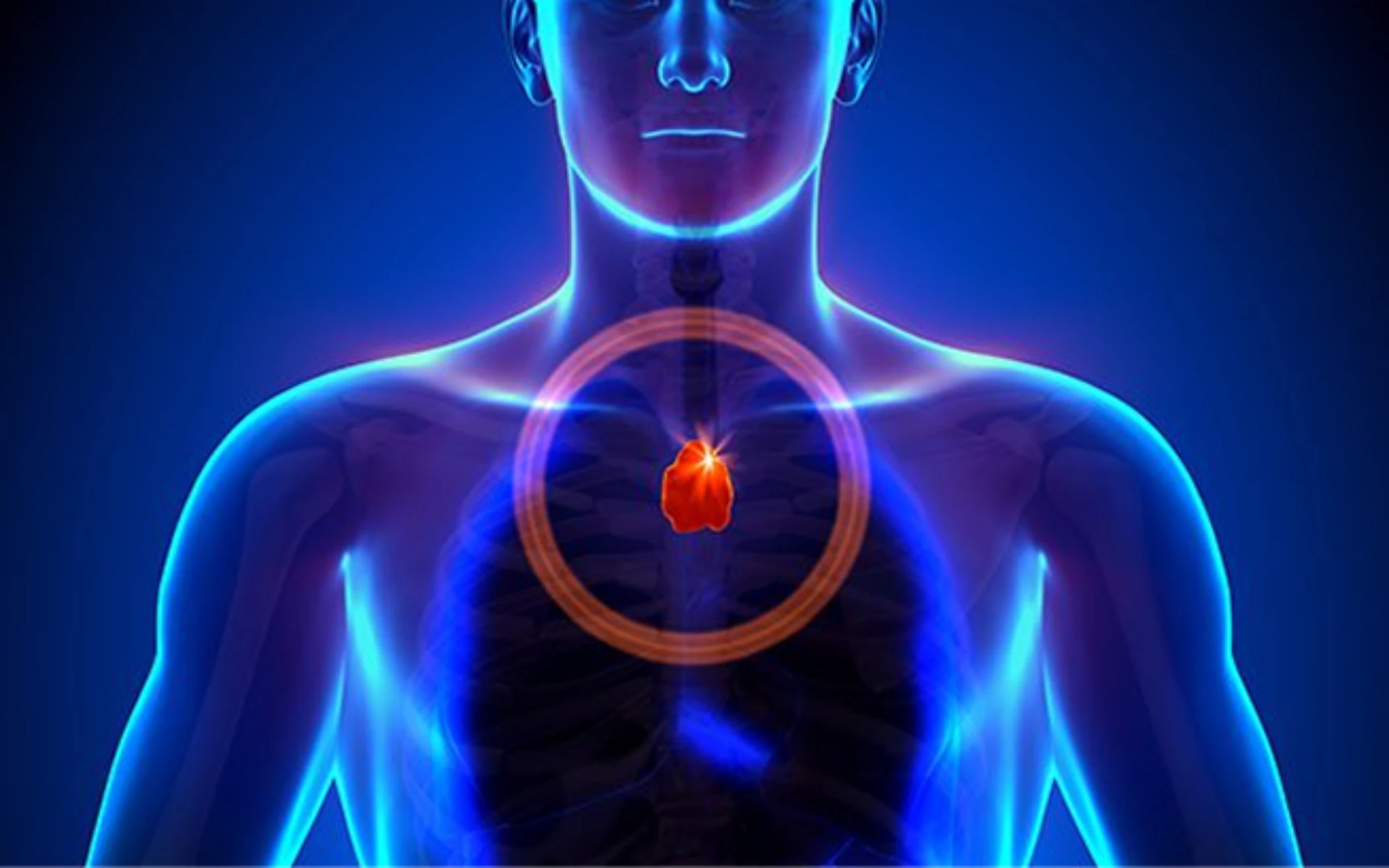
The thymus is a little-known organ in the body, but does some very important things. It is part of the lymphatic system, along with the tonsils, adenoids and spleen, and it’s also part of the endocrine system and contains neuroendocrine cells.
It sits just below the breast bone and whilst relatively large in infants through to puberty (where it can be up to 40 grammes), in adulthood it starts to slowly shrink and in elderly adults has shrunk to weigh less than 5 grammes.
The thymus produces certain cells, maturing into T-cells (thymus-derived cells), which play a role in helping to destroy infected or cancerous cells. T-cells created by the thymus also help other organs in the immune system grow properly. As the thymus shrinks, other parts of the immune system take over its role.
Neuroendocrine cancer of the thymus is very rare – less than 5% of all chest-based cancers; less than 0.5% of all neuroendocrine cancers.
There are four subtypes:
- Typical carcinoid (TC) low-grade neuroendocrine tumour (NET)
- Atypical carcinoid (AC) mid-grade neuroendocrine tumour (NET)
- Small cell neuroendocrine carcinoma (NEC)
- Large cell neuroendocrine carcinoma (NEC)
Although neuroendocrine cancers of the thymus can show slow to moderate growth (approximately 20%), the majority are NEC and therefore benefit from early diagnosis and intervention to either remove or try to control rapid growth rate.
Up to 20% may present with signs of Cushing’s syndrome, where your body makes too much cortisol hormone. Cortisol helps to regulate blood pressure, the immune system, balance the effect of insulin to keep blood sugar normal and helps the body to respond to stress.
It has been reported that 1 in 5 people with neuroendocrine cancer of the thymus have an underlying, rare genetic condition (specifically, either acromegaly or multiple endocrine neoplasia 1 (MEN1).
Causes and risk factors
We do not know exactly what causes neuroendocrine cancer of the thymus, however it is important to follow advice in leading a healthy lifestyle: eat healthily, exercise and avoid smoking and too much alcohol.
Most neuroendocrine cancers do not run in families; however, a number of rare conditions may increase the risk of them developing. Therefore, if other members of the family have been diagnosed with cancer, or have a known genetic condition, it is important that you tell your specialist team about not only your personal medical history, but also any family medical illnesses or conditions.
We recommend speaking to your GP, and specialist team, if you have a personal or family history of either acromegaly and/or MEN1. They may recommend referral for an NHS genetic test, if you have not already been tested, which will tell you if you have inherited one of these conditions.
Neuroendocrine cancer of the thymus is incredibly rare – and may not be associated with either of the above mentioned genetic conditions or family history.
Acromegaly is the name given to a condition caused by the body producing too much growth hormone (GH). The increased amount of GH also leads to increased formation of another hormone, insulin-like growth factor (IGF-1). These two hormones have a number of effects on the body including an increase in size of tissue or organs.
Further information about acromegaly can be found at The Pituitary Foundation.
MEN1 is a rare genetic condition (can be passed down in families) that may cause the development of growths (tumours), primarily within the pituitary, parathyroid and pancreatic glands, that may become neuroendocrine cancer.
Further information about MEN1 can be found at the Association for Multiple Endocrine Neoplasia Disorders.
Symptoms
As with other neuroendocrine cancers, neuroendocrine cancer of the thymus may not be associated with specific symptoms. Symptoms if they do occur may be more related to size and position.
Symptoms, if present, may therefore include:
- Shortness of breath
- A cough (which may bring up bloody sputum)
- Chest pain
- Hoarseness – voice may become breathy, raspy, strained or there may be changes in volume (loudness) or pitch (how high or low the voice is)
- Trouble swallowing
- Loss of appetite and weight loss
Neuroendocrine cancer of the thymus is rarely associated with a neuroendocrine associated syndrome, such as carcinoid syndrome.
Although rare, other syndromes including Cushing’s syndrome, raised calcium levels (hypercalcaemia) and superior vena cava obstruction (SVCO) have been reported and require urgent medical review.
SVCO may produce the following symptoms:
- Headaches
- Swelling and reddening of head, face or neck
- A bluish colour to the skin
- Dizziness
Tests
Tests that may be used for the diagnosis and/or monitoring of neuroendocrine cancer of the thymus:
Blood and urine tests
- Full blood count
- Liver and kidney function
- Vitamin B12/iron/ferritin/folate
- Chromogranin A
- Gut hormone profile
- Calcium
- Glucose
- CEA
- Urinary or serum 5HIAA (serotonin)
- NT-ProBNP – to check for evidence of carcinoid heart disease
Clinical assessment for presence of carcinoid syndrome and/or other paraneoplastic syndromes – Cushing’s, SIADH, hypoglycaemia and hypercalcaemia.
If MEN1 is suspected or known: calcium, PTH and consider genetic studies.
If acromegaly is suspected or known: IGF-1, GH and growth hormone-releasing hormone (GHRH).
Scans and other tests
- Chest X-ray
- Contrast or high-resolution CT chest
- CT abdomen and pelvis – to exclude secondary disease or confirm thymus as the primary site
- Octreotide (SPECT) or Gallium-Dotatate PET/CT
- FDG-PET if NEC or rapidly progressing disease is suspected or seen
Watch our video: Your Guide to Scans
Pathology (what can be seen through special tests under a microscope)
- Differentiation and cellular morphology
- Synaptophysin
- Chromogranin
- NSE
- Ki67
- CEA
- Cytokeratins
- TTF1
Treatment options
The key aim of treatment should be to help you have the best quality of life, by ensuring access to appropriate treatment, management of symptoms and addressing what’s most important to you.
Treatment options will depend on the type, position and size of your cancer – and whether (and to where) it has spread.
It will also depend on whether you have any other health concerns and/or illnesses and your general health and fitness.
One or more of the approaches below may be suggested:
- Surgery
- Control of your disease, by slowing or stopping further growth and/or spread
- Palliation, or easing, of any symptoms you may be experiencing.
Surveillance
Monitoring through clinic review, bloods and scans can be used to assess how well treatment is working or in periods between treatments (which may be months or years).
As not everyone will need to be on treatment, surveillance can be used to check your cancer and general health for any signs of change that may mean that a treatment might need to be considered. All treatments have possible side effects, therefore it is important to know when treatment may be helpful for you or not.
Surgery
To remove, partially remove or bypass neuroendocrine cancer and/or secondary sites of disease (metastases).
Small neuroendocrine cancers of the thymus may be removed using video-assisted thoracic surgery (VATS). Larger tumours or those that may have spread to surrounding tissues and structures will require open surgery.
In open surgery, the cut is made either through the sternum (breastbone) (this is called a sternotomy) or through the chest wall (this is called a thoracotomy).
Removal of the thymic gland is called a thymectomy.
Chemotherapy and/or radiotherapy
May be given before surgery if it is believed that this may help to control or reduce the size of the cancer, to improve surgical clearance of disease.
Non-surgical treatments
- Somatostatin analogues (SSAs): may be used to help regulate the secretion of hormones if abnormal levels are being produced. SSAs may also be used to slow down growth rate in low to moderate grade ‘well-differentiated’ neuroendocrine tumours (NETs) of the thymus (typical or atypical carcinoid of the thymus).
- Chemotherapy: can be given orally (in tablets) or intravenously (through a vein) to slow tumour growth or try to reduce tumour size. This may be the first-line therapy in high-grade disease – particularly ‘poorly-differentiated’ NEC or in combination with other treatments. Chemotherapy may also be used to increase tumour cell sensitivity to radiation therapies or given after surgery.
- Targeted molecular therapies: can be given orally (in tablets) or intravenously (through a vein) to slow tumour growth or try to reduce tumour size.
- Peptide receptor radionuclide therapy (PRRT, also called radioligand therapy): uses targeted radiation to treat neuroendocrine cancer cells. Can be used in some patients who have had a ‘positive’ Octeotide or Gallium scan (‘receptor positive’ disease).
- Radiotherapy: is sometimes given after surgery to kill any cancer cells that might remain there. It may also be used for cancer that has spread beyond the primary site, in particular if disease has spread to the bones – here it is used to help control growth of any spread and alleviate bone pain.
- Interventional radiology: through techniques such as embolisation or ablation, this can be used to treat neuroendocrine cancer that develops in the the liver and/or lung(s).
- Clinical trials: clinical research and safe new treatment development is essential to provide best care for those with neuroendocrine cancer – we need to know that treatments not only work but work safely. There are several phases of trial therapy. Each trial has specific criteria in regards to patient suitability – this can be discussed with your clinical team. You do not have take part in a trial – participation is voluntary.
- Symptom control: managing symptoms, including pain, is an important part of total care – and therefore occurs throughout care. Symptom control or ‘palliation’ refers to what is used to alleviate or reduce the impact your cancer, other health issues and /or treatments may be having on you and your physical and mental health. It can include anything from simple medication and/or a combination of some of the treatments mentioned above to counselling and practical support.
Diagnosis and living with neuroendocrine cancer of the thymus
A diagnosis of neuroendocrine cancer can bring questions, uncertainty and a range of emotions. Information and support are available to help you understand your diagnosis and navigate what happens next.
Just diagnosed with neuroendocrine cancer? Access information and support to help you navigate the early days after diagnosis.
Follow up
There are expert agreed guidelines regarding how and when follow up should occur, however, in practice this varies and often with good reason. Follow up should be expert informed and evidence/research based but also tailored to you and what is appropriate for your best care.
There are no consensus guidelines for follow up for neuroendocrine cancer of the thymus, however recommendations have been published:
- Given the nature of disease and potential for recurrence, lifelong surveillance is recommended starting with 3–6 monthly CT scan over the first 3 years following surgery.
- MRI and functional imaging (with either Octreotide (SPECT), Gallium-Dotatate PET/CT or FDG-PET) if recurrence is suspected.
- Alongside diagnostic / pre-treatment biomarkers.
Advanced disease
Follow up should be aligned with guidelines, and also guided by prognosis, expected treatment efficacy and treatment related toxicity. Your health, wellbeing, physical activity, informed choice and preference for ongoing care as well as aim of treatment should be reviewed and discussed to best plan care.
Stories from our community
Hear from people connected to neuroendocrine cancer as they share their experiences, perspectives and insights – from living with the condition to caring for, treating and supporting those affected.
Remember
Remember: every person’s experience with neuroendocrine cancer of the thymus is different – there may be shared similarities, but each journey is unique.
Your healthcare team will support you every step of the way, guiding your treatment, care, and follow-up. We’re here alongside them, offering additional support and information whenever you need it.
The information on this page is based on available clinical expert guidelines and publications. It is for informational purposes only and should not be considered professional medical advice.