|
Getting your Trinity Audio player ready...
|
Name: Chrissie
Neuroendocrine Cancer Primary Site: Pancreas
Neuroendocrine Cancer Centre of Excellence: The Royal Free London
Diagnosis: December 1997
–
Chrissie’s Story
I am in my twenty-eighth year of living with neuroendocrine cancer, and I find it difficult to look back and think: how have I managed to live the life I have?
Some of my friends say it is because I have developed a strong resilience and a courage even I didn’t know I had. But I would question that, and I wonder if it’s more a “bury-my-head-in-the-sand” kind of attitude. I am where I am, and I just get on with it.
Looking back, burying my head in the sand was definitely my strategy at the beginning. I was 24 and recovering from a very traumatic emergency caesarean section to deliver my daughter Amie at 29 weeks.
We had only been home a few weeks with a tiny pre-term baby, life was difficult enough, and still unwell myself, having to look after a baby was exhausting.
My diagnosis came after many scans and multiple blood tests, all to see why my “calcium level” would not go back to normal (the cause of the emergency c-section). Then my primary was found in the tail of my pancreas, and in a blur of many more tests, I was told surgery would be required to remove the tumour.
After surgery, I was told that I was ‘clear’ (though, of course, this can never be guaranteed) and that no further follow-up would be required. Time to ignore what had just happened, and we did not have Dr Google back then. So, I just got on with life in a haze of normality, but on reflection, really in a haze of anger and disbelief about what had happened. My emotions were out of control, and there was no support or help around at that time. So, I just kept going.
–
Recurrence and Reality
Five years later, a recurrence was found in my liver. I did some research of my own and found the Royal Free London and immediately felt I was with a team that understood and knew about this little-known cancer. “Big sigh”. I was scared and feared the outcome, and angry was still my predominant emotion – but again, I just kept going, not addressing what was going on or how ill I really was.
As the years have passed and I have been through multiple surgeries and treatments, I have discovered that I can compartmentalise sections of my life. For example, my ‘scanxiety’ (as they call it these days) to a certain degree. And I can manage the fear much better. It never leaves, of course, but after eight recurrences and as many surgeries along with other aspects of health to deal with, it somehow becomes normal.
–
Finding Strength in Movement and Mindset
NORMAL? Yes. My trips for scans, blood tests and consultations are just part of my normal life now, with the acceptance that this will be the case for the rest of my life. And that is a massive achievement for me.
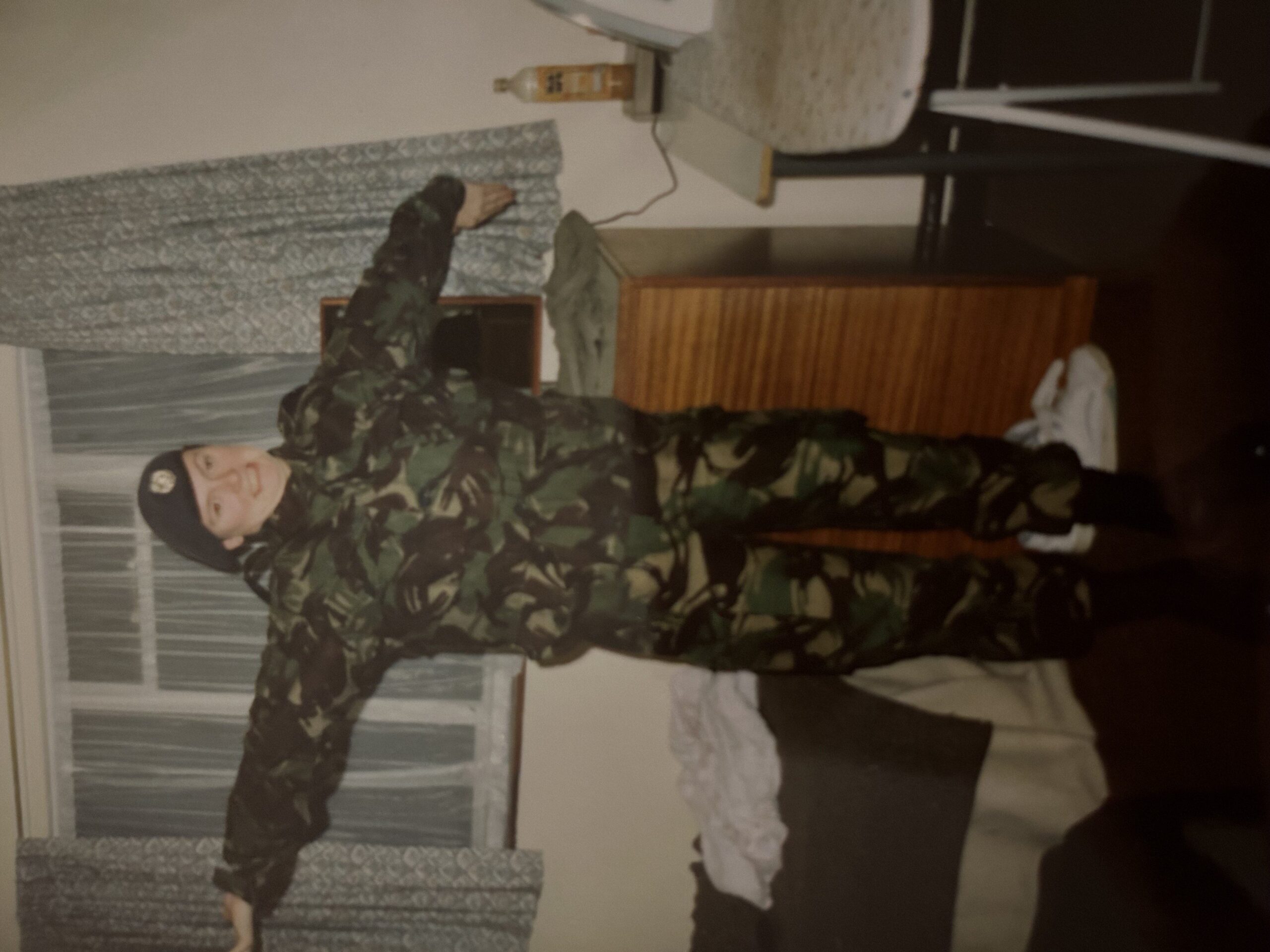
Dr Google is certainly not one of my coping mechanisms. In fact, I don’t want to know all the medical details. But I do want to know what to do, where to be and what will happen (maybe my RAF training as a Supplier/Logistics specialist coming out). I still get scared, but I can control it better now. I used to go to the gym and make my body do what I wanted it to rather than my body dictating what I could do. Eventually, I could see that this was a rather destructive coping method. Now, I still go to the gym, cycle and play pickleball. I know that physical activity is the best treatment for my mental health because it makes me feel happy. But I no longer abuse my body – I do this in a normal way now!
I also had counselling a few years back – not a service I ever thought would be helpful to me as I very much see my health, or lack of, as ‘my problem.’ But to my surprise, this is what I took away from it:
- It’s ok to feel rubbish
- It’s ok to be kind to yourself
- I am strong mentally
- I am a good person
- I am proud of myself
- Life goes on around me anyway, so I chose to get in amongst it.
–
Support in My Own Way
And even though I still basically deal with neuroendocrine cancer on my own, I do have support around me for practical help when I need it. It’s just that I personally prefer not to discuss my health because I very much see it as my problem and my approach is to just “crack on” – and I do access the Neuroendocrine Cancer UK patient support meetings when I need to (I even hosted one in my region for a few years). Select here to view our calendar. The relief of being with people who really understand this cancer can be immense.
We will all find our way to manage living long term with neuroendocrine cancer, but after all these year,s there is no right or wrong way. It’s your way that matters. Find what works for you, and don’t let others tell you it’s not the right way.
Live each day as best you can.
Good luck on your journey, Chrissie.
January 2024