|
Getting your Trinity Audio player ready...
|
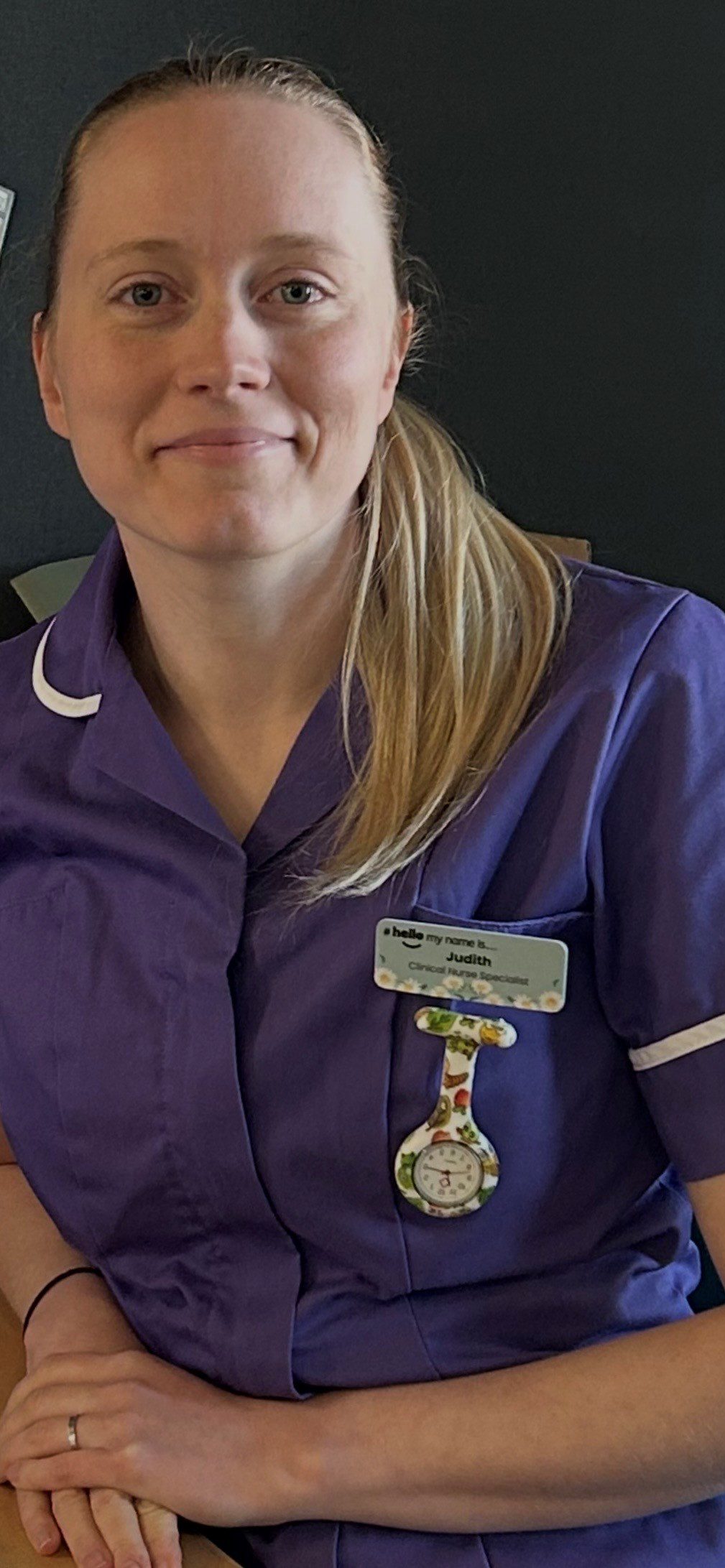
My name is Judith McCulloch, and as the Lead Neuroendocrine Tumour (NET) Clinical Nurse Specialist in Leeds Teaching Hospital NHS Trust, no two days are ever the same—and that’s exactly what makes this role so meaningful.
Our small team consists of two CNSs and a Cancer Care Coordinator, supporting a large group of patients with a wide range of needs. Much of our work is led by patients themselves, responding to concerns as they arise, which means our days are rarely predictable.
We understand that living with neuroendocrine tumours (NETs) and neuroendocrine carcinomas NECs) can feel overwhelming at times. Our role is to provide consistent, compassionate support and to help guide you through your care as smoothly as possible.
Starting the day
Most mornings begin by reviewing messages in our shared inbox and voicemail. These may be from patients or families with questions about symptoms, treatments, or appointments, or from GPs, hospitals, and other specialists involved in your care.
We always aim to respond as quickly as we can, although this may take longer if we are in clinics or need to discuss things with the consultants. We work very closely with our two main NET and NEC consultants, which allows us to get advice and make decisions promptly when needed.
Structure within a busy role
Although much of our work is reactive and patient-led, there is some structure to the week. We support consultant clinics several times a week, run nurse-led telephone clinics, and attend regular multidisciplinary team (MDT) meetings where complex cases are discussed with colleagues from across different specialties.
Everything else fits around these fixed commitments, alongside the unexpected issues that can arise at any point in the day.
Preparing for clinics and results
A significant part of our role happens behind the scenes. Before clinic appointments, we carefully review patient lists to make sure scans and blood tests have been completed and that results are available. If anything is missing or delayed, we work to chase this up or, if necessary, rearrange appointments.
We know that last-minute changes can be frustrating for you, but our priority is to ensure that every clinic appointment is worthwhile and that your consultant has all the information needed to make the best decisions about your care.
Supporting patients in the hospital
Some days involve visiting patients who have been admitted to the hospital, either because of side effects from treatment or because symptoms related to their tumour have worsened.
When patients are unwell on the ward, we provide continuity and a familiar face. We support both patients and their families by answering questions, explaining what is happening, helping with symptom management, and liaising closely with ward staff and consultants. These visits help ensure patients understand their treatment plan and have someone familiar to talk to at what can be an anxious and challenging time.
Coordinating complex treatments
Patients with neuroendocrine tumours and neuroendocrine carcinomas may receive a wide range of treatments, including long-acting injections such as Lanreotide or Octreotide, chemotherapy, PRRT, or targeted therapies. Because treatment pathways vary so much, coordination can be complex.
Our team helps organise treatment appointments, follow up with patients after treatments such as PRRT, and works closely with other hospitals and specialist services involved in your care to make sure nothing is missed.
Homecare injections
Many patients receive their injections at home through a homecare service. Once this is in place, we remain in regular contact with the homecare team to ensure deliveries run smoothly and to resolve any delays or issues quickly. Our aim is to make treatment at home as reliable and stress-free as possible.
Patient support at the heart of everything
Being available to patients is at the core of our role. We are often the first point of contact if you develop new symptoms, feel worried about your treatment, or need help understanding results.
Supporting people throughout their entire journey, not just when they are unwell, is one of the most rewarding aspects of being a NET CNS. We want you to feel listened to, supported, and cared for at every stage.
Peer support in Leeds
One of the highlights of this role has been helping to establish the Leeds Neuroendocrine Cancer Peer Support Group. When I started in this role, there were no face-to-face support groups available for our patients, and I felt it was important that patients had the opportunity to meet others in person, share experiences, and support one another.
The group has been extremely well received, and we plan to continue running sessions long term to provide a welcoming and supportive space for patients.
About Me
I have worked in oncology for over 12 years and have experience across a range of roles, including inpatient oncology, supporting teenagers and young adults with cancer as a CNS, and working in Australia. Most of my career has been spent on an adult inpatient medical oncology ward, caring for people receiving chemotherapy, those admitted with complications or treatment side effects, and patients at the end of life.
Before joining the NET team, I worked as a Ward Manager, a role that strengthened my skills in leadership, teamwork, and compassionate care. I joined the Neuroendocrine Tumour CNS team in April 2025, seeking a new challenge and the opportunity to support patients throughout their whole journey. Although I had no previous NET-specific experience, I have learned a great deal, supported by a very experienced and encouraging consultant team.
There are times when things do not go as smoothly as we would hope, and that can be difficult—especially when circumstances are beyond our control. We genuinely care about our patients, and a simple thank you from a patient or family can mean more than people realise.