|
Getting your Trinity Audio player ready...
|
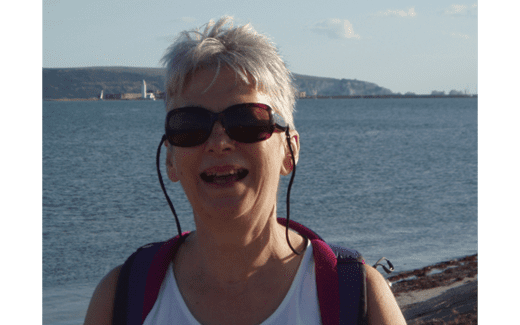
I was 64 when in February 2020 I was diagnosed with a carcinoid tumour in my left lung. I’d had pneumonia for three months the previous year which began in April 2019, and on one visit to A&E was told I had lung cancer – only to be told three months later that I didn’t have cancer and a few months after that I was discharged from the outpatient clinic.
Six weeks after I had been discharged I was called to say they had seen a small spot on my lung and I needed to have a bronchoscopy. I had this three days later and then received the diagnosis that I had a carcinoid tumour on my lung ** which needed to be surgically removed within the next month or so.
The diagnosis came as I was staying in a hospital room 24/7 with my husband, sleeping on a mattress on the floor, while he was in an isolation room having contracted an infection following his stem cell transplant three weeks before and he was still having daily fevers.
Fortunately, my husband had recovered sufficiently when three months later I had a lobectomy. As it was at the beginning of Covid and he was very vulnerable. I self-isolated in our bedroom after I was discharged from hospital and he lived in the rest of the flat and slept in another room for over a month. He was marvellous in how he looked after me and brought delicious meals to the door and we talked to each other at a distance through the open bedroom door. They were certainly very different times and also very special in their own way.
At my first telephone clinic after the surgery I was told there was a small spot on my pancreas which was the first I’d heard of it and the doctor said they would use the watch and wait approach. I was understandably rather alarmed to hear this and after writing to query this approach received a phone call three days later to say there was no spot, the records in fact belonged to another patient.
Through Neuroendocrine Cancer UK’s website I began to learn more about this rare cancer though I found it very confusing having being told by a doctor that it wasn’t really a cancer and that it would never come back.
I joined a Neuroendocrine Cancer UK Natter support group as well as the national Lung Natter support group, both of which I found very helpful, hearing other’s experiences as well as the ones where a consultant would talk to us and invite questions. I also had Counselling which was offered by Neuroendocrine Cancer UK. This supported me enormously when I felt so rocked by the diagnosis and didn’t really know which way to turn.
As a result of these support groups and my Counselling ** I realised that whilst I was under the lung team it would be more helpful to be monitored by the specialist neuroendocrine team. With the encouragement of the ‘Natter’ support groups, I asked to be referred and whilst it took four months to finally be referred after my initial request, I eventually had my first telephone clinic with the neuroendocrine team and I immediately felt reassured.
I would definitely encourage anyone with a neuroendocrine cancer diagnosis to be cared for by their specialist neuroendocrine team. Prior to being referred to the neuroendocrine team I had been very concerned that I had previously had no blood tests since my surgery, despite sharing my concern about symptoms I was having. Since being referred to the neuroendocrine team, nearly two years after my surgery, I have had multiple blood tests and a 24hr urine test plus another scan with contrast that will provide the necessary markers for future monitoring.
I now feel hugely reassured for the first time since I was diagnosed that I am being correctly monitored. I feel I can now begin to fully live my life again as I have complete trust in the neuroendocrine team who are looking after me and I know they will listen to any concerns I may have, at any time.
I have recently begun the 8-week Mindfulness programme that Neuroendocrine Cancer UK is running with Rare Minds. I am already finding it very helpful to manage my pain, anxiety and stress through the mindfulness practices that are all very possible to integrate into each day.
Thank you so much to everyone at NC-UK, without whom I would still be wandering alone in the dark.
Linda