|
Getting your Trinity Audio player ready...
|
A Long Time … Watching and Waiting
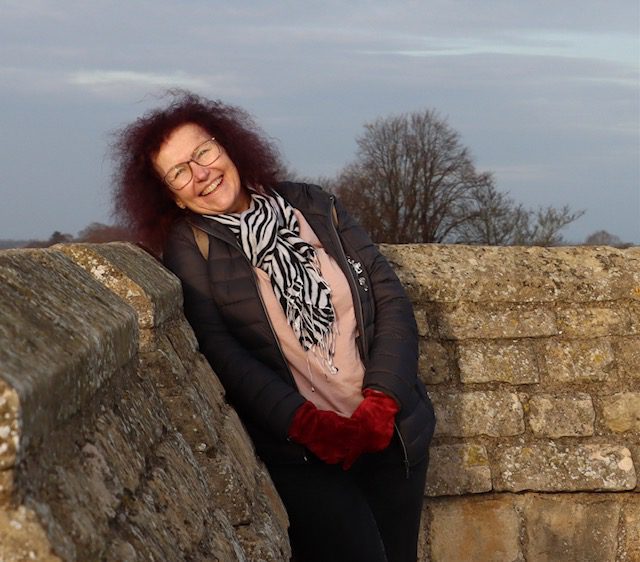
I received my diagnosis of ‘Watch and Wait’ in June 2015, following surgery to try to remove a growth that had been found in my small intestine. The growth unfortunately could not be safely removed, but whilst my surgeons were in there, they decided to have a look around. As a result, they found some lesions on my liver, some lymph nodes and my peritoneal wall, and took a sample from my liver to biopsy. The rest as they say is history. I had come to the end of a long, frustrating and at times very painful journey, finally getting a definitive diagnosis.
Cancer is a big word to deal with. When you are diagnosed your first response is to get the cancer out, but my tumours are in places my team would rather not go unless my body gives them no choice. So that is why I am classed as a ‘Watch and Wait’.
Emotional Toll
My only treatment options are my 3 weekly somatuline gel injections supplemented by various other medications to help keep the tumours stable and any associated side effects under control. So far this has included a course of 4 PRRTs 2018-2019, and daily slow-release morphine for pain management; but as many of you already know it is not just about the physical effects of living with neuroendocrine cancer, it also about the emotional aspect, which for me is like sitting on a time bomb.
I accepted early on in my diagnosis that surgery would not cure me, that my life had changed irrevocably.
In one way it was a relief to know that I wasn’t a hypochondriac or going mad.
But not only do I have cancer, nobody seems to have heard of it, even in the medical community. So, whilst trying to process my own feelings and come to terms with what has happened, I also had to manage many others’ expectations too, including dealing with the stereotypical picture of a cancer patient that so many expect you to become.
Looking Good
We are told we look too good to have cancer, then again not many see us on our bad days… We often don’t know what type of day we are in for until we wake up in the morning, and I personally would love to know why some days my body makes the decisions it does, as 9 times out of 10 my bad days have no point of reference at all.
In many respects, each of us with neuroendocrine cancer are on ‘Watch and Wait”. Even if you have had surgery, you remain under surveillance. Constantly trying to understand the complexities of this thing they call neuroendocrine cancer and trying not to dwell on the fact that things can change at any time.
Staying Strong
In fact, many see us as a strong people, and cancer can definitely make you appear strong – in public anyway. You feel you have to be strong for everybody around you, and it took me a long time to accept the fact that I didn’t have to be, including lots of ranting, raving and crying behind closed doors (still do sometimes), which also makes living with this very isolating at times.
Hiding Pain
As a result, it is all too easy to fall into the trap of not being entirely honest about how you feel both physically and mentally. As an example, the pain I experience on a daily basis is part of who I am, but I tend to underplay it, which I know is not a good thing. This is mainly down to guilt; I don’t want to worry or impose.
It is also hard to really express how you feel, one of the reasons being that this cancer is very hard to explain. Talking about some of the physical aspects can be fairly straight forward, I have cancer, it has metastasised throughout my body, I can’t have surgery to try and get rid of it and there is no cure, but being honest about how the physical makes you feel personally is not so easy.
Seeking Support
Even with a strong support network some days it can still be hard to know which way to turn, especially as I think we tend to bury our emotions. Asking for help is not easy at times either, as that means having to relinquish some control, so it’s no wonder we can get anxious and depressed. I don’t know about you, but I do not like to show my vulnerability, I have to be seen as coping as I am not going to wake up one day and it will have gone away.
I am constantly ‘Watching and Waiting’ for the time bomb to start ticking again and hoping they will be able to stabilise the off switch once more.
By Kath Lewis, Ambassador
2022