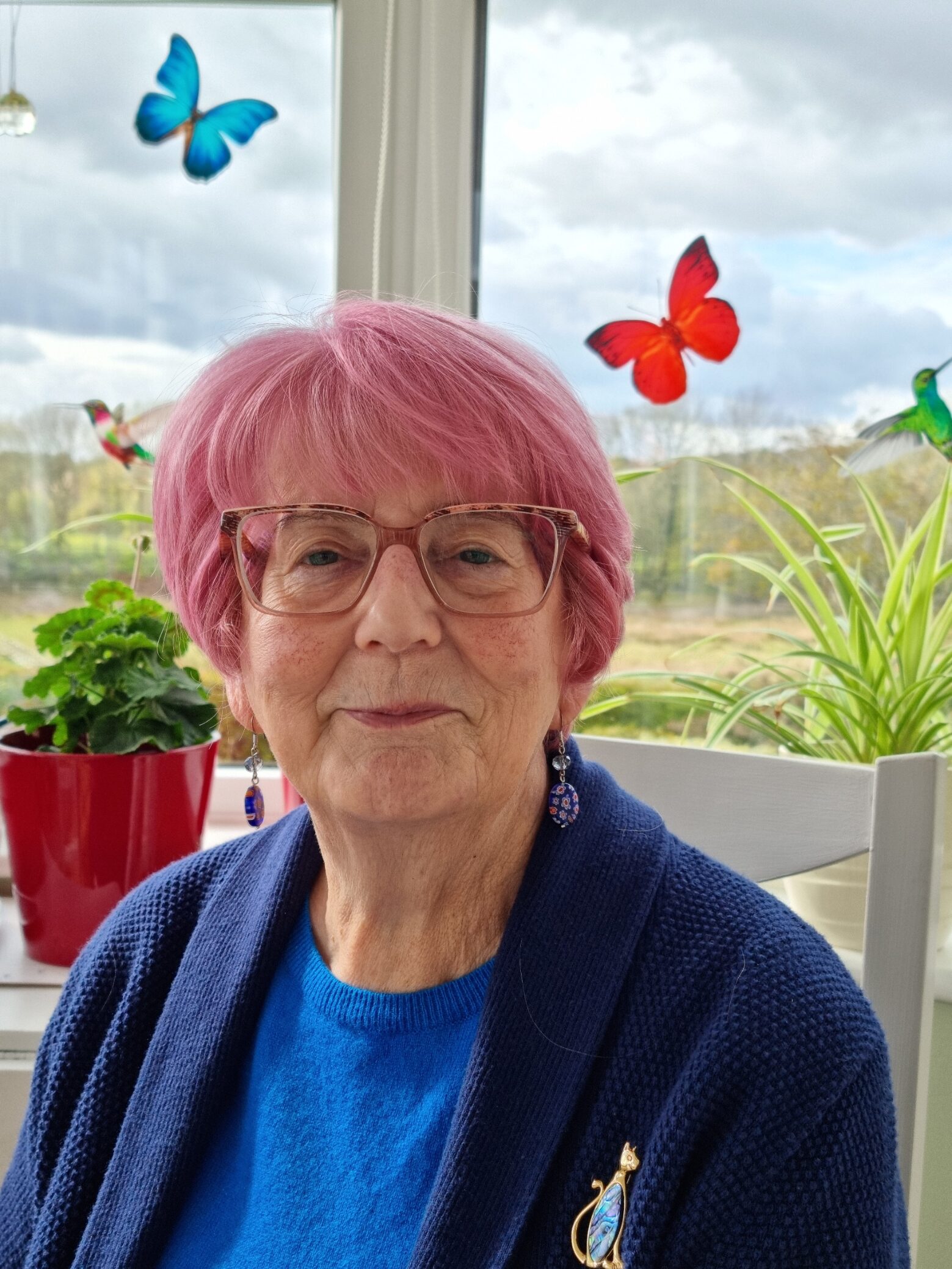
Maxine, Patient

By: Leanne Talbot

Posted on: 5 years ago

Trigger Warning.

Please note that while some stories end on a positive note, others may depict the challenging and difficult road that many neuroendocrine cancer patients face.

Getting your Trinity Audio player ready...

I’m Maxine Patterson and seventy-four years old. I was a deputy headteacher, but my first love was teaching English. I really enjoyed the connection with young people and helping them begin their adult lives. 

When I retired, I became involved in the U3A in my local area, establishing two Book Groups; a Creative Writing Group and a Photography Group. During the pandemic all the groups have continued remotely using zoom.

I’ve always had “tummy” problems with ongoing investigations that stretched over more than twenty years. Things got serious during my final years teaching and my retirement. In 2015 there were endless visits to the doctor where I asked repeatedly was going to the toilet twelve times during the day actually normal? Patient and kind and completely out of his depth, he suggested the FOD map diet and referred me for tests. The specialist was positive that I had IBS and that I just had to follow the diet. Just as a precaution I was sent for yet another colonoscopy. They couldn’t insert the camera, so I was sent for a scan which identified the tumours, and I was referred to the Freeman MDT in Newcastle. 

I had no idea where or what the tumours were, but after a biopsy at North Tees Hospital it was confirmed on the phone that I had cancer. Luckily, the Consultant diabetes and endocrinologist had trained under the consultant at the Freeman and was able to explain a little about neuroendocrine cancer. He was so hesitant and unsure that I realised something was different and immediately got a pen and paper and wrote down everything he said. That became the start of my neuroendocrine journey and my attempt to maintain some control over my life.

In January 2016 I had to have an emergency small bowel resection right hemicolectomy. I had no idea what that meant although the letters from the hospital used all the technical language and “assured me that they had explained it all very clearly.”

My G.P., a very kind and caring person knew nothing about NETs, just didn’t have the time to research. Any issues I raised were met with; “ask your specialist nurse.” In desperation I used the internet and found the Royal Free Hospital website’ Ronny Allen’s site and finally the NET Patient Foundation website.

I am on monthly Sandostatin LAR (Octreotide) injections and take colesevelam 3 times daily. I find life has to be taken day by day, planning ahead allows me to  enjoy the good days and allow space for rest on the not so good days. 
Everyone’s experience of neuroendocrine cancer is different. Take your time, and engage with the stories in whatever way feels right for you.

Do you have a story to share?

Sharing what you’re going through with others can be incredibly powerful, helping others to feel less alone, find hope and reassurance, and feel more confident and empowered.

If you have a story to share, we would love to hear from you.

Share your story
Share your story

We’re always looking for people to share their experiences with Neuroendocrine Cancer. Whether you have the personal experience yourself or through a family member or friend, we use stories on our website, on social media, in our patient information, and on occasion, in the press.

By raising awareness of Neuroendocrine Cancer (NC), we can reach and help more people. Personal stories highlight many relevant aspects of living with NC.

Experiences provide insights that support the education of healthcare professionals, raise awareness of possible signs and symptoms pre diagnosis, raise awareness of NC in the general public arena and encourage and inspire other people who have just started their pathway.

Please complete the form below to share your story.

A note about reading and listening to personal stories

Everyone’s experience of neuroendocrine cancer is different. Some stories may offer hope and reassurance, while others may be difficult or upsetting to read or hear. Take your time, and engage with the stories in whatever way feels right for you.

Remember that treatments and outcomes vary from person to person. These stories offer personal perspectives and support, but should not replace advice from your own healthcare team. If something raises questions about your care, speak to your doctor or clinical nurse specialist.

Support and next steps

You do not have to face this alone. Support is here when you are ready.

Disclaimer

The stories and opinions shared here reflect the personal experiences and views of individual contributors and do not necessarily reflect those of Neuroendocrine Cancer UK. They are provided for information and support and are not a substitute for professional medical advice.


Read more stories from people 
affected by neuroendocrine cancer, 
sharing their journeys, hopes and advice.

In this episode, Lisa is joined by Dave and Stephanie, parents to six-year-old Elliott and three-year-old Oliver. Dave was diagnosed with neuroendocrine cancer just one month ...


Published: 4 days ago

By Beth Chesser