|
Getting your Trinity Audio player ready...
|
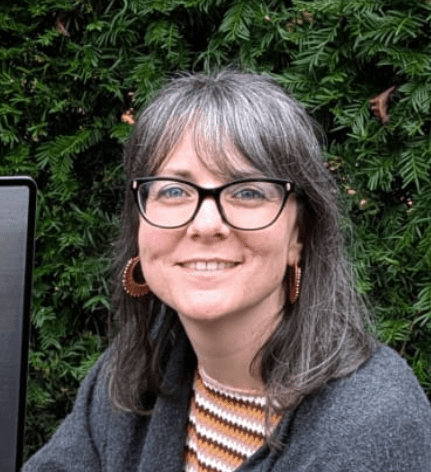
Name: Melanie
Neuroendocrine Cancer Site: Lung NETS (also known as Typical Carcinoid Lung)
Hospital: Diagnosed at St George’s University Hospital London*
Date Diagnosed: March 2020
–
The Beginning: When Life Stopped
My story starts when everyone’s life stopped: during the COVID pandemic. In March 2020, I developed a severe, yet not hospitalising, COVID pneumonia, which lingered for months. The red flags started when, on paper, I am fit, young, and healthy and yet, the oppressing sensations never went away.
A Lifesaving GP and Early Red Flags
My GP was my lifesaver. She promptly sent me off for some respiratory tests, as she sensed I wasn’t fitting the COVID statistical picture. Imagine this scene back in April 2020. The results ring alarm bells for the respiratory team, who wants to run more tests. At the time, I really did fear for my life, thinking COVID was slowly progressing. But no, there was something else.
The Diagnosis: An Incidental Finding
I sensed it wasn’t going to be good news as the hospital scheduled an in-person appointment when the rest of the world is required to stay away from one another, let alone from hospitals. They call it an “incidental finding,” a “6 mm nodule in my left bronchus,” I was told. Learn more here.
Good news, I’m told, it’s not COVID scarring or its debilitating symptoms. But it IS a tiny tumour, and the bad news is that it is cancerous. It’s a Lung NET (neuroendocrine tumour). It was such a shock. I don’t understand anything in the oncologist’s office, I just cry, get my Macmillan envelope, and go home.
My team help me see the bright sides of things. “It’s tiny,” they say, “it’s early,” “COVID pneumonia is your saviour because it would have grown insidiously for years otherwise, if it was not for the lung tests.” This resonates with me to this day. I feel sad and scared, but grateful in my misery. Select here to watch the Rareminds, Coping with Uncertainty video.
From then, everything happens fast: I have a bronchoscopy in December 2020 to scope the nodule. They are happy with the outcome, but one pregnancy later, the tiny nodule comes back following the yearly check. They discussed Plan B—the one I had always dreaded: a more invasive surgery.
The Surgery and Recovery
In September 2023, I had the nodule removed with a thoracotomy. It’s painful, but still, I smile. The nodule was in a funny place, but surgery went very well, and I recovered very well. Twelve months later, I get the all clear, with a very good prognosis, and very small recurring risk.
That risk will always sit with me, but I feel fortunate with the care I received at St George’s Hospital in London, and at my GP medical practice. I’m grateful for my GP, thanks to whom, everyone’s worst nightmare is now under surveillance. I’m not taking any medication yet and do not need any other treatment at this stage. I have a big scar on my back, but I sort of like it. It is part of my story.
A Message of Hope
With my story, I want to urge people to get checked when they sense something is not right. See another medical practitioner if you don’t feel heard. I want to thank the NHS and their talented teams. I want to share hope, in particular to the young and fit people who, like me 4 years ago, feel like their life might be falling apart right now. You are not alone; there is hope. Your life doesn’t stop when a NET diagnosis strikes.
*(Note: This is not one of the UK’s 14 NET Centres of Excellence but we are grateful to the expert knowledge of the team.
Written December 2024.