|
Getting your Trinity Audio player ready...
|
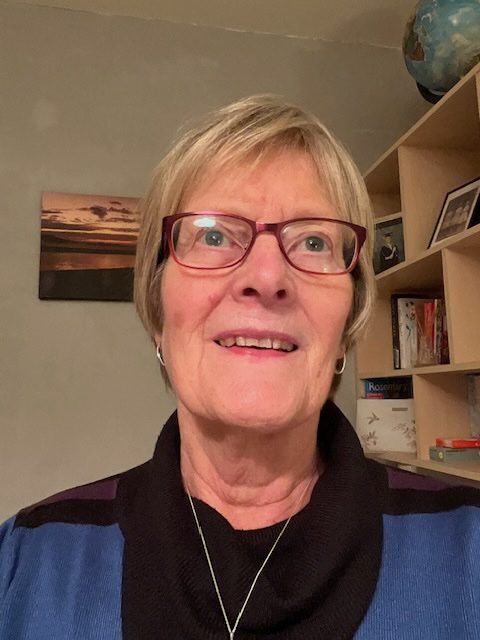
Written by Cynthia, neuroendocrine cancer patient.
Neuroendocrine cancer site: Pancreas.
Hospital: The Christie, Manchester.
In June 2021, I was diagnosed with an 11cm tumour on the tail of my pancreas, with metastases in my liver and lymph nodes. After a liver biopsy at The Christie NHS Foundation Trust in Manchester, my consultant decided to put me on Cap/Tem chemo tablets in August 2021.
I was made aware that they couldn’t operate on my cancer or cure me, but they could help to improve my quality of life.
For the previous six months, I had slowly been getting more lethargic. I could only walk for about half an hour before needing to sit and rest. I was losing weight weekly (which I quite enjoyed) and had completely lost my appetite for cake (very unusual) but I was not in any pain. I thought I was probably having side effects from recently being put on blood pressure tablets. When I reported these symptoms to my amazing GP, he immediately set the ball rolling with blood tests and scans. Three months later I was given my diagnosis.
To be honest it was a relief to know the diagnosis. Although for the first year, I thought I had pancreatic cancer as I just listened to the words ‘tumour on the pancreas’ when doctors talked about my cancer. At this point, the word ‘neuroendocrine‘ had no meaning to me (thank you Kate for explaining things to me).
–

–
Armed with my tablets and a spreadsheet on my fridge, my chemo journey began. I knew friends who had had chemo treatment and many had really struggled with side effects so I was expecting to feel unwell at times although I had been told that I shouldn’t lose my hair (a big plus!).
I always took my tablets at the same time each day, the Cap. tablets with my breakfast and evening meal, then Tem. and Ondansetron (for any nausea) on an empty stomach just before bedtime. After about 5 months on the chemo tablets my main tumor was beginning to shrink and I was getting my energy back. I stopped losing weight and started to enjoy cake again (the downside is that the weight I lost is starting to go back on again!).
I am lucky in that I have very few side effects from the tablets, I was sick once in the first couple of months, I get constipated when I am on both tablets, I have periods of sleeplessness and my nails are very flaky. But otherwise, for some reason, my body is coping with the chemo very well.
I have now just started my 30th month on Cap/Tem. The tumour on my pancreas has shrunk to 6 cm and is stable. My other tumours are also stable. I occasionally have a nap during the day but otherwise, I am back to enjoying the things I used to enjoy – gardening, walking, singing, church activities, organising concerts and socialising.
–

–
At the age of 74, my life is full again. I am now able to forget about the cancer for most of the time, knowing that I have the best care at The Christie. The things that keep me so positive are my 3 ‘F’s’ family, friends and faith. I obviously don’t know how long I can continue on the tablets but whilst they are continuing to work I will continue to have my monthly chemo.
I hope this will give some of you who are recently diagnosed with neuroendocrine cancer a more positive perspective, although I do know that many people with neuroendocrine cancer suffer more than me.
And can I give a huge vote of thanks to all the staff at The Christie who are always so caring and cheerful, no question is ever too much trouble for them to answer.
Further Support: