|
Getting your Trinity Audio player ready...
|
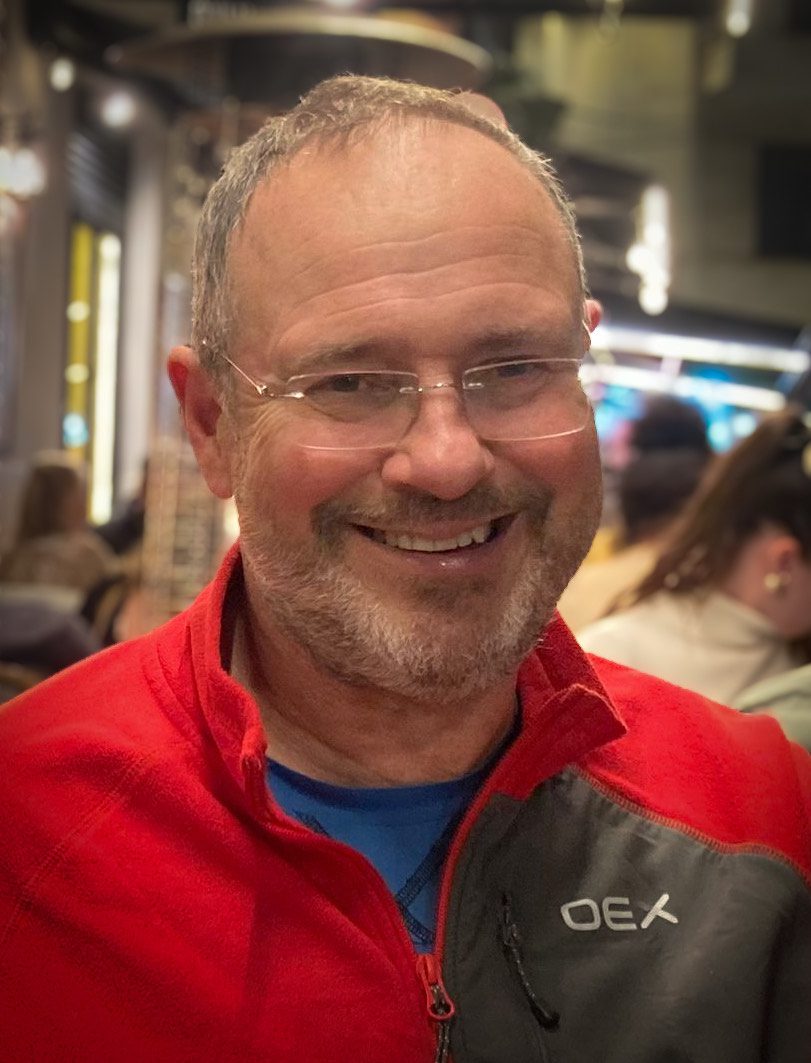
Name: Tim
Neuroendocrine Cancer Primary Site: Stomach – Type 3
Centre of Excellence: Kings College London
Date of Diagnosis: September 2024
–
Tim’s Story:
An Unexpected Start
My NET journey started, like so many others, by accident.
Early in 2024, on two or three occasions, food did not seem to travel smoothly down my oesophagus. I saw my GP who worried me by putting me on a two-week wait for possible cancer of the oesophagus.
Within two weeks, I had a transnasal endoscopy by a Consultant Endoscopist. He found no signs of cancer but observed “multiple polyps” in my stomach. I was consequently taken off the cancer pathway and scheduled for a polypectomy.
A Summer of Unawareness
I happily passed the summer oblivious to what was going on in my stomach and was summoned to Nottingham in early September for the procedure with a different Consultant Endoscopist. I found out later that she thought one and possibly two polyps looked unusual and took multiple biopsies but undertook no polypectomies.
The Diagnosis
Out of the blue, on 22nd October, I was summoned for a CT scan and an urgent meeting with a Consultant Gastroenterologist. He explained that the histopathology from the biopsies had shown that one of the polyps was a Type 3 Grade 3 Gastric Neuroendocrine Tumour (GNET) with a Ki67 30%. All new words to me. He said they would need to do more tests but if it was a T3, the likely treatment would be the full removal of my stomach and associated lymph nodes.
Taking Charge of My Care
Shell-shocked, at home, I started to madly research. Early on, I found Neuroendocrine Cancer UK’s website and the importance of Centres of Excellence. The next morning, I forced an early meeting with a GP and asked him to refer me to Kings College Hospital. Initially, he refused and said I should have treatment locally. Luckily, my wife Sarah is a retired senior NHS manager and explained to the GP my right to choose. The next day, there was a referral to Kings.
Comprehensive Testing and a New Plan
From that point on, the NHS worked like clockwork. By the end of November 2024, I’d had a telephone consultation, an ultrasound endoscopy, an FDG PET CT, a Ga68 PET CT, and full bloods.
The discussion with my NET specialist Gastroenterologist at Kings revolved around whether an endoscopic removal was possible or if a wedge resection of my stomach or a total gastrectomy would be the best course of action.
The EUS showed that the GNET was confined to the sub-mucosa, and the various scans had indicated no lymph node involvement or secondaries. After a meeting with an upper GI surgeon, everyone agreed a sub-mucosal dissection (SMD) was the best option.
Surgery and Recovery
SMD is a difficult technique to master, even for an experienced endoscopist, but Kings had an expert. So, on 3rd December, the GNET was successfully removed via SMD, and then the dreaded scanxiety set in.
I tried to relax leading up to Christmas, and then thankfully, a superb Christmas present arrived on 23rd December when I received the histopathology report: the GNET was fully removed in one piece; there were clear margins all around; surprisingly, the Ki67 was only 1.5% (an anomaly which is still to be resolved with Nottingham) and no lymphovascular or perineural invasion.
Ongoing Monitoring and the Future
At the moment, my consultant wants me to have a CT and gastroscopy every six months. Studies on Type 3 GNETs are inconsistent, but with some studies putting the likelihood of metastasis at more than 50%, scanxiety will continue for some time.
Tim
Written January 2025
Learn more about Stomach Neuroendocrine Cancer- Click here to watch.
For further support: Supporting you.