Over recent months, NCUK has continued to expand its presence across the clinical and advocacy landscape, ensuring the needs and voices of people affected by neuroendocrine cancer remain central.
Through key national and international events including the Society for Endocrinology BES Conference, European Neuroendocrine Tumour Society (ENETS) conference, the ESMO (European Society for Medical Oncology) Rare Cancers Congress, and the British Nuclear Medicine Society, Molecular Radiotherapy meeting, as well as parliamentary and patient education forums, we have raised awareness, strengthened collaboration, and shared the patient perspective across research, clinical practice, and policy discussions.
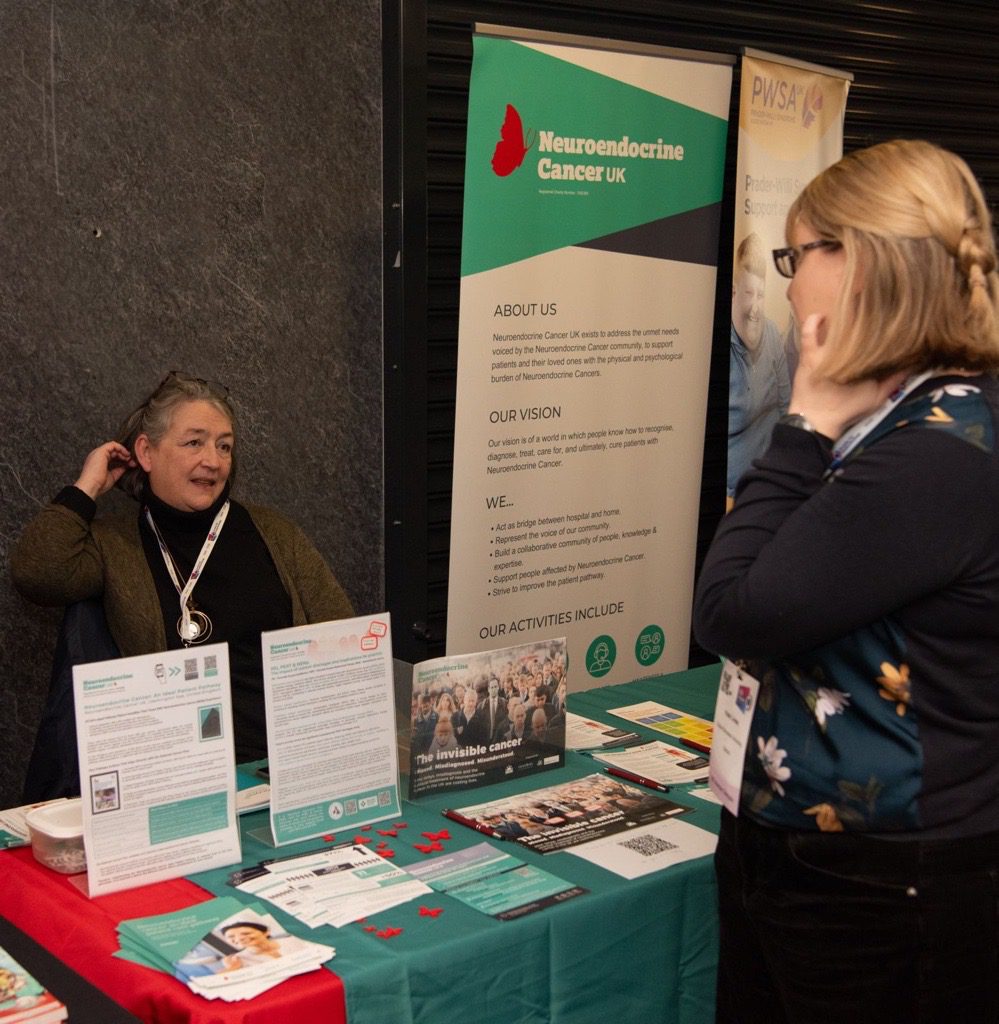
The Society for Endocrinology BES 2026 Conference, held from 2–4 March, brought together around 1,000 healthcare professionals spanning basic science, translational research, clinical investigation, and practice. The Society’s ongoing commitment to patient support organisations ensured our active involvement through a complimentary exhibition stand, open access to sessions, and participation in discussions about care. Our stand once again served as a central hub, enabling us to raise awareness of the charity, showcase patient and professional resources, highlight key initiatives such as the Invisible Cancer Report, and build meaningful relationships across disciplines.
A particular highlight was the pre‑conference PPIE in Action meeting, which brought together clinicians, researchers, patients, and members of the public to explore how meaningful Patient and Public Involvement and Engagement (PPIE) can enhance the relevance, quality, and impact of endocrine research. The session reinforced the value of close collaboration between clinicians and patient support organisations to deliver research outcomes that truly matter to patients.
We also took part in the European Neuroendocrine Tumour Society (ENETS) Conference, a key event in the neuroendocrine cancer calendar. The conference provided valuable insight into the latest scientific and clinical advances, while facilitating important discussions with European patient organisations, UK clinicians, and industry partners. These conversations continue to help shape shared advocacy priorities and inform future collaboration at both national and international levels.
The following week, we attended the ESMO Sarcoma and Rare Cancers Congress 2026, held from 12–14 March in Lugano. This international meeting showcased significant advances in the diagnosis, biology, molecular classification, and treatment of rare solid tumours, supported by a strong multidisciplinary programme. A notable development this year was the introduction of dedicated training workshops designed by and for patient advocates, focusing on practical skills, clinical research, health technology assessment, and improving care through reference centres and guidelines. These sessions recognised the critical role patient advocates play in shaping research, care, and policy, and reflected ESMO’s commitment to strengthening advocacy capacity across the rare cancer community.
At the British Nuclear Medicine Society – Molecular Radiotherapy Conference, we presented directly to nuclear medicine specialists, raising awareness of neuroendocrine cancer and sharing the patient perspective on nuclear medicine therapies. This included discussion of common patient questions lived experiences, and concerns, helping to strengthen understanding of patient needs within highly specialised treatment settings.
Beyond the conference setting, we attended a Parliamentary Reception marking progress towards the Rare Cancers Act becoming law. This represented an important milestone, reflecting growing recognition of the needs of the rare cancer community and the value of sustained policy engagement. It marks a positive step forward in strengthening support for people affected by neuroendocrine cancer and other rare cancers. We, alongside many across the rare and less common cancer community, would like to thank Dr Scott Arthur for seeing this legislation through, from his initial proposed Bill to the Act now in place.
We would also like to thank Dr Arthur for meeting with members of our team and community to discuss the key challenges faced in achieving accurate diagnosis and access to appropriate specialist care and treatment. He not only listened but added his voice by raising these issues through an adjournment debate (held on 16 April) and a parliamentary press article. (Link to the debate and related information here.)
And…we were delighted to be invited to take part in the King’s Healthcare Partners Patient Education Event, held on Monday 20 April. Working alongside clinical colleagues, to directly involve patients in education about their diagnosis, current clinical practice, clinical trials, and what may lie ahead in the research and innovation landscape. This event highlighted the importance of informed and empowered patients, and how partnership between clinicians, patients, and NCUK helps to strengthen care and understanding.
Alongside these events, NCUK continues to play an active role within the UK & Ireland Neuroendocrine Tumours Society (UKINETS), contributing across the Executive, Education, and Research Committees. This ongoing commitment ensures that the patient voice remains embedded in national discussions, and that we continue to help shape priorities in education, research, and clinical practice for neuroendocrine tumours.
Together, these activities reflect a consistent and connected approach: strengthening awareness, fostering collaboration, influencing policy, and ensuring that the patient voice remains central to progress in endocrine and rare cancer research and care.