
|
Getting your Trinity Audio player ready...
|
Paraganglioma is a rare type of neuroendocrine tumour that develops from specialised neuroendocrine cells found near nerves and blood vessels. It can develop in different parts of the body, most commonly in the abdomen, but also in the chest, head and neck. Paragangliomas are closely related to phaeochromocytomas, which develop in the adrenal gland.
Paragangliomas can affect people in different ways depending on where they develop and whether they produce hormones. Some cause symptoms by pressing on nearby structures, while functioning tumours can release hormones such as adrenaline and noradrenaline, causing symptoms including headaches, sweating, palpitations and changes in blood pressure.
This page explains more about paraganglioma, including possible causes and symptoms, diagnosis, treatment and follow-up care. It also includes information about living with your diagnosis and where to find further information and support.
Use the links in the box to find the information that is most relevant to you.
What is a paraganglioma?
A paraganglioma is a rare type of neuroendocrine tumour that is similar to a phaeochromocytoma, but it develops outside of the adrenal glands.
These tumours form along nerves and blood vessels in the body, as part of the peripheral nervous system (the network of nerves outside the brain and spinal cord). They are sometimes called extra-adrenal phaeochromocytomas.
Phaeochromocytoma and paraganglioma (PPGL)
Phaeochromocytomas and paragangliomas are often grouped together and called PPGLs.
- About 8 in 10 (80%) start in the adrenal gland (phaeochromocytoma)
- Around 1–2 in 10 (about 15%) start outside of the adrenal gland (paraganglioma)
Where do paragangliomas develop?
Paragangliomas can occur in different parts of the body:
- Most (more than 8 in 10) develop in the abdomen
- Around 1 in 10 develop in the chest
- Fewer than 1 in 20 (less than 5%) develop in the head and neck
Although PPGLs may have some similarities, there are differences.
This page focuses on paraganglioma.
Information on phaeochromocytoma can be found in its own page here.
Your paraganglia
Paraganglia are small clusters of specialised neuroendocrine cells found throughout the body, usually near nerves and blood vessels.
These cells develop early in life from the same tissue as the nervous system and play an important role in keeping the body balanced and working normally.
Paraganglia help the body by acting as both sensors and signal‑senders. They are vital for detecting changes in the body and regulating key functions, such as:
- Blood pressure
- Oxygen levels
- Breathing and heart function
- The body’s stress (‘fight or flight’) response
Some paraganglia also release hormones, such as adrenaline, which help the body respond to stress.
Types of paraganglia
There are two main types, depending on where they are found and what they do:
Sympathetic paraganglia:
- Are found mainly in the chest and abdomen
- Release hormones like adrenaline and noradrenaline
- Help control heart rate, blood pressure and stress responses
The centre of the adrenal gland (the adrenal medulla) is a well‑known example.
Parasympathetic paraganglia:
- Are found mainly in the head and neck
- Usually do not produce large amounts of hormones
- Act mainly as sensors, detecting changes in oxygen and blood chemistry
- Help control breathing and circulation
When these cells become abnormal, they can form paragangliomas, which are rare tumours.
How do paragangliomas develop?
The exact cause of paraganglioma is not yet fully understood. In some people and families, certain genetic changes (mutations) may increase the risk of developing this type of tumour.
Researchers are continuing to learn more about how the body works, how our environment may affect our health, and how genetic changes can lead to cancer. This growing knowledge is helping to improve diagnosis and treatment and may lead to better ways to prevent cancer in the future.
Approximately half of all paragangliomas are sporadic, which means:
- They are not linked to an inherited condition
- They do not usually run in families
However that means that up to 50% (5 in 10 people) with a paraganglioma may have an inherited genetic condition.
Inherited paraganglioma conditions
Some genetic conditions are known to be linked with an increased risk of developing a phaeochromocytoma.
Click on the drop-down options below to for patient support organisations associated with each inherited paraganglioma condition.
PPGL syndromes
MEN-2
Neurofibromatosis
von Hippel-Lindau (VHL)
For those with either a phaeochromocytoma or paraganglioma, genetic testing may be offered to look for changes in a group of genes called succinate dehydrogenase (SDH) genes.
Experts recommend that everyone diagnosed with a phaeochromocytoma is offered genetic testing.
If a genetic change (such as an SDH mutation) is found, testing may also be offered to close family members, including parents, siblings (brothers and sisters) and/or children.
This can help identify others who may be at risk and ensure they receive the right monitoring and support.
Hereditary PPGL syndrome
This is caused by changes (mutations) in SDH genes (succinate dehydrogenase genes).
These genes normally help control how cells produce energy. When they do not work properly, it can increase the risk of certain tumours developing.
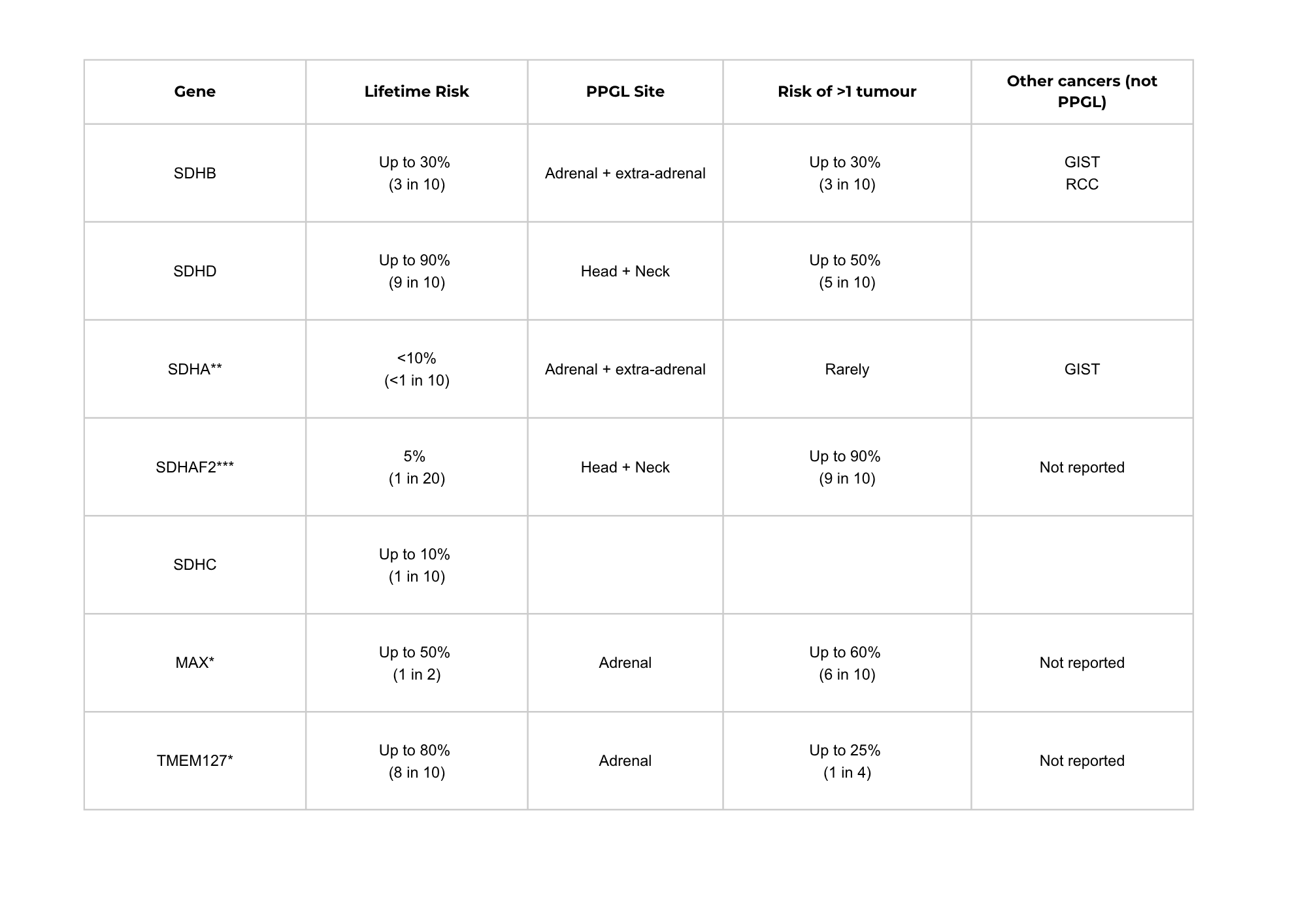
Table: PPGL risk and characteristics associated with different gene variants
Table notes:
‘PPGL site’ is the location in the body where phaeochromocytoma and paraganglioma associated with the gene may develop. ‘Adrenal’ means in the adrenal gland; ‘extra-adrenal’ means outside the adrenal gland.
PPGL: phaeochromocytoma and paraganglioma; GIST: gastrointestinal stromal tumour; RCC: renal cell carcinoma.
* Risk shown is for a mutation inherited from the father.
** Babies who inherit two SDHA mutations have a different genetic condition called Leigh syndrome. Further information on Leigh Syndrome is available at Metabolic Support UK
*** Risk shown is for a mutation inherited from the father. If inherited from the mother, children may be carriers and the mutation may be passed on to the next generation.
Risk of other cancers with hereditary PPGL syndrome
Not everyone with a family history, genetic condition or genetic mutation will develop a phaeochromocytoma, paraganglioma or other cancer.
People with a hereditary PPGL syndrome may have a slightly increased risk of developing other types of cancer, although this is still uncommon.
Gastrointestinal stromal tumours (GIST)
GISTs are rare tumours that develop in the wall of the stomach or bowel. They may grow slowly and not cause symptoms at first. They are very rare in people with PPGL syndromes. Routine screening is not usually needed, but they may sometimes be found during regular follow-up scans.
More information about GIST can be found at GIST Cancer UK.
Renal Cell Carcinoma (RCC)
Renal cell carcinoma (RCC) is a type of kidney cancer. It can also grow without symptoms in the early stages. If you are having regular scans as part of PPGL follow-up, any changes in the kidneys can often be picked up early.
More information about RCC can be found at Kidney Cancer UK.
If you have concerns about family history or genetic risk, your healthcare team can talk to you about whether genetic testing may be helpful.
Further information about PPGL syndrome and genetic conditions associated with phaeochromocytomas can be found by visiting our partner charities:
- The Association for Multiple Endocrine Neoplasia Disorders (AMEND)
- PhaeoPara Support UK
Signs and symptoms
Some people have no symptoms at first. Others notice changes before diagnosis. Symptoms can happen for different reasons.
1. Symptoms caused by the tumour itself
Symptoms of paragangliomas may vary depending on location.
Head and neck paragangliomas may cause:
- Tinnitus
- Hearing loss
- Earache
- Visual disturbances
- Difficulty swallowing
- Visible/palpable lump
- Voice changes
- Shortness of breath
Those that develop in the abdomen or pelvis may cause:
- Abdominal pain
- Flank pain
- Altered bowel habit
- Urinary difficulties
- Nausea
- Fatigue
- Unintentional weight loss
2. Symptoms caused by hormone changes
Some paragangliomas make extra hormones (called functioning tumours) and so may produce symptoms similar to those that can occur with phaeochromocytomas.
Symptoms can occur intermittently often in episodes lasting only 15 minutes and may include some or all of the following:
- Headaches
- Dizziness
- Facial paleness (pallor)
- Excessive sweating
- Racing heart rate (palpitations)
- Panic attacks or a sense of doom
- Anxiety
- Weight loss
- Heat intolerance
- High (and rarely low) blood pressure (sustained or episodic)
- Nausea (with or without vomiting)
- Breathlessness
- Depression
- Lethargy
Many of the symptoms listed above are related to high blood pressure (hypertension) that can result from excess hormones released by this tumour.
Hypertension in patients with undiagnosed PPGLs can be very difficult to control. However, once a diagnosis is made there are specific medications that can be prescribed to help with this.
Higher than normal levels of catecholamines (noradrenaline and adrenaline), can lead to catecholamine-induced hypertension (CIH) and more severely a CIH crisis, with a high risk of life-threatening complications (e.g. a stroke).
Once a functioning paraganglioma diagnosis is confirmed
If you have a paraganglioma, you may need to avoid certain medicines that could make your symptoms worse. Your specialist healthcare team will advise you about which medicines are safe for you. Do not stop taking any prescribed medicines unless your healthcare team advises you to do so.
The Association for Multiple Endocrine Neoplasia Disorders (AMEND) has produced a patient information card that can be shown to a pharmacist or other healthcare professional to support medication prescribing.

AMEND patient information card
It is available from their website (www.amend.org.uk) or from your specialist team.
Seeking advice from a specialist team with expertise in managing phaeochromocytoma and paraganglioma is recommended to inform medications prescribing.
3. Rare symptoms (paraneoplastic syndromes)
Very rarely, Paragangliomas may trigger symptoms caused by the body’s immune response to cancer. These are uncommon but can sometimes cause serious health problems.
Watch our video: Paraneoplastic Syndromes – Explained
4. Symptoms related to treatment
Treatments can cause side effects, but not everyone experiences them.
Your team will talk through possible side effects and how they can be managed.
Tests and scans
Blood and urine tests
Expert guidelines recommend the following tests:
- Full blood count
- Liver and kidney function
Hormonal work-up:
- Glucocorticoid levels
- Dexamethasone suppression test
- 24-hour urine collection text for free urinary cortisol
- Basal cortisol (serum)
- Basal adrenocorticotropic hormone (ACTH) (plasma)
Sexual steroids and steroid precursors:
- Serum DHEA-S, 17-OH-progesterone, androstenedione and testosterone
- 17-beta-oestradiol (serum, men and postmenopausal women only)
- 24-hour urine collection to measure steroid metabolites
Mineralocorticoid levels:
- Potassium (serum), aldosterone/renin ratio (only in those with arterial hypertension with or without low potassium levels), catecholamine levels
- Normetanephrines, metanephrines and methoxytyramines (plasma)
- Alternatively; fractionated metanephrine production (24-hour urine collection)
Not all of these tests will be needed if it is already certain that you have paraganglioma. Some are only required if the doctors need to be sure you don’t have another reason for your symptoms, for example an adrenal-based tumour (phaeochromocytoma or adrenocortical carcinoma).
Scans
You may have:
- CT and/or MRI scans of the chest, abdomen and pelvis
- Metaiodobenzylguanidine (MIBG) or gallium-dotatate-PET scan
If a head and neck paraganglioma is suspected, you may have an angiography to look at the blood vessels in your head and neck.
- CT angiography (CTA) is a quick scan that uses X-rays and a dye injected into a vein to show blood vessels clearly. It usually takes only a few minutes.
- MR angiography (MRA) uses magnets to create detailed images of blood vessels and often does not need dye. It does not use radiation.
- Catheter angiography (DSA) involves placing a thin tube into a blood vessel (usually in the groin) to inject dye directly. It gives very detailed images and can sometimes be used to treat a problem at the same time.
Watch our video: Your Guide to Scans
Histopathology
Studying tissue under a microscope can be a helpful way to confirm a cancer diagnosis. It can give clues about where a cancer started, what kind of cancer cells exist and how quickly or slowly they are dividing and growing.
Treatment options
Your care is individualised based on your tumour, health and preferences.
1. Monitoring (surveillance)
Often used after treatment or if treatment is not possible but intervention or supportive care may help with symptom management. Regular scans and check-ups help monitor for any changes.
2. Surgery
Surgery to remove a paraganglioma depends on where the tumour is in the body. Specialist surgeons will choose the safest and most effective approach and often work together as a team.
The aim of surgery is to remove all, or as much as possible, of the tumour. The exact approach depends on the tumour’s size, location and nearby structures. Surgery is often carried out by a multidisciplinary team with specialist expertise.
Head and neck paragangliomas
Surgery in this area can be complex because tumours are close to important nerves and blood vessels. Common approaches include:
- Neck (transcervical) approach: a cut is made in the neck to carefully separate and remove the tumour from nearby blood vessels and nerves.
- Skull base or ear approaches: for tumours near or inside the skull, surgeons may operate through the base of the skull or around the ear, sometimes removing a small amount of bone to safely reach the tumour.
- Transoral robotic surgery (TORS): in selected cases, surgery can be done through the mouth using robotic tools, which may mean smaller cuts and quicker recovery.
In some situations surgery may be done in stages (one side at a time) if tumours affect both sides. Techniques may be used to reduce blood flow to the tumour before removal, helping make surgery safer.
Abdominal and pelvic paragangliomas
Surgery is the main treatment when possible, and the approach depends on the tumour size and position. Common approaches include:
- Keyhole (laparoscopic) surgery: uses small cuts and a camera to remove the tumour.
It is often used for smaller, well-defined tumours and can lead to quicker recovery. - Robot-assisted surgery: a type of keyhole surgery that uses robotic tools to improve precision, especially in hard-to-reach areas.
- Open surgery (laparotomy): a larger cut is made in the abdomen. This is often used for larger or more complex tumours, or those close to major blood vessels, allowing the surgeon better access and control.
Your surgical team will explain the recommended approach for you and what to expect from your operation.
Pre-operative considerations
Pregnancy and functional paraganglioma
If you have a functional tumour and are planning a family, it is usually recommended to delay pregnancy until after treatment (such as surgery or radioligand therapy) and recovery.
If you become pregnant during, or just before, treatment, it is important to tell your doctor as soon as possible.
Your care will be planned by a specialist team, including your cancer team, obstetrician and midwife, to help keep both you and your baby safe.
Some tests and treatments are not suitable during pregnancy, as they may affect the unborn baby. These include:
- CT scans
- MIBG scans
- PET scans
- Radioligand therapy (RLT)
If surgery cannot be safely delayed until after the baby is born, and the tumour is suitable for keyhole (laparoscopic) surgery, this may be carried out during the second trimester (weeks 13–27) by an experienced specialist team.
In some cases, it may be safer to manage the tumour during pregnancy and plan surgery after the baby is born.
Further information and support is available from PhaeoPara Support UK.
Blood pressure control
High blood pressure (hypertension) caused by a phaeochromocytoma can be difficult to control, especially during surgery.
To reduce risks, you will usually be given medication called alpha-blockers (and sometimes beta-blockers) for at least 10 days before your operation.
These medicines help to lower blood pressure and reduce the risk of complications during surgery.
You may be prescribed these medications even if you have few or no symptoms, as they are an important part of making surgery safer.
Alpha-blockers before surgery
Common alpha-blockers include phenoxybenzamine or doxazosin. These are usually taken at home before surgery.
Some people may experience side effects, such as:
- Dry mouth
- Stuffy nose
- Feeling dizzy
- Feeling more tired than usual
Some men may notice changes during sex, such as difficulty ejaculating.
Your doctor or nurse will ask about any side effects to make sure the treatment remains safe and suitable for you.
In many cases, these medications can be stopped after the tumour has been removed.
Your healthcare team will guide you through each step and help you prepare safely for surgery. If you have any concerns, it’s always okay to ask questions.
3. Non-surgical treatment options
These may include:
- Somatostatin analogues (SSAs): these injections are more commonly used in other neuroendocrine tumours to control hormone-related symptoms and slow tumour growth
- Targeted therapy (e.g. sunitinib): sunitinib is a multikinase Inhibitor (MKI), a type of targeted treatment that block several signals (called tyrosine kinases) that cancer cells use to grow and divide, helping to slow tumour growth.
These medicines can raise blood pressure, so in paraganglioma it is very important that blood pressure is carefully controlled to make sure the treatment can be used safely.
- Chemotherapy: is rarely used as a first treatment for paragangliomas but may be considered if other treatments are not suitable or have stopped working. It may be given as tablets or through a drip into a vein. If considered, a combination of cyclophosphamide, vincristine, and dacarbazine (CVD) is the most commonly used regimen, though Temozolomide may also be considered.
- Radioligand therapy (RLT, also known as PRRT or lutetium‑177): this is a targeted internal radiation treatment. It delivers radiation directly to cancer cells, usually given in four sessions spaced 8–12 weeks apart. It is mainly used for metastatic or progressing disease. At present, RLT with lutetium-177 does not have approval from the National Institute for Health and Care Excellence for paragangliomas but may be available through clinical trials or other funding routes. You may be offered MIBG therapy instead, which is similar but uses a different radionuclide.
- Local therapies may include radiotherapy and/or interventional radiology, for example radiofrequency ablation, cryoablation, microwave ablation, (chemo-) embolisation. An individualised treatment approach is required.
- Radiotherapy: external beam radiation therapy (EBRT) may be used to treat symptomatic bone metastases.
- Symptom control and supportive care: this includes any treatment or support that helps you feel better, even if it is not directly treating the cancer. This may include medicines, dietary advice and/or psychological support. Techniques such as mindfulness or relaxation may help with pain, fatigue, stress or anxiety.
- Anti-hypertensives: these help to help control raised blood pressure. Your specialist team can advise and/or prescribe the type of medication best used in paragangliomas. This may be different to the standard treatment used in non-hormonal-related hypertension.
- Clinical trial therapy: clinical trials are used to find out if new treatments and techniques are safer and more effective than the ones that already exist, or for discovering if existing treatments can be used in different, more effective, ways or combinations.
A note about immunotherapy: immunotherapy treatments have yet to be proven effective in neuroendocrine tumours (NETs) and the precise role of immunotherapy remains unclear in the treatment of paragangliomas. However, research is ongoing.
You can also find further information from our partner organisations:
Diagnosis and living with paraganglioma
A diagnosis of neuroendocrine cancer can bring questions, uncertainty and a range of emotions. Information and support are available to help you understand your diagnosis and navigate what happens next.
Just diagnosed with neuroendocrine cancer? Access information and support to help you navigate the early days after diagnosis.
Follow-up care
Follow-up is an important part of your ongoing care. It helps your healthcare team check how you are doing, spot any changes early, and support your physical and emotional wellbeing.
While expert guidelines offer a general plan for follow-up, your care will always be tailored to you and your specific type of neuroendocrine cancer.
At each appointment, your team will ask how you are feeling, review your symptoms and medications, and arrange blood tests if needed.
You may also be offered a holistic needs assessment (HNA). This is an opportunity to talk with your specialist nurse or doctor about any physical, emotional, practical, or social needs, so the right support can be put in place.
Guideline-recommended follow-up suggests that after surgery you have an early review:
- Around 2 to 6 weeks after surgery, with a clinical review and blood and/or urine tests
- This is repeated at around 12 to 16 weeks, often with scans such as CT or MRI (and sometimes functional imaging)
Ongoing follow-up usually includes:
- A review at 6 months
- Then yearly follow-up
For most people, follow-up continues for at least 10 years. However, if you also have a genetic condition, follow-up is usually lifelong.
Experts recommend the following tests and scans are done at or just before your follow up appointment:
- Blood and urine tests every year, including markers such as chromogranin A
- Scans every 1 to 2 years, unless your team feels they are needed more often
Because these tumours can sometimes spread to the bones, your doctors will choose scans that are sensitive to this risk.
For scans of the abdomen:
- An MRI scan is usually preferred
- A CT scan may be used if MRI is not suitable or available
If surgery was or is not possible or if the cancer has come back
Your follow-up plan will depend on your individual situation, including your general health.
Regular review is strongly recommended if you are receiving active treatment, have ongoing symptoms or are assessed as being at higher risk of the cancer growing or returning.
Hormone monitoring
For all people with paraganglioma, regular checks are recommended to monitor hormone levels, alongside imaging.
Nerve-related symptoms (head and neck surgery)
If surgery involves the head or neck, there may be temporary or longer lasting effects on nearby nerves. These can include:
- Changes in voice
- Difficulty with swallowing
- Shoulder weakness or reduced movement
Your team may refer you to speech and language therapy or physiotherapy to support recovery.
Recovery after head and neck surgery
This often involves temporary voice changes, swallowing difficulties or shoulder weakness.
Advice for voice changes:
- Rest and pace: speak in shorter phrases and take frequent breaths. Rest your voice for 30 minutes several times a day. Avoid whispering, which strains vocal cords, and use a quiet, natural tone instead.
- Hydration and moisture: sip water regularly (aim for two litres a day) to keep vocal cords lubricated. Use steam inhalations (plain water only, no menthol or oils) several times a day to soothe a dry throat.
- Relaxation: gently release tension in your shoulders, neck and throat before and during speaking.
- Environment: reduce background noise so you don’t feel the need to push or strain your voice.
Advice for swallowing difficulties (dysphagia):
- Posture: always sit fully upright when eating, drinking or taking medications. Remain upright for at least 30 minutes after meals.
- Technique: eat slowly. Lower your chin slightly toward your chest before swallowing to prevent food from going down the wrong way. Swallow completely before taking the next bite and avoid talking while chewing.
- Texture and temperature: opt for soft, moist foods (e.g. porridge, scrambled eggs, yoghurt, pasta with smooth sauces). Add extra gravy or sauces to moisten dry foods. Cold or fizzy drinks can sometimes help stimulate the swallow reflex.
- Medication: if swallowing tablets is painful or difficult, ask your GP to prescribe your medications in liquid or crushable forms.
Advice for shoulder weakness or reduced movement:
- Consult your surgical team: shoulder weakness or a ‘dropped’ shoulder is very common after head and neck surgery, as the spinal accessory nerve runs directly through this area.
- Physiotherapy: ask your hospital team for a tailored physiotherapy plan. Gentle, guided range-of-motion exercises will help prevent the shoulder from stiffening (a condition sometimes called ‘frozen shoulder’).
- Pacing: avoid heavy lifting and respect your physical limits during recovery.
- Pain management: take prescribed pain relief regularly as directed; managing your pain can help you move your shoulder more comfortably.
Additional sources of information and support:
- Speech and language therapists (SLT): your NHS Trust’s SLT department is your primary resource for personalised swallowing and voice rehabilitation exercises. Request a referral from your GP or clinical nurse specialist. If there’s any uncertainty about availability of local services, this can be checked with the Royal College of Speech and Language Therapists.
- The Swallows: a nationwide head and neck cancer charity offering a 24/7 support line (07504 725 059), virtual meetings, and practical resources like a restaurant card.
- Oracle Head and Neck Cancer UK: provides comprehensive patient information, advocacy and emotional support services.
Your follow-up plan will always be tailored to you. Your healthcare team will explain what to expect and when your tests and appointments will take place.
How you can be part your care
You are a key part of your team. You can help by:
- Reporting new symptoms or any changes in current symptoms or overall health
- Asking questions if at all uncertain or you want more information about your diagnosis and/or plan of care
- Attending appointments made – and checking up with the team if you haven’t received an appointment according to your agreed plan of care.
- Making your wishes and any concerns clear – let your team know what matters most to you.
Support and further information
We have worked with the International Neuroendocrine Cancer Alliance (INCA) to provide information resources in more than 10 different languages: these are available here.
You can find information from our partner organisations:
Stories from our community
Hear from people connected to neuroendocrine cancer as they share their experiences, perspectives and insights – from living with the condition to caring for, treating and supporting those affected.
Remember
Remember: every person’s experience with paraganglioma is different – there may be shared similarities, but each journey is unique.
Your healthcare team will support you every step of the way, guiding your treatment, care, and follow-up. We’re here alongside them, offering additional support and information whenever you need it.
The information on this page is based on available clinical expert guidelines and publications, and was produced by Neuroendocrine Cancer UK, in partnership with AMEND and PhaeoPara Support UK.
The content on this page is for informational purposes only and should not be considered professional medical advice.