Adrenal

Adrenocortical carcinoma (ACC)

Adrenocortical carcinoma (ACC) is a rare cancer that starts in the outer layer of the adrenal glands, the small glands that sit above your kidneys. Some tumours release extra hormones. Find out about symptoms, diagnosis, treatment and living well with ACC.

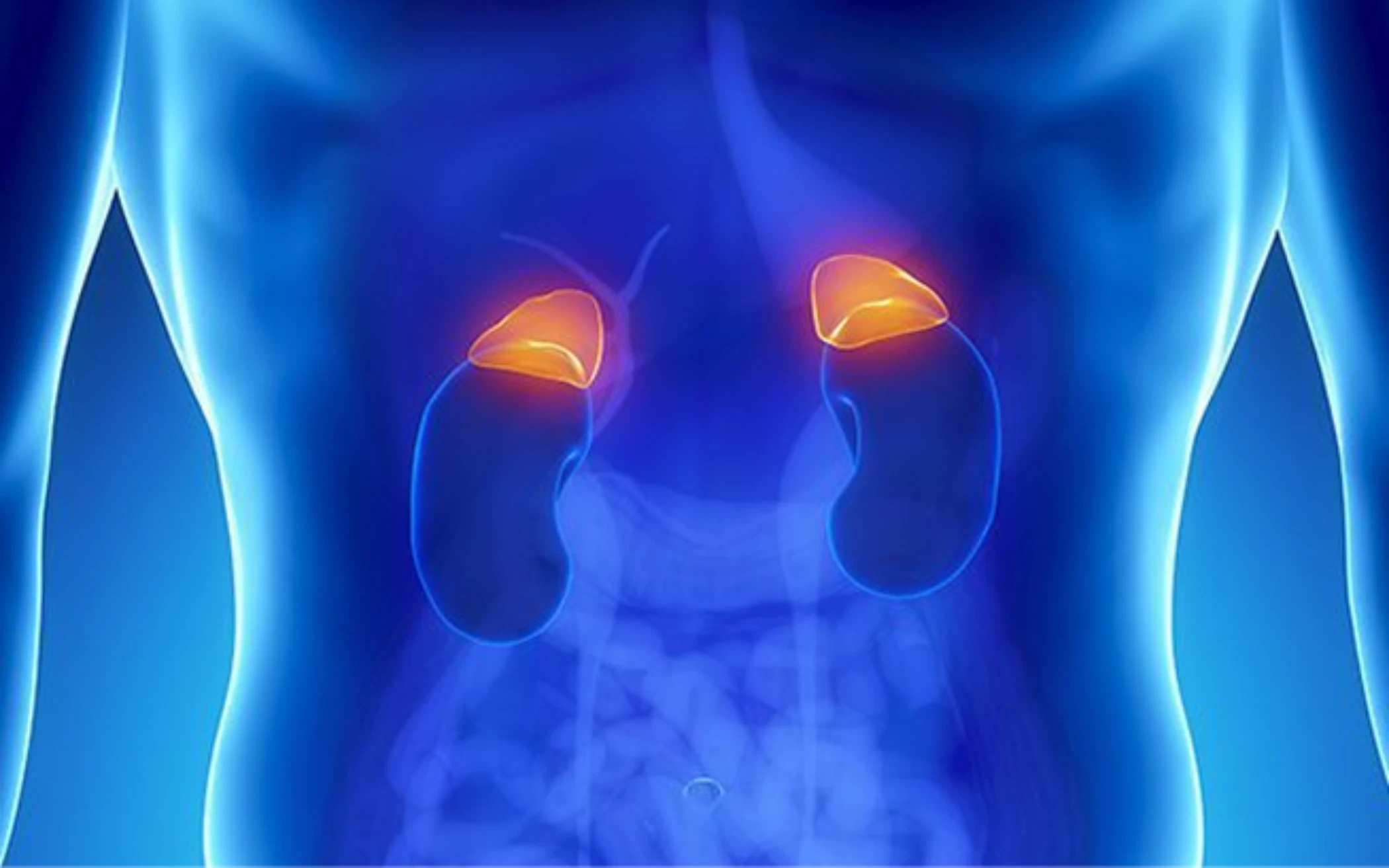
Medical illustration of kidneys and adrenal glands, showing the anatomical location relevant to adrenal and kidney-related neuroendocrine tumours (NETs).

Overview

Getting your Trinity Audio player ready...

Adrenocortical carcinoma (ACC) is a rare cancer that develops in the outer layer (cortex) of the adrenal glands. The adrenal glands sit above the kidneys and make hormones that help control important functions in the body.

ACC can affect people in different ways. Some tumours produce extra hormones, which can cause a range of symptoms, while others may cause symptoms as the tumour grows. Tests and scans can help your healthcare team understand your individual cancer and plan the most appropriate treatment and follow-up care.

This page explains more about ACC, including possible causes and symptoms, how it is diagnosed and monitored, and the treatments you may be offered. It also includes information about living with ACC, taking an active part in your care, and where you can find further information and support.

Use the links in the box to find the information that is most relevant to you.

What is adrenocortical carcinoma (ACC)?

There are two types of cancer that start in the adrenal gland:

  • Adrenocortical carcinoma
  • Phaeochromocytoma (also known as adrenal-based paraganglioma)

Adrenocortical carcinoma (ACC) is a rare endocrine cancer that starts in the outer layer of the adrenal glands (called the cortex).

Phaeochromocytoma is a rare neuroendocrine cancer that starts in the inner part of the adrenal gland – called the medulla.

This page focuses on adrenocortical carcinoma (ACC).

Find out more about phaeochromocytoma

Your adrenal glands

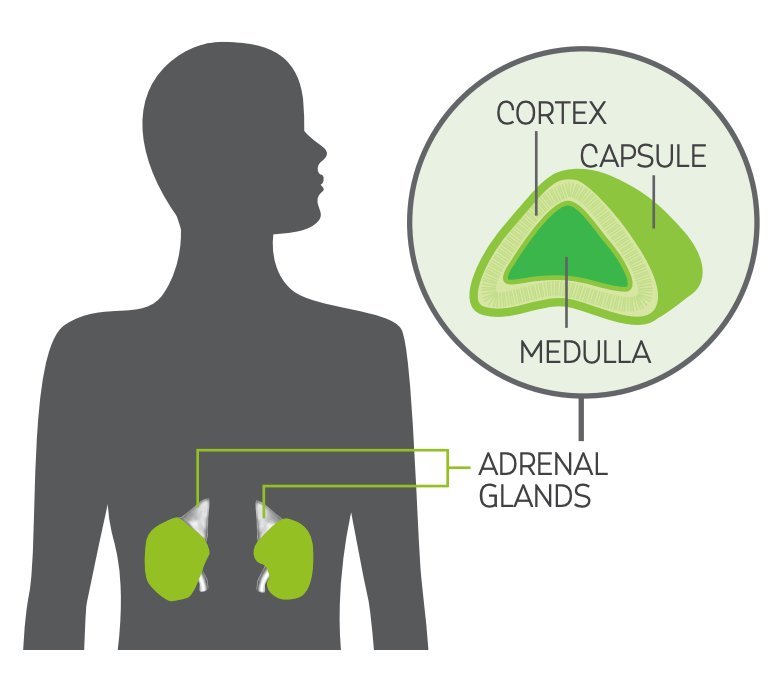
The adrenal glands are small organs that sit on top of your kidneys. They make hormones that help control important body functions such as:

  • Blood pressure
  • Energy levels
  • Stress response
  • Salt and water balance

When cancer develops in these cells, it can affect how hormones are made and released.

ACC image ACC Support UK image with permission
The adrenal gland

Each adrenal gland has three main parts:

  • The capsule – a thin outer layer that surrounds and protects the adrenal gland
  • The cortex (outer layer) – makes hormones such as cortisol, aldosterone and small amounts of sex hormones
  • The medulla (inner layer) – makes adrenaline (the ‘fight or flight’ hormone)

These hormones help your body respond to stress, control blood pressure, and manage how your body uses energy.

ACC develops in the cortex of the adrenal gland.


Causes and risk factors

The exact cause of ACC is not fully understood.

Researchers are continuing to study:

  • How the body works
  • How the environment affects health
  • How genetic changes (mutations) may lead to cancer

This research is helping to improve diagnosis and treatment and may lead to better ways to prevent cancer in the future.

What we do know

  • ACC is rare
  • It is most often diagnosed in adults in their 50s or 60s
  • It is slightly more common in women

Is it inherited?

Most ACC cases are not inherited and do not run in families.

However, in some people, ACC may be linked to rare genetic conditions, including:

  • Li-Fraumeni syndrome
  • Beckwith-Wiedemann syndrome
  • Lynch syndrome
  • Familial adenomatous polyposis (FAP)
  • Multiple Endocrine Neoplasia (MEN)

If you have a family history of these conditions, your healthcare team may discuss genetic testing.


Signs and symptoms

Some people have no symptoms at first. Others notice changes before diagnosis.

Symptoms can happen for different reasons.

1. Symptoms caused by the tumour itself

  • Pain in the abdomen or side (flank)
  • A feeling of fullness or a lump

2. Symptoms caused by hormone changes

Some ACC tumours make extra hormones (called functioning tumours).

This can lead to symptoms such as:

  • Weight gain
  • High blood pressure
  • Diabetes
  • Muscle weakness
  • Tiredness
  • Acne or easy bruising
  • Changes in body shape
  • Sexual dysfunction
  • Increased body or facial hair (especially in women)
  • Voice deepening and/or baldness in women
  • Breast soreness and/or swelling in men
  • Osteoporosis
  • Mood changes

3. Rare symptoms (paraneoplastic syndromes)

Very rarely, ACC can trigger symptoms caused by the body’s immune response to cancer.

These are uncommon but can sometimes cause serious health problems.

Watch our video: Paraneoplastic Syndromes – Explained

4. Symptoms related to treatment

Treatments can cause side effects, but not everyone experiences them.

Your team will talk through possible side effects and how they can be managed.


Adrenal insufficiency

Adrenal insufficiency happens when the body does not produce enough steroid hormones. This may happen because of the cancer or after treatment (such as surgery). Risk increases during surgery, injury, or illness – for example, if you have vomiting/diarrhoea. Symptoms can include:

  • Severe tiredness
  • Dizziness
  • Nausea or vomiting

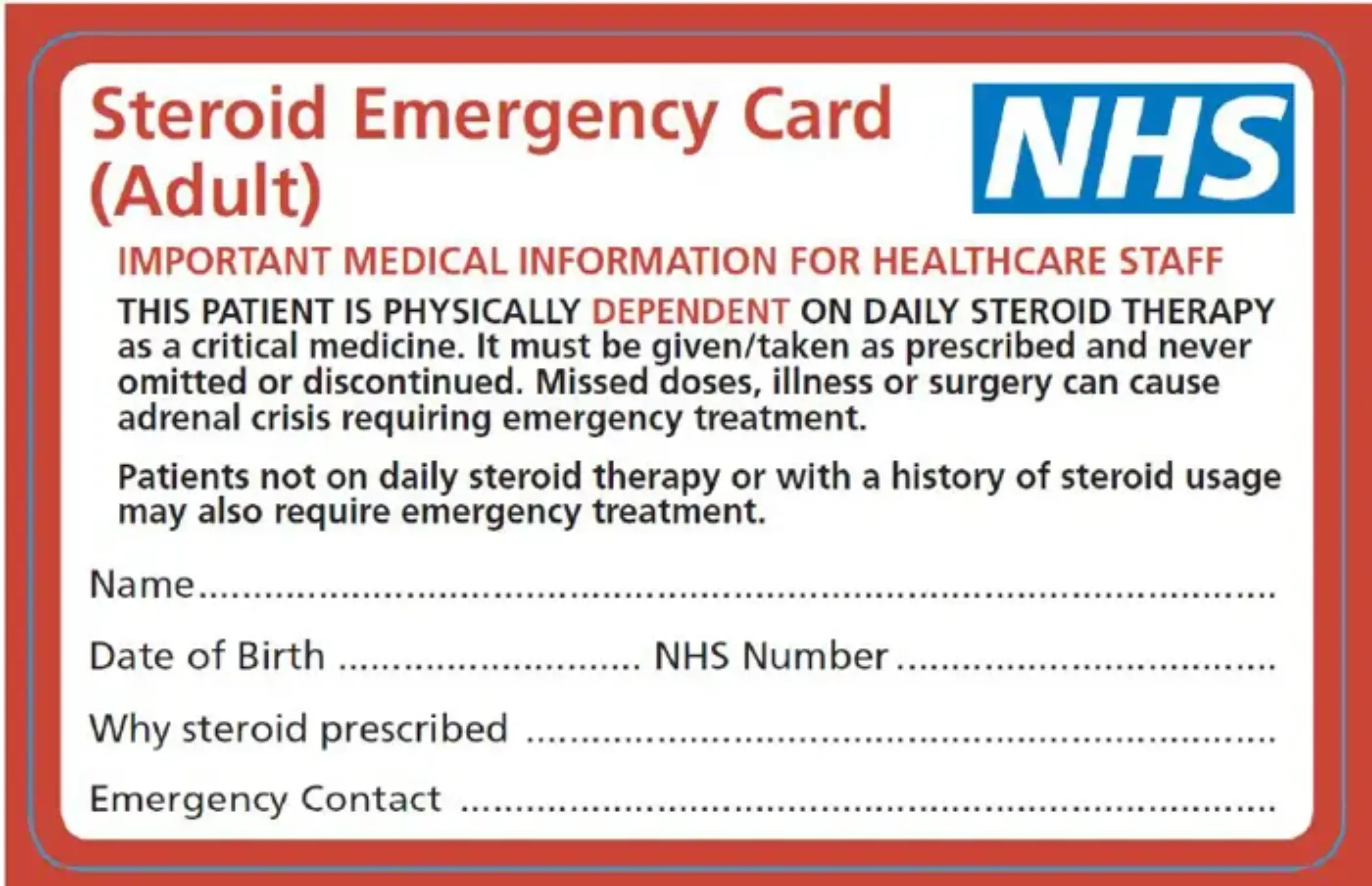
If untreated, it can lead to an adrenal crisis, which is a medical emergency. If you are advised to take steroid treatment, you should:

NHS Steroid Emergency Card

Tests, scans and biopsy

You may have a number of tests to help confirm a diagnosis and guide treatment.

Blood and urine tests

These check your general health and hormone levels.

Tests may include:

  • Full blood count
  • Liver and kidney function

Hormonal work-up:

  • Glucocorticoid levels
  • Dexamethasone suppression test
  • 24-hour urine collection text for free urinary cortisol
  • Basal cortisol (serum)
  • Basal adrenocorticotropic hormone (ACTH) (plasma)

Sexual steroids and steroid precursors:

  • Serum DHEA-S, 17=OH-progesterone, androstenedione and testosterone
  • 17-beta-oestradiol (serum, men and postmenopausal women only)
  • 24-hour urine collection to measure steroid metabolites

Mineralocorticoid levels:

  • Potassium (serum), aldosterone/renin ratio (only in those with arterial hypertension with or without low potassium levels), catecholamine levels
  • Normetanephrines, metanephrines and methoxytyramines (plasma)
  • Alternatively: fractionated metanephrines production (24-hour urine collection)

Some of these tests may not be needed if it is already certain that you have ACC.

Scans

You may have:

  • CT or MRI scans of the chest, abdomen and pelvis
  • FDG-PET scan (in some cases)
  • Brain or bone scans if needed

Biopsy (tissue sample)

A biopsy is not always needed.

Expert guidance says that biopsies for suspected ACC are usually not helpful and are best avoided if the tumour can be removed. This is because the tumour can be fully examined in detail after it has been taken out of the body.

If surgery is planned, the tumour can be examined after removal.

However, a biopsy may be discussed with patients who have inoperable and/or metastatic ACC, where a tissue diagnosis (histopathology) would help inform treatment choices.


Treatment options

Your care is individualised based on your tumour, health and preferences.

1. Monitoring (surveillance)

Often used after treatment or if treatment is not possible but intervention or supportive care may help with symptom management. Regular scans and check-ups help monitor for any changes. 

2. Surgery

If possible, surgery is the main treatment.

  • This involves removing the adrenal gland (called an adrenalectomy)
  • Nearby tissue or lymph nodes may also be removed

The aim is to remove all visible cancer.

There are two main types of surgery used to remove the adrenal gland.

Open adrenalectomy

This involves removing the adrenal gland through a cut (incision) in the abdomen.

The size and position of the incision will depend on the size of the tumour and whether nearby structures also need to be removed. The cut may be horizontal, diagonal or vertical.

Laparoscopic adrenalectomy (keyhole surgery)

This is a less invasive operation using small cuts and a camera.

However, it is not commonly used for ACC unless the tumour is very small. In most cases, an open operation is recommended to allow the surgeon to safely remove all of the cancer.

Your surgical team will discuss the most appropriate approach for you and explain what to expect before and after your operation.

Expert guidelines recommend that adrenal surgery should be carried out only by surgeons with appropriate expertise and experience.

ACC pre-operative considerations

In patients with hypercortisolism, excess cortisol and/or other related glucocorticoids (e.g. Cushing’s syndrome), peri-operative steroid replacement (usually with tapering doses of intravenous hydrocortisone) is recommended to reduce/alleviate the risk of adrenal insufficiency following adrenalectomy.

3. Non-surgical treatment options

  • Chemotherapy: for those with advanced ACC not suitable for surgery, then mitotane with or without local therapies can be considered as first-line treatment. If ACC has recurred, or continued to grow through mitotane treatment, then EDP chemotherapy (etoposide, doxorubicin and cisplatin) with or without mitotane may be considered. Other options as second- or third-line treatments may include gemcitabine plus capecitabine or streptozotocin plus mitotane. The role of mitotane with or without chemotherapy after surgery (adjuvant therapy) may depend on whether complete resection was possible or not, and whether there is a low/moderate or high risk of recurrence depending on post-surgical examination of removed tissue (histopathology).
  • Local therapies: may include radiotherapy, and /or interventional radiology, for example radiofrequency ablation, cryoablation, microwave ablation, (chemo-) embolisation. An individualised treatment approach is required.
  • Radiotherapy: external beam radiation therapy (EBRT) may be considered alongside mitotane in select patients following surgery.
  • Symptom control and supportive care: includes any treatment or support that helps you feel better, even if it is not directly treating the cancer. This may include medicines, dietary advice and/or psychological support. Techniques such as mindfulness or relaxation may help with pain, fatigue, stress or anxiety.
  • Clinical trial therapy: clinical trials are used to find out if new treatments and techniques are safer and more effective than the ones that already exist, or for discovering if existing treatments can be used in different, more effective, ways or combinations.

You can find further information at ACC Support UK


Diagnosis and living with ACC

A diagnosis of neuroendocrine cancer can bring questions, uncertainty and a range of emotions. Information and support are available to help you understand your diagnosis and navigate what happens next.

Just diagnosed with neuroendocrine cancer? Access information and support to help you navigate the early days after diagnosis.

Just diagnosed with neuroendocrine cancer?

Follow-up care

Follow-up is an important part of your ongoing care. It helps your healthcare team to check how you are doing, spot any changes early, and support your physical and emotional wellbeing.

While expert guidelines offer a general plan for follow-up, your care will always be tailored to you and your specific type of neuroendocrine cancer.

At each appointment, your team will ask how you are feeling, review your symptoms and medications, and arrange blood tests if needed.

You may also be offered a holistic needs assessment (HNA). This is an opportunity to talk with your specialist nurse or doctor about any physical, emotional, practical or social needs, so the right support can be put in place.

Your follow-up plan will always be tailored to you. Your healthcare team will explain what tests you need and how often they will happen.

Guideline-recommended follow-up suggests:

After surgery (potentially curative treatment)

You will usually have regular scans and reviews:

  • A CT scan (chest, abdomen and pelvis) or a CT chest plus MRI of the abdomen every 3 months for the first 2 years
  • Then every 6 months up to 5 years
  • Then once a year for at least 10 years

You may also have:

  • An FDG-PET scan at 3 months (if not done at diagnosis)
  • Further FDG-PET scans every 1–2 years, but only if needed

If surgery is not possible, or if the cancer has come back or spread

Your follow-up will depend on your overall health and individual situation, but regular review is strongly recommended.

This may include:

  • A CT scan (chest, abdomen and pelvis) or CT chest plus MRI abdomen every 2–3 months
  • An FDG-PET scan as a baseline (if not done at diagnosis), with further scans only if clinically needed (every 1–2 years)

Hormone monitoring

In all people with ACC, regular checks are recommended to look for changes in hormone levels.

Please note

As knowledge advances, expert guidelines and information may be updated and changed. The information on this page is aligned with currently available expert recommendations at time of writing (2026).

How you can be part your care

You are a key part of your team. You can help by:

  • Reporting new symptoms or any changes in current symptoms or overall health
  • Asking questions if at all uncertain or you want more information about your diagnosis and/or plan of care
  • Attending appointments made – and checking up with the team if you haven’t received an appointment according to your agreed plan of care
  • Letting your team know of your preferences and wishes regarding care – what is most important to you

For more information on decision-making and living with ACC, visit ACC Support UK.

Find out more about making decisions about your care

Support and further information

You are not alone – support is available.

ACC Support UK is a patient organisation and support group for people diagnosed/living with adrenocortical carcinoma (often referred to as ‘adrenal cancer’ or ‘ACC’). They provide:

  • Patient support groups: in-person and online
  • Counselling services and group therapy programmes and courses
  • Online resources, videos, podcasts and webinars
Find out how Neuroendocrine Cancer UK can support you

Stories from our community

Hear from people connected to neuroendocrine cancer as they share their experiences, perspectives and insights – from living with the condition to caring for, treating and supporting those affected.

Read and watch their stories

Remember

Remember: every person’s experience with ACC is different – there may be shared similarities, but each journey is unique.

Your healthcare team will support you every step of the way, guiding your treatment, care, and follow-up. We’re here alongside them, offering additional support and information whenever you need it.


This information on this page is based on available clinical expert guidelines and publications, and was produced by Neuroendocrine Cancer UK, in partnership with AMEND, for those diagnosed with ACC.

The content on this page is for informational purposes only and should not be considered professional medical advice.

On this page

We’re here to help. Please call.

Our dedicated neuroendocrine cancer helpline provides general neuroendocrine cancer information 
and peer support.

Contact us

Find out about other cancer types and treatments

Merkel cell carcinoma is a rare neuroendocrine cancer of the skin: a firm, painless lump that can grow quickly, usually on sun-exposed skin. It accounts for ...


Published: 11 months ago

By Neuroendocrine Cancer UK

Neuroendocrine cancers of the duodenum are uncommon, and many people have no symptoms in the early stages. Some duodenal NETs release extra hormones, causing acid reflux, ...


Published: 11 months ago

By Neuroendocrine Cancer UK

Large cell neuroendocrine carcinoma (LCNEC) of the lung is a rare, faster-growing type of neuroendocrine cancer that develops in the lungs. It is one of two ...