|
Getting your Trinity Audio player ready...
|
Neuroendocrine cancer of the small bowel can affect people in different ways. Some people have no symptoms initially, while others may experience abdominal pain, changes in bowel habits or symptoms of carcinoid syndrome. Sometimes, the cancer is diagnosed following a bowel obstruction or investigations for other conditions. Tests and scans can help your healthcare team understand the cancer and plan the most appropriate treatment and follow-up care.
This page explains more about neuroendocrine cancer of the small bowel, including symptoms, how it is diagnosed and monitored, and the treatments you may be offered. It also includes information about living with the condition and taking an active part in your care.
Use the links in the box to find the information that is most relevant to you.
What is neuroendocrine cancer?
Neuroendocrine cancer is a type of cancer that begins in the neuroendocrine cells, which are found throughout the body. These cells have the ability to release hormones that can regulate many body functions. When they become cancerous, their growth rate and normal function is disrupted.
This page looks at neuroendocrine cancers of the small bowel.
Watch our video: Spotlight on Small and Large Bowel Neuroendocrine Cancers
Neuroendocrine cancer of the small bowel
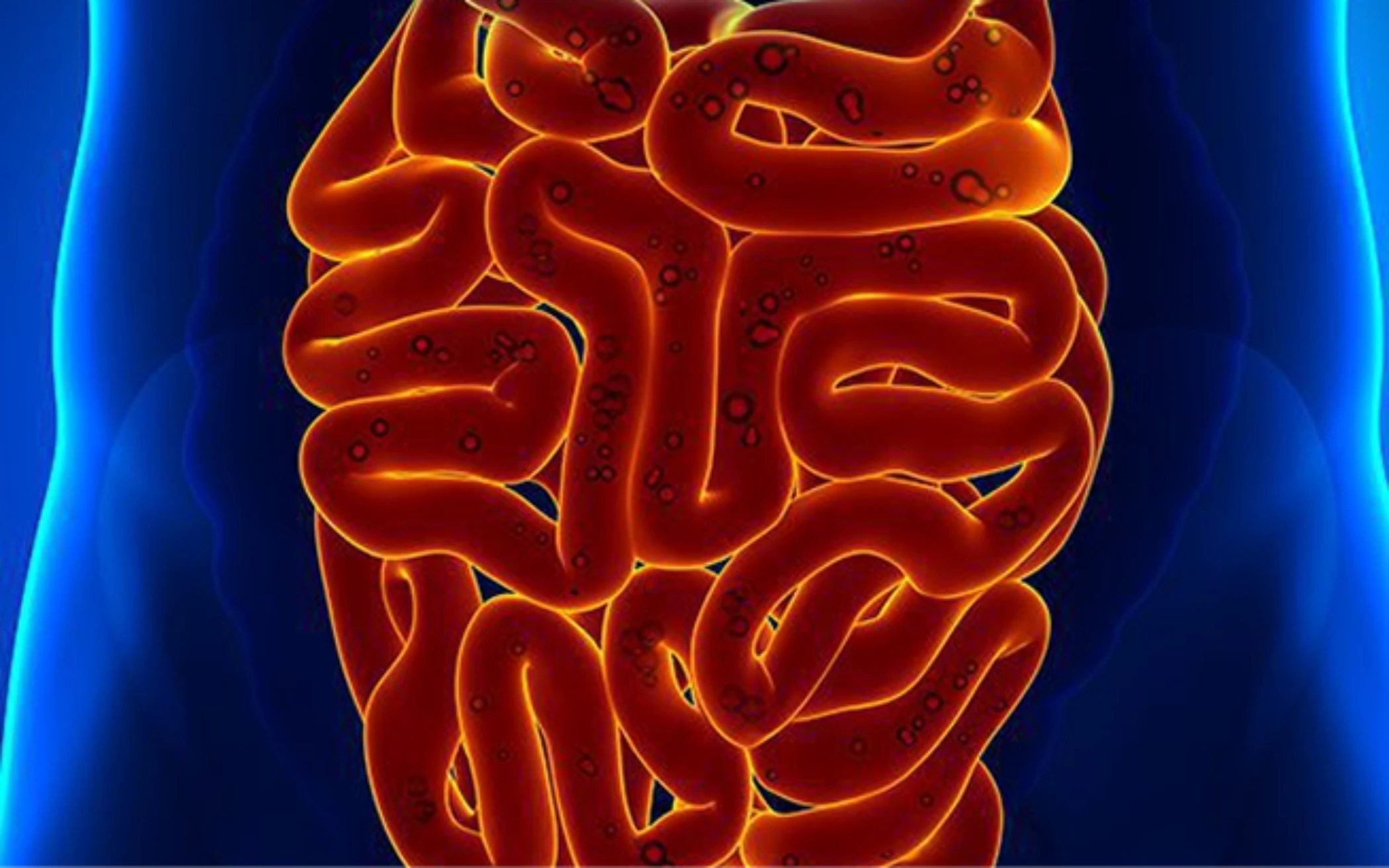
The small bowel (intestine) is the longest part of the digestive system. It is only about as wide as a middle finger (approximately 1 inch or 2.5 centimetres) and is, on average, 600 centimetres in length in an adult (we need at least 200 cm to maintain normal function).
The small bowel is anchored within the abdomen by a double fold of peritoneum (lining of the abdomen) called the mesentery. Lymph nodes and the blood supply to the intestines run through it.
It is not uncommon for neuroendocrine cancer of the small bowel to be diagnosed because of acute symptoms, such as bowel obstruction, ischaemia or chronic symptoms such as irritable bowel syndrome (IBS). You may also experience symptoms of carcinoid syndrome (dry flushing, diarrhoea or change in bowel habit).
It is also possible that you may be diagnosed through a scan showing an enlarged lump of lymph nodes or ‘mass’ within the mesentery, especially if the primary neuroendocrine cancer itself may be too small to be immediately visible.
Grading
Not all cancers are the same or behave in the same way. Some may grow very slowly, may not have invaded nearby structures, or spread to other parts of the body at the time of diagnosis – but they have the potential to. Some may have already spread at the time of diagnosis. Find out more about secondary neuroendocrine cancer in our Secondary Site Factsheet.
The grade is the rate at which the neuroendocrine cancer grows. You might see this referred to as ‘Ki67’ or ‘Mitotic Index’ mentioned in your clinic letters or medical reports. Grade 1 is slow-growing through to Grade 3, a more aggressive, rapidly growing disease.
Symptoms
Neuroendocrine cancer of the small bowel, in early stage disease, may not present with symptoms. However, if symptoms do occur, they may be related to the size and position of the cancer, and how it is growing.
They may be acute (sudden and severe) – for example, increasingly severe abdominal pain or cramping associated with vomiting, which may indicate bowel obstruction.
They may be chronic (occur over time and change in severity and frequency) – for example, abdominal discomfort or cramping, diarrhoea, bloating and altered bowel habit, which are similar to symptoms of irritable bowel disease.
Although carcinoid syndrome may also occur at this point, it is more commonly associated with disease that has spread (metastasised) to the liver. Symptoms include:
- ‘Dry’ flushing: a red ‘blush’ of the face, neck and chest (which can extend over the whole body), and may be associated with pins and needles in hands and feet, headache and/or palpitations (fast beating, fluttering or pounding heart).
- Diarrhoea: watery, loose stools multiple times a day, sometimes associated with considerable urgency, that may be more urgent/frequent in early hours to mid-morning.
- Carcinoid or valvular heart disease.
- Wheezing (bronchospasm) and/or shortness of breath.
- And/or skin changes.
The syndrome is caused by the neuroendocrine cancer: the abnormal neuroendocrine cells within it can release higher than normal levels of the peptides and hormones they would normally produce, causing altered function and leading to the symptoms described above.
Later symptoms may include scaly, irritated skin (caused by a lack of the vitamin B3, also called niacin), arthritis, muscular weakness (myopathy), and symptoms related to secondaries in the liver and/or carcinoid heart disease.
Tests
Tests that may be used for the diagnosis and/or monitoring of neuroendocrine cancer of the small bowel:
Bloods and urine
- Full blood count
- Vitamin B12 and serum iron
- Liver and kidney function
- Chromogranin A (and B)
- Urinary 5-HIAA
- Full gut hormone profile
- NT-ProBNP to check for evidence of carcinoid heart disease
- Calcium
- Glucose
- Thyroid function
A vitamin and trace element/mineral check alongside formal dietetic assessment is advised at baseline and as clinically indicated in follow up: vitamin D, B3 and B12 deficiency and evidence of early malnutrition in symptomatic patients is not uncommon.
Scans and other tests
- Echocardiogram: as a baseline in the presence of carcinoid syndrome or raised U5HiAA and/or elevated NT-ProBNP with or witthout clinical signs of heart valve impairment or R sided heart failure
- Colonoscopy: may be useful in detecting distal ileal disease and for excluding other colorectal abnormalities
- Video capsule endoscopy (VCE)
- CT thorax/abdo/pelvis or MRI abdo/pelvis plus CT chest
- CT enterolysis (a CT examination of the small bowel)
- Gallium-Dotatate PET/CT (SRS SPECT/CT if Dotatate PET not available)
- FDG-PET if high grade or rapidly progressing disease
Watch our video: Your Guide to Scans
Pathology (what can be seen through special tests under a microscope)
- Differentiation and cellular morphology
- Synaptophysin
- Chromogranin
- Ki67
- cdx-2, p53 and/or SSTR 2a (optional)
Causes and risk factors
We do not know exactly what causes neuroendocrine cancer of the small bowel, however research is ongoing to truly understand both the pathology and the biology with the hope that this will lead to a much better understanding of the causes.
Most neuroendocrine cancer of the small bowel do not run in families; however, there are a number of rare conditions that may increase your risk. Therefore, if other members of the family have been diagnosed with a particular cancer (especially aged 50 years or less) or cancer-associated genetic condition, it is important that you tell your specialist team about not only your medical history, but also any family medical illnesses or conditions.
Treatment
For all patients, there are many things to consider in planning treatments. Your treatment will be personalised to you and the type of neuroendocrine cancer you have. Even if you have a diagnosis that sounds the same as another patient, your treatment and follow up plan may be different.
Your care team will discuss your treatment options with you – giving you both written and verbal information – to help you make an informed choice. Together you can agree on the most appropriate treatment for you. There is consensus agreement that all neuroendocrine cancer patients should be reviewed by a specialist multidisciplinary team (MDT).
Treatment options will depend on the type, position and size of your neuroendocrine cancer, and whether (or to where) it has spread. It will also depend on whether you have any other health concerns and/or illnesses and your general health and fitness. A big part of meeting with your doctors or specialist nurse/team is to make sure you get the information you need to understand.
The key aim of treatment should be to help you have the best quality of life by ensuring access to appropriate treatment, management of symptoms and addressing what’s most important to you.
One or more of the approaches below may be suggested:
- Surgery
- Control of your disease by slowing or stopping further growth and/or spread
- Palliation, or easing, of any symptoms you may be experiencing
Surveillance
Monitoring through clinic review, bloods and scans can be used to assess how well treatment is working or in periods between treatments (which may be months or years).
As not everyone will need to be on treatment, surveillance can be used to check your cancer and general health for any signs of change that may mean that a treatment might need to be considered. All treatments have possible side effects, therefore, it is important to know when treatment may be helpful for you or not.
Surgery
To remove, partially remove or bypass neuroendocrine cancer and/or secondary sites of disease (metastases). Careful clinical and radiological (review of scans) assessment is required in planning surgery of the small bowel due to the complexity of the mesentery. The blood supply to remaining bowel needs to be maintained, and an assessment of how much small bowel will need to be resected to remove the cancer but maintain function is needed.
Small bowel segmental resection
This is removal of a specific segment of the small bowel.
Ileo-caecal valve resection
The terminal ileum, ileo-caecal valve and part of the right colon is removed.
Ileocaecal valve resection plus right hemicolectomy
The terminal ileum, ileo-caecal valve and all of the right colon is removed.
With or without mesenteric mass or lymph node resection
This is removal of mesenteric mass and/or lymph nodes associated with mesenteric mass and/or primary tumour.
Watch our video: Surgery for Small Intestinal Neuroendocrine Tumours
Non-surgical treatments
- Somatostatin analogues (SSAs)
- Chemotherapy
- Targeted molecular therapies
- Peptide receptor radionuclide therapy (PRRT)
- Endoscopic procedure
- Interventional radiology
- Clinical Trials
- Symptom control
Diagnosis and living with neuroendocrine cancer of the small bowel
A diagnosis of neuroendocrine cancer can bring questions, uncertainty and a range of emotions. Information and support are available to help you understand your diagnosis and navigate what happens next.
Just diagnosed with neuroendocrine cancer? Access information and support to help you navigate the early days after diagnosis.
Follow up
There are expert agreed guidelines regarding how and when follow up should occur, however, in practice this varies and often with good reason – follow up should be expert informed and evidence/research based but also tailored to you and what is appropriate for your best care.
Following surgery
Grade 1 or 2:
- Surgery undertaken with curative intent: 6–12 monthly CT (chest, abdomen and pelvis) plus bloods and urine
- Non-curative surgery/residual disease: 3–6monthly CT (chest, abdomen and pelvis) plus bloods and urine
Grade 3a and b:
- 3 monthly CT (chest, abdomen and pelvis) plus bloods and urine
If long term, can replace CT abdomen/pelvis with MRI abdomen/pelvis but will need to continue CT chest.
Functional imaging, if recurrence or progression is suspected:
- Grade 1-3a: Gallium-Dotatate PET/CT (SRS SPECT/CT if Dotatate PET not available)
- Grade 3a and b: FDG-PET if high grade or rapidly progressing disease
Inoperable disease: as per non-curative protocol. Note there is a high lifelong risk of sub-acute/acute small bowel obstruction and/or ischaemia.
Consensus guidelines recommend lifelong surveillance.
Nutritional assessment and ongoing monitoring, as clinically indicated, is also advised.
How you can be part your care
You are a key part of your team. You can help by:
- Reporting new symptoms or any changes in current symptoms or overall health
- Asking questions if at all uncertain or you want more information about your diagnosis and/or plan of care
- Attending appointments made – and checking up with the team if you haven’t received an appointment according to your agreed plan of care.
- Let your team know of your preferences and wishes regarding care – what is most important to you.
Advanced disease
Follow up as per guidelines, but this should be guided by prognosis, expected treatment efficacy and treatment related toxicity.
Your health, wellbeing, physical activity, informed choice and preference for ongoing care as well as aim of treatment should be reviewed and discussed to best plan care.
Stories from our community
Hear from people connected to neuroendocrine cancer as they share their experiences, perspectives and insights – from living with the condition to caring for, treating and supporting those affected.
Remember
Remember: every person’s experience with neuroendocrine cancers of the small bowel is different – there may be shared similarities, but each journey is unique.
Your healthcare team will support you every step of the way, guiding your treatment, care, and follow-up. We’re here alongside them, offering additional support and information whenever you need it.
The information on this page is based on available clinical expert guidelines and publications. It is for informational purposes only and should not be considered professional medical advice.