|
Getting your Trinity Audio player ready...
|
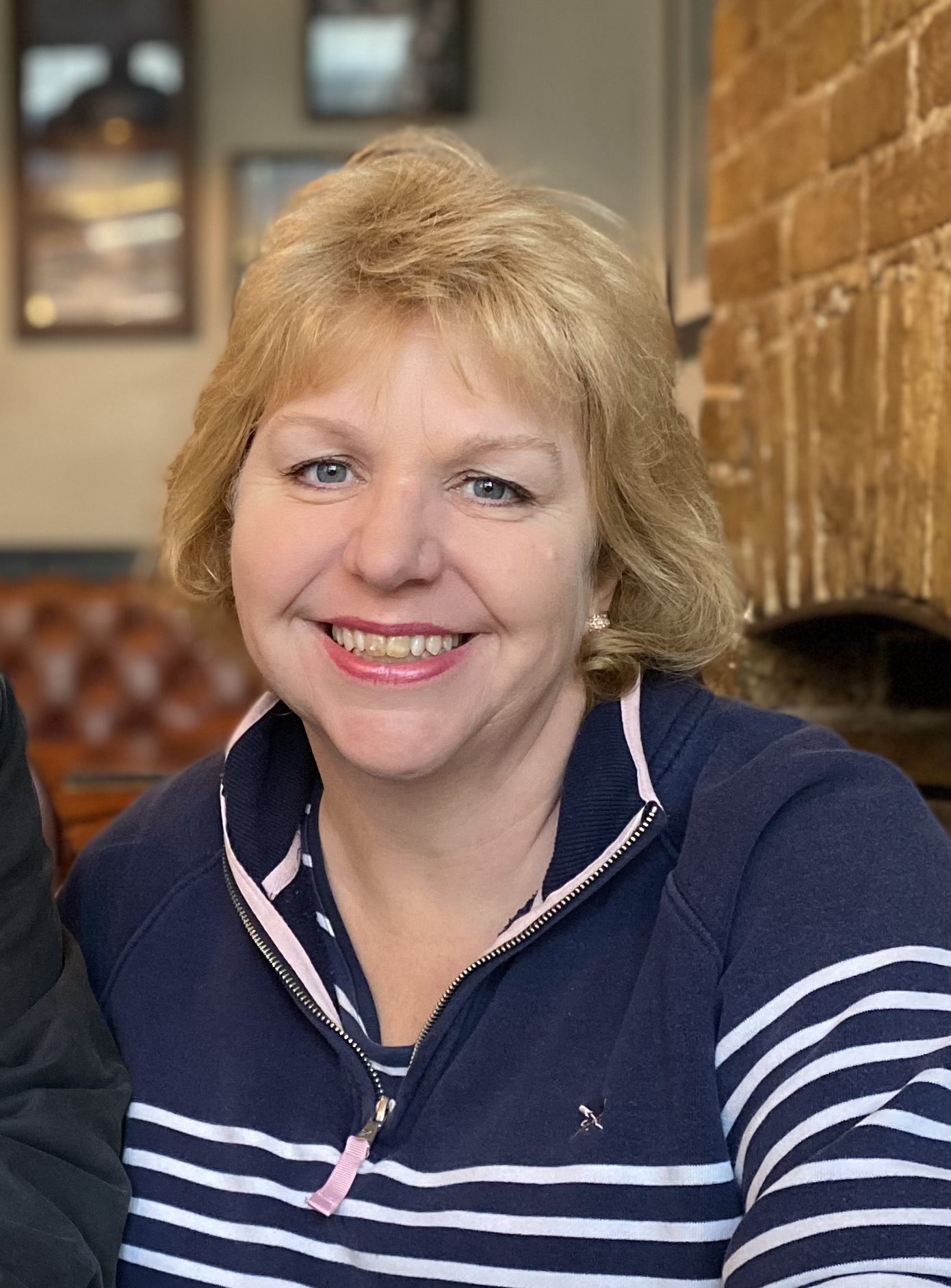
Name: Angela
Neuroendocrine Cancer Site: Ileal, small intestine with metastases in my liver, ovary, and pelvic nodes.
Hospital: Southampton
–
Cancer has been part of my life for many years. Both my mother and father had colorectal cancer when I was only 16 years old. Tragically my wonderful father, also a GP, died within 3 months of diagnosis. I had always wanted to study medicine, having been brought up on the premises of my father’s old-style family practice. From the moment I lost my father, I knew that I wanted to be involved with working with patients with cancer and helping them at the ‘end of life’ as part of any future career. My parents’ illnesses put me off track for a while but I did achieve that goal in the end.
I studied medicine at the tender age of 28, having worked in business as a graduate and singing opera semi-professionally in London. I later studied for a Masters in Palliative Medicine whilst working as a GP Partner with three small children and a GP for a husband. I also worked in a hospice for 6 months and as a national telephone triager for ‘Out of Hours’ at weekends. Life was busy.
My days in General Practice were ‘full on’ with never a moment’s break, often working 12-14 hour days – now that is certainly something that never reaches the news headlines.
There was no time to do anything but work ‘flat out’ but in the meantime, I was getting progressively more and more exhausted, having intermittent bouts of unexplained diarrhoea, “menopausal” flushes, experiencing a fist-like pain under my right shoulder blade, and a sore ache just above my tummy button – which I put down to a busy life, IBS, menopause, and as a result of sitting in one position for hours on end at my computer, or so I had thought. After all, I was only 51 years old.
Then life changed forever one Friday morning at 4am in October 2019 … I was awoken by a pain that hit me like a thunderbolt in my abdomen – it was all over my tummy, everywhere was tender and I just couldn’t make sense of it. The pain just kept on getting worse. Despite this I went to work and saw patients that day and kept going all weekend taking my daughter to London for her ballet lesson whilst not being able to sit still, having to get up and pace up and down all the time, with no chance of sleep or being able to eat. I just had to keep going as there was so much to do. It was not until the Monday that I saw my GP, who, like me, could not make head nor tail of my pain, however, we both agreed that it was ‘not right’.
I was admitted to hospital immediately to see the Surgical Team and had an urgent ultrasound that afternoon, bloods only showed a high inflammatory marker (CRP). A large abdominal mass was seen located where I had been having my sore aches for months. I had an urgent CT scan the next day. This was followed by two months of feeling like a ‘bunny in headlights’ as each day brought more worrying news and further urgent scans being ordered producing so much uncertainty with the possibility of many worrying alternative diagnoses being suggested: desmoid tumour; brain tumour; ovarian cancer; bowel cancer to name but a few. Finally, after having had PET-FDG, CT, and Tektrotyd scans along with ultrasounds, an MRI of my head, and a colonoscopy, a provisional diagnosis of ileal NET was made in December 2019.
What would this mean?
I remained in sub-acute small bowel obstruction surviving on Heinz mushroom and chicken soups and toast until my operation in February 2020. I lost 9 kg in weight. I was operated on at Southampton NET Centre of Excellence by their Surgical Team. I had 9/14 positive lymph nodes, 3 large primaries in the ileum (with perineural and lympho-vascular spread under the microscope), and a large mesenteric mass (which is what had been seen on the very first ultrasound back in the previous October). All were removed and I was classed as Grade 1, Stage 3c (T4 N1 M0) and placed on annual CT and bloods for surveillance. My body had other ideas though as I developed a rare form of blood clot in the blood supply to my gut two months post-op (a superior mesenteric vein thrombosis) so I took blood thinners for 3 months and had an extra couple of CTs.
Although I was told that all the visible cancer had been removed at the time of the operation I, and my consultants, knew that it was highly likely that at some point in the future, it would re-appear due to the extent of involvement and the appearance of the tumours under the microscope.
After my operation, I took a further 9 months’ sick leave as I had ongoing abdominal pain along with my blood clot symptoms and my bowels were totally out of control. Fatigue was a major problem too, all of which made seeing patients impossible. I had wonderful support from my local NET team and was also lucky enough to have the input of a NET dietician. I was an unusual case apparently as I was so symptomatic.
In November 2020 I took Tier 1 Medical Retirement and resigned from my GP Partnership which was a very big, but necessary, decision.
There is always a silver lining, however, and the cancer forced my hand into taking a new career path, as a regional and national ‘GP Clinical Lead for Cancer and GP Advisor’ working 16 hours a week remotely, mostly from home, near my own bathroom. Without having NETs I would never have ‘come up for air’ from General Practice and the effects of the cancer treatment pushed me out of my comfort zone to apply for strategic roles where I could influence the cancer care for thousands of patients. It was a wonderful opportunity which I thoroughly enjoyed as it used my business, medical, cancer, and palliative care knowledge and experience. All paths seemed to lead to these new roles. Isn’t it funny how life can take such unexpected twists and turns and take us in all sorts of new directions?
After experiencing pain under my right ribs and armpit, then developing facial flushing and 4 hour-long bouts of profuse watery diarrhoea with colicky abdominal pain progressively getting more frequent and severe over 15 months it was finally confirmed in May 2023, that I have NET metastases in my liver, ovary, and pelvic nodes so I am now classed as being stage 4 with carcinoid syndrome despite normal bloods, Chromogranin A and 24-hour urine 5-H1AA. I ran aground in October 2023 due to multiple symptoms and heart problems so am sadly no longer able to work.
Radiological imaging is not always perfect and new techniques are being developed all the time and it is thanks to having had an MRI liver and a Gallium-PET rather than just CT scans that the true extent of my NETs has finally been visualised. A lot of investigations are needed to put the pieces of the jigsaw together to get a whole picture. No one test has all the answers, but I am fairly certain that I have been Stage 4 all along as ‘liver cysts’ were seen on CTs early on and my left ovary has always shown uptake on scan. It has been 4 ½ years now since it all started and continued monitoring will determine the speed of progression which so far has been slow.
I started monthly Lanreotide injections in June 2023 once it had been confirmed that I was Stage 4. In August I changed to octreotide depot injections but was intolerant of both.
In a quirk of fate, quite independently, I also developed symptoms due to severe coronary artery disease which appeared coincidentally one month after starting the injections. The cardiac symptoms were initially attributed to the injections and carcinoid syndrome rather than to ischaemic heart disease by the medical teams when I was admitted several times before Christmas last year. Luckily, I have just had cardiac intervention so am excited to see how many of my symptoms improve with restored good blood flow to my heart. As a result, I will be able to withstand any further cancer treatment much better, for which I am extremely grateful.
I have had counselling through Neuroendocrine Cancer UK and privately with counsellors specialising in NETs both at the time of the initial diagnosis and again now that I am Stage 4 with what is classed as ‘incurable, eventually terminal cancer’. I have learnt so much about myself and others. For me, coming to terms with that terminal diagnosis was really important especially as I have children. As a result, I try my best to ‘live in the moment’, make lots of short-term goals to get a sense of achievement, and desperately try not to think too far ahead, which is so hard but really helps if I can do it.
Being a doctor I read NET research voraciously as I like to be fully informed, especially when I hit a bump in the road produced by delayed results, deferred clinic appointments, unexpected results, or when experiencing a very symptomatic day when I can feel quite low. It is my way of coping with the uncertainty. When I am having a ‘bad day’ I go with it, rest and read, cry when needed, and go to the depths which helps me to bounce back and be positive once more. It is not an easy road for us to travel with NETs but it can be a rewarding one.
Since stopping work I am beginning to take up new, more sedentary hobbies (like table tennis, photography, and archery) on good days and am meeting new people as a result which is great. Singing will always be a part of my life too. I am determined to make the most of life, having nearly had it snatched away too soon last December because of my heart.
I am in the process of getting a second opinion from The Royal Free NET Centre of Excellence in London as there is a question about the nature of the ovarian tumour and the cause of my myriad symptoms, so time will tell about which treatment options lie ahead for me. At the moment, daily octreotide and PRRT are being mentioned, but other treatments may be needed depending on the final ovarian diagnosis.
I know that I am on a relentless cancer journey now that I am officially Stage 4. Each treatment is only trying to ‘put the breaks’ on that progression, which for me is thankfully slow – this slowness can be a weird concept to deal with at times though.
Each treatment works with varying degrees of success and can sometimes fail altogether but no matter what happens I will make the most of every ‘good day’ and enjoy experiences and moments that I would not have had the opportunity to enjoy had it not been for the cancer halting me in my tracks and giving me the chance to stop, smell and appreciate the roses.
Although I can’t travel outside of the UK at the moment, and my diagnoses and further treatment options are as yet unclear, I can’t wait to see what the future holds and what new experiences await me whilst being surrounded by the love of my family and friends.
Onwards and Upwards!