|
Getting your Trinity Audio player ready...
|
Name: Margaret Watt
Diagnosed: 2018.
Primary Site: Small Bowel
UK NET Centre of Excellence: Glasgow Beatson
–
Introduction
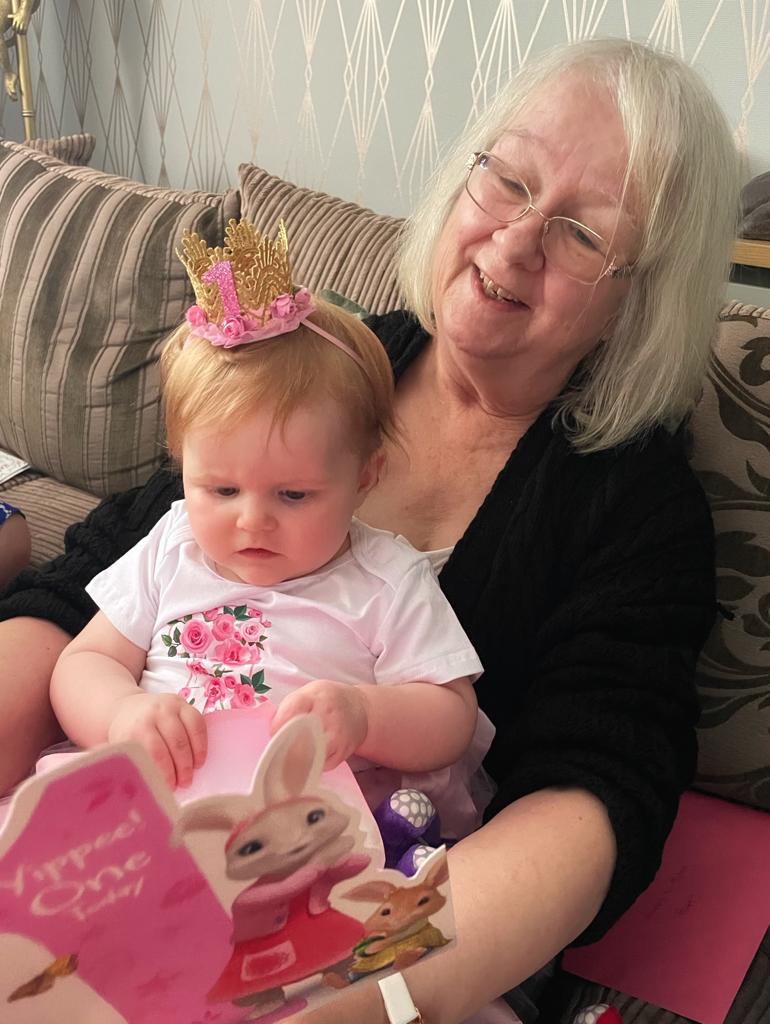
My name is Margaret, and I am grandmother to four beautiful grandchildren: Owen (18), Paige and Payton (14), and Poppy (2). Six years ago this month, I was admitted to Ninewells Hospital Dundee, Scotland with ongoing abdominal pain, nausea, and vomiting. My initial diagnosis was gallstones with a suspicion of pancreatitis, but following an ultrasound, something suspicious was seen on my liver.
Initial Diagnosis
Four years earlier, I had breast cancer, and the team looking after me initially thought that perhaps I had developed metastases/secondaries from that. I quickly had a liver biopsy, and the results revealed Neuroendocrine Cancer.
In the new year, I had various scans, including a CT and an Octreotide scan. I also met my Oncologist for the first time. The Oncologist explained what Neuroendocrine Cancer was and, given that the primary was now identified in my small bowel with numerous metastases to the liver, the best line of treatment recommended was Lanreotide monthly injections as surgery wasn’t an option.
First Line of Treatment:
I was on Lanreotide for 18 months, but unfortunately, progression was noted on scans and my symptoms seemed to be worsening. Fortunately, I was deemed a suitable candidate for PRRT (Peptide Receptor Radionuclide Therapy), and I had four sessions at the Beatson Cancer Hospital in Glasgow. My final and fourth session coincided with lockdown. Once again, I got around 18 months of stability before further progression.
My Oncologist and I then decided to try Lanreotide every two weeks, and I managed to tolerate this quite well for a couple of years. However, in September 2024, following further progression, especially in my liver, I was placed on Everolimus (an oral chemotherapy) starting on the lowest dose of 5mg due to the rather unpleasant side effects of the 10mg dose.
I’ve just had my third round of tablets in November 2024. I must admit, I am finding the fatigue difficult but am slowly learning ways to cope with this. I look at my day ahead and decide on the things I want to do and the things I have to do. I also factor in a nana-nap if I have to. I’ve also developed some acne-like spots, but nothing I can’t manage so far. It’s a long time since I had to deal with that as a teenager!
The good news is that my bowel incidents have decreased, so hopefully, that’s a sign that Everolimus is doing its job.
Reflections on My Journey
I’ve now had six relatively good years, and I hope to have many more. My oncology appointments, scans, blood tests, and treatments — while not always plain sailing — have been worth it because I feel I really am ‘living with’ this cancer rather than fighting fires.
Finding Support and Community
I’m a member of the Neuroendocrine Cancer UK Facebook group, and I must admit, I find it comforting to read how other patients handle this diagnosis. There is so much to learn, but there is also so much support available there — and always someone to answer questions.
More recently, I’ve been enjoying listening to the guest speaker webinars which take place monthly. I hope my experience encourages others, especially newly diagnosed patients.
Sharing my story is my way of showing that even with a diagnosis like Neuroendocrine Cancer, there is hope, support, and the chance to live well. I’ve learned to adapt, seek help, and embrace the support of others on this journey. I hope my experience inspires others to do the same.