|
Getting your Trinity Audio player ready...
|
Neuroendocrine cancers of the duodenum are uncommon cancers that develop from neuroendocrine cells in the duodenum, the first part of the small bowel (small intestine). They include neuroendocrine tumours (NETs), which are usually slower growing, and neuroendocrine carcinomas (NECs), which tend to grow more quickly.
Many people have no symptoms in the early stages. Symptoms may develop as the tumour grows, while some duodenal NETs produce excess hormones, which can cause digestive problems such as acid reflux, abdominal pain and diarrhoea.
This page explains more about neuroendocrine cancers of the duodenum, including possible causes and symptoms, diagnosis, treatment and follow-up care. It also includes information about living with your diagnosis and where to find further information and support.
Use the links in the box to find the information that is most relevant to you.
What is neuroendocrine cancer of the duodenum?
Neuroendocrine cancer is a type of cancer that begins in the neuroendocrine cells, which are found throughout the body. These cells have the ability to release hormones that can regulate many body functions. When they become cancerous, their growth rate and normal function is disrupted.
There are two main types:
- Neuroendocrine tumours (NETs) – usually slower growing
- Neuroendocrine carcinomas (NECs) – less common and faster growing
Treatment and outlook depend on factors including tumour type, grade, stage, differentiation and whether the cancer has spread.
About the duodenum
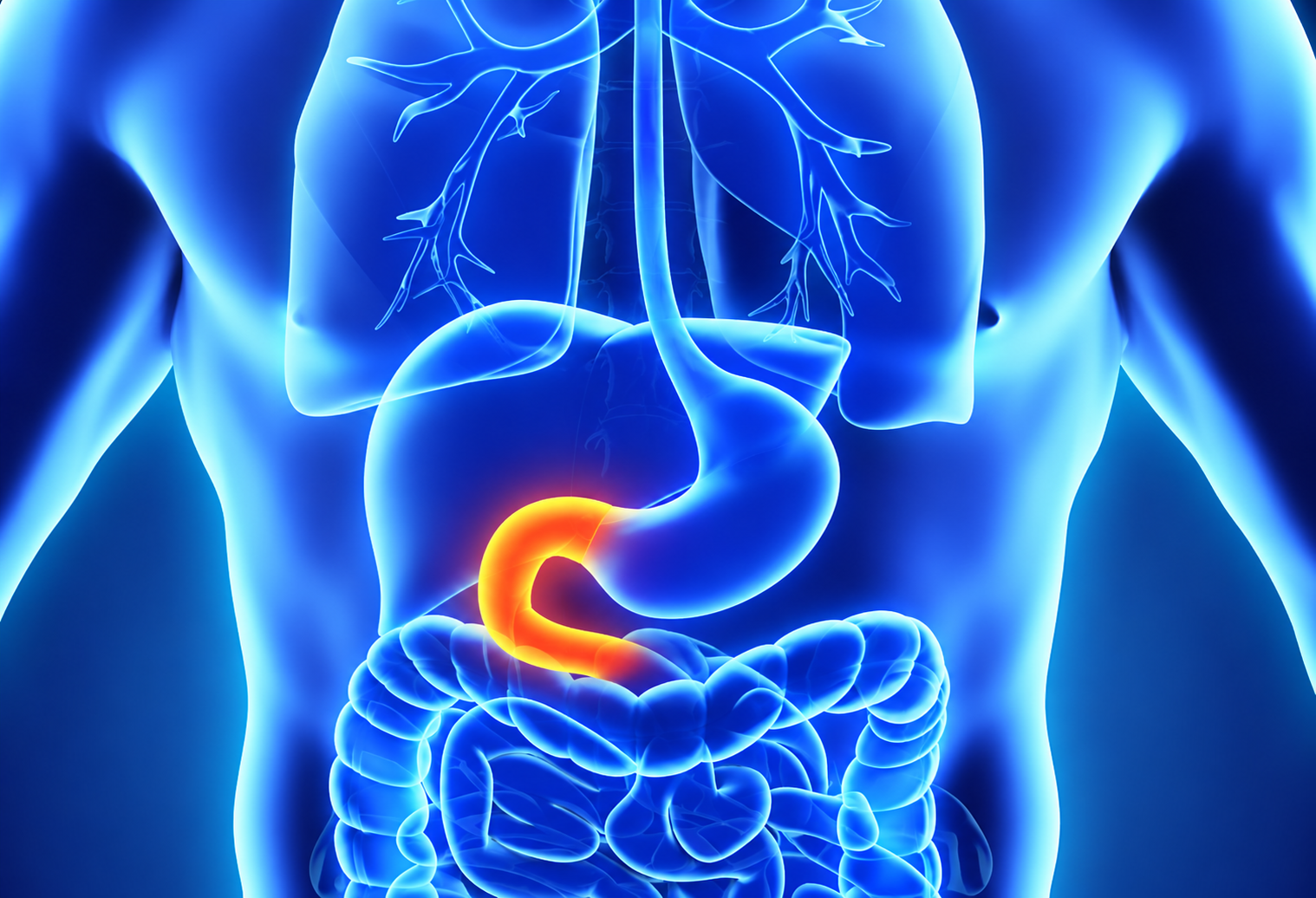
The duodenum is the first part of the small bowel (small intestine). It is a C-shaped hollow tube approximately 25–38cm (10–15 inches) long which connects the stomach to the rest of the small intestine.
It is here that semi-digested food and stomach acid (chyme) are processed before nutrients are absorbed further along the small bowel. Key nutrients absorbed in the duodenum include:
- Iron
- Calcium
- Vitamin A
- Vitamin B1
- Other essential nutrients
Digestive juices from the liver, gallbladder and pancreas enter the duodenum to help break down food.
The four parts of the duodenum
- Superior segment (duodenal bulb): the first portion connected to the stomach. This area is commonly affected by peptic ulcers because it is exposed to stomach acid.
- Descending segment: the section where bile from the gallbladder and liver and digestive enzymes from the pancreas enter the bowel.
- Horizontal segment: the third section of the duodenum which crosses the abdomen.
- Ascending segment: the shortest section which joins the next part of the small intestine, known as the jejunum.
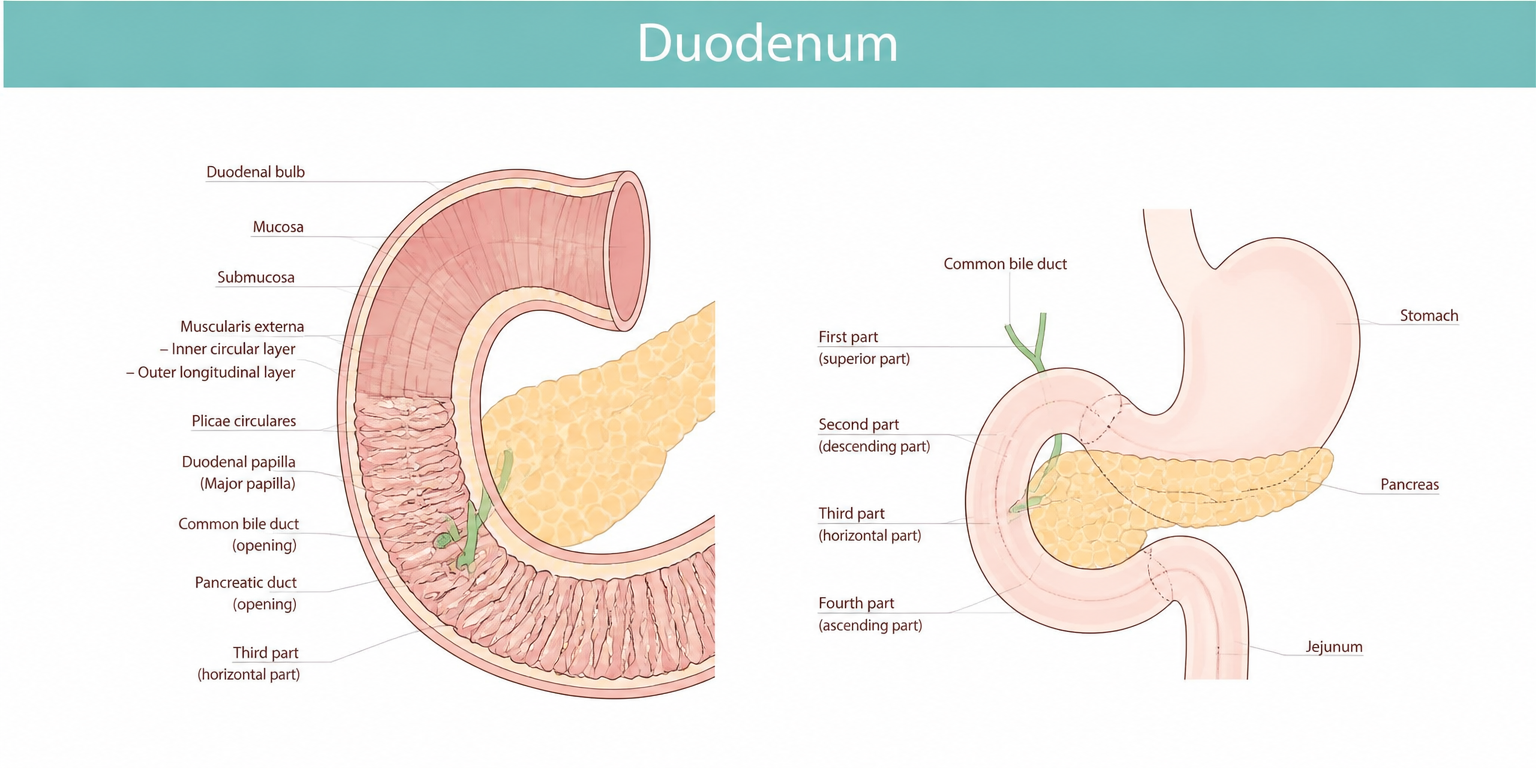
What does the duodenum do?
The duodenum:
- Neutralises stomach acid by releasing hormones such as secretin
- Stimulates release of bile and digestive enzymes via cholecystokinin (CCK)
- Begins nutrient absorption
- Regulates stomach emptying
- Plays an important role in blood glucose regulation and appetite control
- Pushes food into the jejunum through muscular contractions known as peristalsis
Layers of the duodenum
The wall of the duodenum contains four layers:
- Mucosa: contains glands and microvilli which increase nutrient absorption
- Submucosa: contains blood vessels and Brunner’s glands which help reduce acidity
- Muscularis: moves food through the bowel
- Serosa: the outer protective layer
How does neuroendocrine cancer of the duodenum develop?
Neuroendocrine cancer develops when neuroendocrine cells acquire genetic changes that disrupt their normal life cycle. Rather than growing, dividing and dying in a controlled way, affected cells continue to divide and may form a tumour.
Duodenal neuroendocrine cancers may be:
- Well-differentiated neuroendocrine tumours (NETs)
- Poorly differentiated neuroendocrine carcinomas (NECs)
Although neuroendocrine cells are found throughout the digestive tract, neuroendocrine cancers that arise primarily within the duodenum are uncommon.
Risk factors
The exact cause is not known. Most neuroendocrine cancers are not inherited and occur sporadically. However, risk may increase in people with inherited conditions such as:
- Multiple endocrine neoplasia type 1 (MEN1)
- Von Hippel-Lindau (VHL) syndrome
It is important to discuss this with your specialist team if you have a family history of:
- Neuroendocrine Cancer
- MEN1
- VHL
- Other inherited cancer syndromes
General health advice includes:
- Avoid smoking
- Limit alcohol intake
- Maintain a healthy weight
- Exercise regularly
- Eat a balanced diet
Signs and symptoms
Many people experience no symptoms during the early stages of disease.
1. Symptoms caused by the tumour itself
Most duodenal neuroendocrine cancers are non-functioning. Symptoms may occur because of the tumour’s size or location and include:
- Abdominal pain
- Back pain
- Nausea
- Vomiting
- Jaundice
- Unintentional weight loss
2. Neuroendocrine hormone syndromes
Hormone-producing tumours may cause specific syndromes that can sometimes provide clues about where the primary tumour originated. This is rare in duodenal NECs, but some duodenal NETs may produce excessive amounts of hormones, leading to hormone-related symptoms.
Gastrinoma produces excess gastrin, causing Zollinger-Ellison Syndrome. Symptoms may include acid reflux, heartburn, burping, stomach pain, chest discomfort, diarrhoea, anaemia and fatigue.
Somatostatinoma produces excess somatostatin. Symptoms may include diabetes-like symptoms, increased thirst, frequent urination, dry mouth, weight loss, fatigue, diarrhoea, steatorrhoea (fatty pale stools and anaemia.
Carcinoid syndrome is rare and usually occurs only after the tumour has spread to the liver. It may cause flushing, diarrhoea, wheezing, palpitations, blood pressure changes, headaches and fatigue.
Carcinoid crisis (rare) may occur in those who have carcinoid syndrome
Carcinoid crisis can happen during anaesthesia or tumour manipulation (biopsy, surgery or interventional radiology – e.g. embolisation or ablation treatments) or be triggered by mental/physical stress.
Symptoms may be similar to carcinoid syndrome but are much more severe. These include severe flushing often accompanied by palpitations or a fast, irregular heart rate, low blood pressure, confusion and breathing difficulty, and can be life-threatening.
Specialist teams plan care to reduce this risk.
If you are at risk of carcinoid crisis, carry a Carcinoid Crisis Card so healthcare professionals know how to manage your care in an emergency. You can order one from us for free.
3. Rare symptoms (paraneoplastic syndromes)
Although rare, paraneoplastic syndromes occur more commonly in those with NEC rather than NET. Symptoms occur as a result of the body’s immune response to cancer. Examples include:
- Hypercalcaemia
- Neurological symptoms
- Other cancer-related complications
Watch our video: Paraneoplastic Syndromes – Explained
4. Symptoms related to treatment
Treatments can cause side effects, although not everyone experiences them.
Your team will discuss potential risks and benefits before treatment begins.
Tests and scans
Investigations are guided by symptoms, tumour behaviour and primary site. A comprehensive assessment usually includes:
- Clinical examination
- Blood and urine tests
- Cross-sectional imaging
- Functional imaging
- Endoscopy
- Histopathology
Your specialist team may recommend a combination of the following investigations.
Blood and urine tests
- Full blood count
- Liver function tests
- Kidney function tests
- Vitamin B12, iron studies, ferritin and folate
- Chromogranin A +/- B
- Urinary or serum 5HIAA
- Gut hormone profile or single hormone assay, e.g. gastrin
- Thyroid function tests
- LDH
- MEN1 screening
- NT-ProBNP may be taken if you have a history of heart disease or carcinoid syndrome (NET only)
- Vitamin, mineral and trace element check
Other blood tests may be taken, but this will be decided on a case-by-case basis, guided by your symptoms and clinical expertise.
Genetic testing
Where known or suspected, genetic testing may be considered for MEN1, VHL and other inherited syndromes.
Scans
Structural imaging:
- CT chest, abdomen and pelvis
- MRI abdomen and pelvis
Functional imaging:
- Gallium-68 DOTATATE PET/CT
- Octreotide SPECT
- FDG-PET/CT
Watch our video: Your Guide to Scans
Endoscopy
- Upper gastrointestinal endoscopy (OGD) with or without biopsy
- Endoscopic ultrasound (EUS) with or without biopsy
Histopathology
This means looking at cells and tissues under a microscope to understand disease. It helps confirm whether cancer is present, where it started, what type of cells are involved, and how quickly the cells are growing.
Your doctor will explain which biopsy is best for you and why. You will also have time to ask questions and give consent before the procedure
A combination of these investigations will help confirm your diagnosis and guide treatment decision-making.
Treatment options
The aim of treatment is to provide the best possible outcomes, symptom control and quality of life.
Treatment recommendations depend on:
- NET or NEC diagnosis
- Tumour grade
- Tumour size
- Location within the bowel
- Whether disease has spread
- Your overall health and preferences
All patients should be discussed within a specialist neuroendocrine multidisciplinary team (MDT).
Cancer gene changes and targeted treatments
Some neuroendocrine cancers, particularly NECs, may contain specific genetic alterations that can be targeted with treatment.
Examples include:
- PD-L1 expression
- DLL3 expression
- Other molecular alterations
Genomic testing may help identify targeted treatment options or eligibility for clinical trials.
1. Monitoring (surveillance)
Sometimes referred to as ‘watch and wait’, monitoring may be used following treatment to check how well the treatment worked, or to monitor stable disease. When active treatment is not currently needed, monitoring is required.
This typically involves a clinical review, blood tests and further scans or investigations.
2. Surgery
Surgery may be appropriate when:
- Disease can be safely removed
- Symptoms can be improved
The aim would be to completely remove the tumour and nearby lymph nodes. However in NETs or where surgery is required to treat an obstruction, complete removal of all disease may not be possible. But debulking or removing an obstruction can still provide benefit.
Types of surgery for duodenal neuroendocrine cancer may include:
- Endoscopic removal of small tumours (EMR/ESD)
- Local surgical resection
- Whipple procedure (pancreaticoduodenectomy)
- Pylorus preserving pancreaticoduodenectomy (PPPD)
- Surgery for metastatic disease
3. Non-surgical treatment options
NET treatments
- Somatostatin analogues (SSAs): used to control hormone-related symptoms and/or tumour growth.
- Targeted medical therapy (e.g. the mTOR inhibitor everolimus): these are targeted treatments that block a protein that cancer cells use to grow and divide, helping to slow or stop tumour growth.
- Chemotherapy: rarely used as a first treatment for low grade (G1-2) NETs but may be considered in G2-3 or if other treatments are not suitable or have stopped working. It may be given as tablets or through a drip into a vein. For example CapTem (capecitabine + temozolomide) tablets or rarely, Streptozocin/5FU via a drip.
- Radiotherapy: external beam radiation therapy (EBRT) may be used, following surgery or to treat symptomatic bone metastases.
- Radioligand therapy (RLT, also known as PRRT or lutetium‑177) is mainly used for metastatic or progressing disease. It is a targeted internal radiation treatment. It delivers radiation directly to cancer cells, usually given in four sessions spaced 8–12 weeks apart.
- Symptom control and supportive care: includes any treatment or support that helps you feel better, even if it is not directly treating the cancer. This may include medicines, dietary advice and/or psychological support. Techniques such as mindfulness or relaxation may help with pain, fatigue, stress or anxiety.
- Clinical trial therapy: clinical trials are used to find out if new treatments and techniques are safer and more effective than the ones that already exist, or for discovering if existing treatments can be used in different, more effective, ways or combinations.
NEC treatments
- Chemotherapy: considered first line treatment for neuroendocrine carcinomas in inoperable disease. It may also be considered if surgery is not possible or after surgery – if it was incomplete or doctors think there is a high risk of recurrence. The main treatment is usually platinum-based chemotherapy, sometimes combined with etoposide (or irinotecan in certain cases). If the cancer comes back or grows, further treatment options may include reusing the first treatment or trying other forms of chemotherapy.
- Radiotherapy: external beam radiation therapy (EBRT) may be used to treat symptomatic bone metastases.
- Immunotherapy: clinical trials are looking promising in treating NECs, but it has yet to become a standard of care. Research is ongoing. Immunotherapy may be considered in NEC if available and accessible. Types of treatment may include immune checkpoint inhibitors, which help your immune system recognise and attack cancer by removing the ‘brakes’ that normally hold it back, and DLL3 inhibitors, which target the protein DLL3, frequently over-expressed in high-grade neuroendocrine cancers.
- Symptom control and supportive care: includes any treatment or support that helps you feel better, even if it is not directly treating the cancer. This may include medicines, dietary advice and/or psychological support. Techniques such as mindfulness or relaxation may help with pain, fatigue, stress or anxiety.
- Clinical trial therapy: clinical trials are used to find out if new treatments and techniques are safer and more effective than the ones that already exist, or for discovering if existing treatments can be used in different, more effective, ways or combinations.
Additional treatments that may be considered depending on site, type, grade and stage include:
- Endoscopic stenting
- Irreversible electroporation (NanoKnife)
- Liver-directed therapies
Diagnosis and living with neuroendocrine cancer of the duodenum
A diagnosis of neuroendocrine cancer can bring questions, uncertainty and a range of emotions. Information and support are available to help you understand your diagnosis and navigate what happens next.
Just diagnosed with neuroendocrine cancer? Access information and support to help you navigate the early days after diagnosis
Follow-up care
Follow-up is an important part of your ongoing care. It helps your healthcare team check how you are doing, spot any changes early, and support your physical and emotional wellbeing.
While expert guidelines offer a general plan for follow-up, your care will always be tailored to you and your specific type of neuroendocrine cancer.
At each appointment, your team will ask how you are feeling, review your symptoms and medications, and arrange blood tests if needed.
You may also be offered a holistic needs assessment (HNA). This is an opportunity to talk with your specialist nurse or doctor about any physical, emotional, practical, or social needs, so the right support can be put in place.
The European Neuroendocrine Tumor Society (ENETS) recommends individualised, life-long follow-up for people with duodenal neuroendocrine cancers. They recommend that follow-up should be tailored to you and the type of neuroendocrine cancer you have been diagnosed with and/or treated for.
For non-functioning duodenal NETs (grade 1–2)
Small tumours (1 cm or smaller) that have been completely removed by endoscopic treatment may be monitored with:
- Upper endoscopy (gastroscopy)
- CT or MRI scans
- Blood tests, including chromogranin A (CgA)
Follow-up is commonly undertaken at 6, 24 and 36 months after treatment.
Larger tumours (greater than 1 cm) or those requiring surgery usually require longer-term follow-up with:
- CT and/or MRI scans
- Functional imaging where appropriate
- Blood tests and tumour markers
These assessments are often performed at 6 and 12 months, then annually for at least 3 years, although guidelines recommend longer surveillance.
For grade 3 non-functioning duodenal NETs
These may require closer surveillance – similar to that recommended for duodenal NECs (below).
For functioning duodenal NETs
Functioning tumours, such as gastrinomas or somatostatinomas, require monitoring of both the tumour and hormone production. Follow-up may include:
- Hormone blood tests (such as fasting gastrin levels)
- CT or MRI scans
- Functional imaging where appropriate
- Review of symptoms and hormone control
Some functioning tumours occur as part of inherited conditions such as MEN1 and may require additional specialist monitoring.
For duodenal NECs
Neuroendocrine carcinomas (NECs) are high-grade cancers that tend to behave more aggressively than well-differentiated NETs. Follow-up commonly includes:
- Clinical review
- Blood tests
- CT and/or MRI scans
- FDG-PET imaging where appropriate
Assessments are often performed every 3 to 6 months, depending on tumour grade, stage, treatment and response.
Investigations used during follow-up
Your follow-up may involve:
- CT or MRI scans to look for recurrence or spread of disease
- Gastroscopy (upper endoscopy) to assess the duodenum
- Blood tests, including chromogranin A and hormone levels where appropriate
- Gallium-68 DOTATATE PET/CT or other functional imaging when required
Your specialist team will develop a follow-up plan tailored to your individual diagnosis, treatment and needs.
How you can be part of your care
You are an important member of your healthcare team. You can help by:
- Reporting new symptoms or any changes in current symptoms or overall health promptly
- Attending scheduled appointments
- Asking questions
- Sharing your priorities and concerns
- Understanding your treatment plan
- Letting your team know if appointments are delayed or missed
Support and further information
We have worked with the International Neuroendocrine Cancer Alliance (INCA) to provide information resources in more than 10 different languages: these are available here.
Other sources of support including benefits/financial and general cancer advice:
- Maggie’s Centres: Run drop-in centres across the UK providing free practical, emotional, and social support from professional specialists.
- Macmillan Cancer Support: Offers a free support line (0808 808 00 00), for general cancer advice and financial guidance.
Stories from our community
Hear from people connected to neuroendocrine cancer as they share their experiences, perspectives and insights – from living with the condition to caring for, treating and supporting those affected.
Remember
Every person’s experience of neuroendocrine cancer of the duodenum is different – there may be shared similarities, but each journey is unique.
Your healthcare team will support you every step of the way, guiding your treatment, care, and follow-up. We’re here alongside them, offering additional support and information whenever you need it.
The information on this page is based on available clinical expert guidelines and publications. It is for informational purposes only and should not be considered professional medical advice.