|
Getting your Trinity Audio player ready...
|
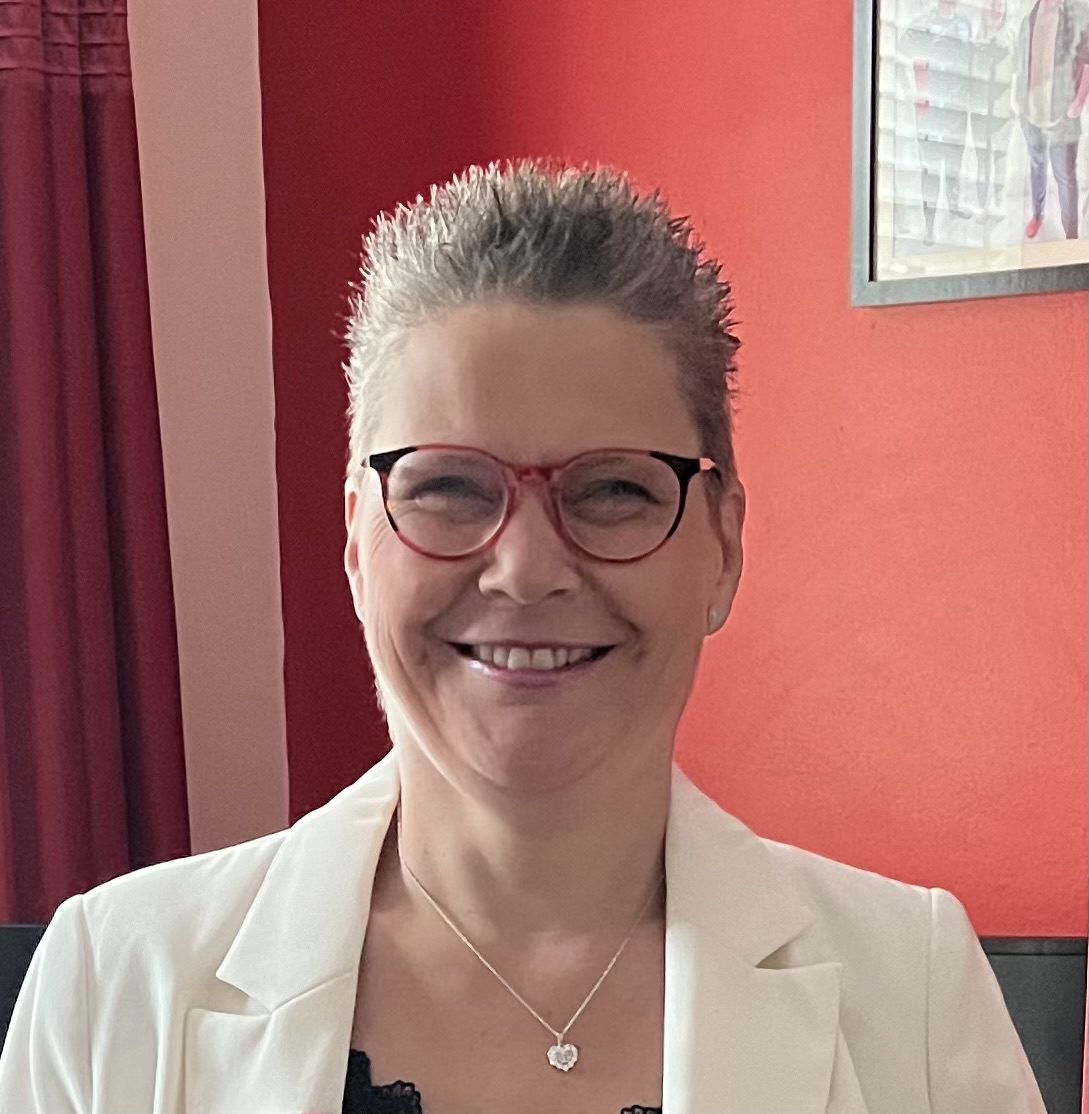
Name: Leanne
Neuroendocrine Cancer Site: Primary tumour in my rectum and metastases in my liver and thyroid.
Hospital: Newcastle Freeman Hospital
–
Initial Diagnosis
I was originally diagnosed in August 2019, with a primary tumour in my rectum and metastases in my liver and thyroid.
Beginning Treatment
Following many blood tests, biomarkers and scans, I started on octreotide injections in September 2019. Quite quickly after this, I was offered the nuclear medicine therapy called PRRT (Peptide Receptor Radionuclide Therapy) which began in January 2020. I had the usual 4 cycles, all 8 weeks apart and was monitored carefully between each cycle.
Background
Then to my delight, in February 2021 my scans started to show shrinkage to the tumours in my liver, which then made me eligible for liver surgery. In June 2022, I had half my liver and segment 4 removed, as well as my gallbladder.
The results from my PRRT and monthly injections made it possible for my primary tumour in my rectum to be removed in January 2022, followed by half my thyroid in September 2022. Then a CT scan in December 2022 showed an 8mm tumour left in my liver.
But my next scan in March 2023 showed progression – and 30 more tumours in my liver, so I started back on the octreotide injection in April 2023 with a scan booked for six months later to check if disease control had been regained.
In October 2023, the scan showed that four of the tumours had doubled in size, so a biopsy was arranged, and we discovered that my KI67% had changed and had, in fact, increased. So, I was referred to the MDT (Multi-Disciplinary Team) to see what the next step was.
SIRT (Selective Internal Radiation Therapy)
I have complete faith in my MDT – they decided that a treatment called SIRT (Selective Internal Radiation Therapy) would be my best option. Whilst not a new treatment as such, research information is constantly being gathered, and at the time of writing, SIRT is still not very widely accessible in the UK. So, I was referred to the SIRT MDT on 19th December 2023, and in early January 2024, they called to say I was eligible.
I met with my HPB (Hepatobiliary) Clinical Nurse Specialist to go through what SIRT involved. The isotope to be used was called Holmium, which was a new isotope, considered to cause less damage to my good tissue than its predecessor. Then my Consultant went through all the details with me. There was also a little excitement as I was only the second neuroendocrine cancer patient at The Freeman to have SIRT. It’s not a quick fix, you must have a ‘pre-SIRT’ mapping CT which the Internal Radiology Team use for planning.
Pre-SIRT and Procedure Details
I had to have an octreotide infusion for 72 hours for both the SIRT and pre-SIRT as it was protocol with me being on the monthly octreotide injections. This meant a three day stay in The Freeman each time, including the one when, unfortunately, the SIRT treatment was delayed.
So, what happens?
Well, during pre-SIRT, a catheter is put in through your groin to your liver, which is basically the same procedure as SIRT only they map out where they are going with the catheter and seal off blood vessels to ensure the radioactive beads go to the right places in the liver, to destroy tumours.
My pre-SIRT took place on 25th January 2024. I went back two weeks later for the actual SIRT, but this didn’t go to plan as the radioactive isotope (Holmium) got stuck at East Midlands Airport Customs due to a technical problem (it is, of course, a very dangerous chemical and there is lots of official paperwork involved in the transportation of such a substance) and it didn’t arrive at The Freeman in time.
Successful Treatment
So, my SIRT was rescheduled for 23rd February 2024.
Everything went to plan this time. The Holmium beads were inserted and I stayed overnight in the hospital to ensure I was ok. I had a CT scan 3 days later, and unusually, this was the worst part for me. I had to travel by patient transport as you can’t drive after each procedure until your groin heals. I also suffered from nausea which wasn’t pleasant.
I had a scan again in March 2024. This showed a good response to SIRT and the 4 tumours that had doubled in size had, in fact, shrunk by 50% and some of the smaller tumours had disappeared. Fantastic news.
Complications and Recovery
Unfortunately, I had a complication 10 weeks post SIRT – an emergency admission to my local hospital. I had an episode of ‘acute radiation hepatitis’ which caused post-procedure E. coli septicaemia. I spent a week in the hospital on IV Antibiotics and then 2 weeks at home on strong oral antibiotics. It took me several weeks to recover from this, but I am pretty much back to how I felt before and taking part in my usual activities.
Reflection and Gratitude
In writing this, in July 2024, I can reflect on how far I have come. As patients, it is easy to forget all the research which goes on in the background for new and upcoming treatment options. I cannot thank my Consultant, the nurses caring for me and The Freeman’s SIRT Team enough. Their support, knowledge and willingness to try something new has extended my ability to live well with my neuroendocrine cancer.
Next scan in 3 months … thank you for reading.
Leanne.
Select here to learn more about neuroendocrine cancer research and clinical trials.